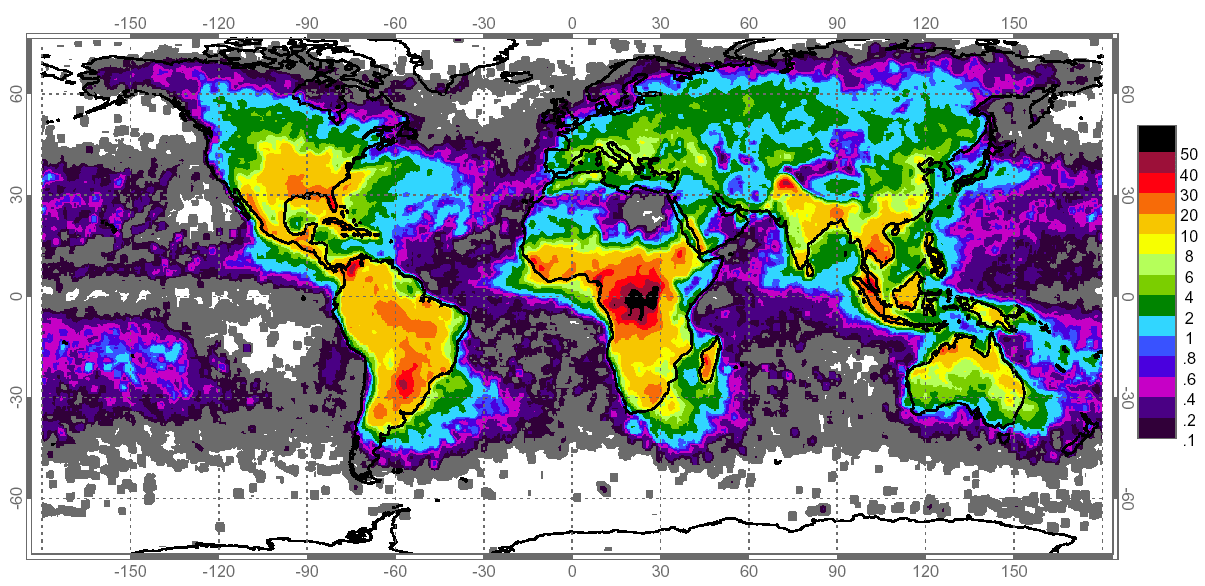


























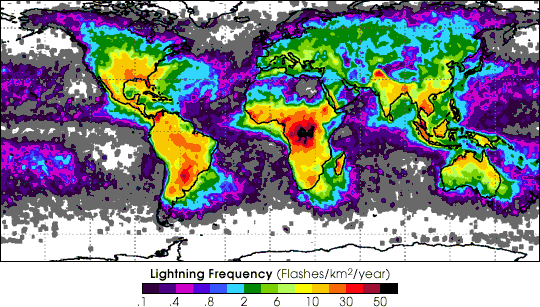
Lightning. It avoids the ocean, but likes Florida. It’s attracted to the Himalayas and even more so to central Africa. And lightning almost never strikes the north or south poles.
These are just a few of the things NASA scientists have learned using satellites to monitor worldwide lightning.
“For the first time, we’ve been able to map the global distribution of lightning, noting its variation as a function of latitude, longitude and time of year,” says Hugh Christian, project leader for the National Space Science and Technology Center’s (NSSTC’s) lightning team at NASA’s Marshall Space Flight Center.
This new perspective on lightning is possible thanks to two satellite-based detectors: the Optical Transient Detector (OTD) and the Lightning Imaging Sensor (LIS). “The OTD and the LIS are two optical sensors that we’ve flown in lower Earth orbit,” says Christian, whose team developed the sensors. “The OTD was launched in 1995 and we got five good years out of it. The LIS was launched on the Tropical Rainfall Measuring Mission satellite in 1997 and it’s still going strong."
“Basically, these optical sensors use high-speed cameras to look for changes in the tops of clouds, changes your eyes can’t see,” he explains. By analyzing a narrow wavelength band around 777 nanometers—which is in the near-infrared region of the spectrum—they can spot brief lightning flashes even under daytime conditions.
For the
visit
References & Resources
Image courtesy NSSTC Lightning Team