










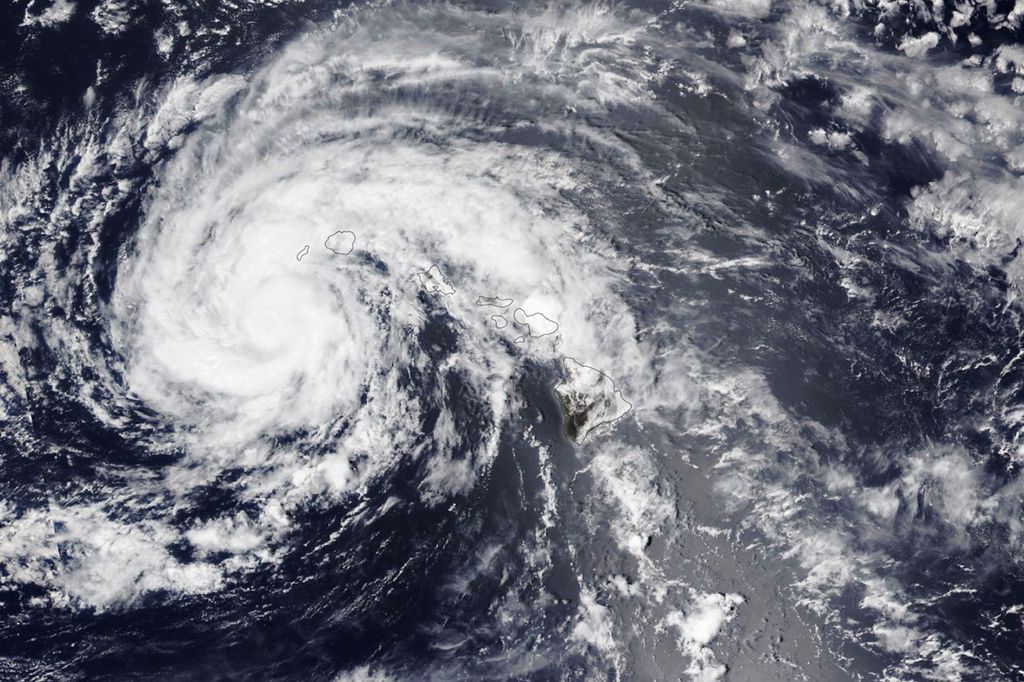









As if in defiance of the unofficial end of summer, the Atlantic Ocean was queuing up a series of tropical storms after Labor Day in 2008. With Gustav raining out over the southern United States, and Hanna drenching the Bahamas, the next storm in the queue, Tropical Storm Ike, made its way westward on September 3.
This image from the Moderate Resolution Imaging Spectroradiometer (MODIS) on NASA’s Aqua satellite on September 2 shows Ike getting organized in the central Atlantic. In the northwest (upper left) quadrant of the storm and in the western half of the eye, distinct clusters of thunderstorms give the storm a boiling appearance. In the east, the cloud deck is more diffuse, with wispy streamers like tassels around the edge. As of the 11:00 a.m. Eastern Daylight Time briefing from the National Hurricane Center, Ike’s wind speeds were about 70 mph, and it was expected to become a hurricane later that day.
References & Resources
NASA image created by Jesse Allen, using data provided courtesy of the MODIS Rapid Response team. Caption by Rebecca Lindsey.