















A fierce winter storm lashed the North Island of New Zealand over the last weekend of July 2008. Heavy rains and strong winds caused several fatalities on land and sea, and more than 70,000 homes were without electricity in the wake of the storm. A second, though less severe, storm was headed for the country on Tuesday.
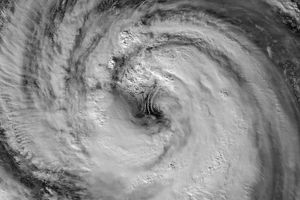
This natural-color image of the storm was captured by the Moderate Resolution Imaging Spectroradiometer (MODIS) on NASA’s Terra satellite on July 26. Although the clouds seem lacy and somewhat insubstantial compared to the thick deck of clouds associated with hurricanes, the storm bears a resemblance to its tropical cousins; a core of low atmospheric pressure sits just off the East Cape, and the clouds are being drawn toward the low in an inward, clockwise spiral. In the Southern Hemisphere, air rotates clockwise around areas of low pressure.
No matter where it occurs, the large-scale rotation of the atmosphere around a core of low pressure is known to meteorologists as cyclonic motion, and thus storms with these characteristics are known as cyclones. The more famous of these types of storms are tropical cyclones (hurricanes, typhoons), but cyclones can also form in polar and middle latitudes.
References & Resources
- References
- canberratimes.com.au (2008, July 28). Five killed as fierce storm hammers New Zealand. Accessed July 29, 2008.
NASA image created by Jesse Allen, using data obtained from the Goddard Land Processes data archives (LAADS). Caption by Rebecca Lindsey.