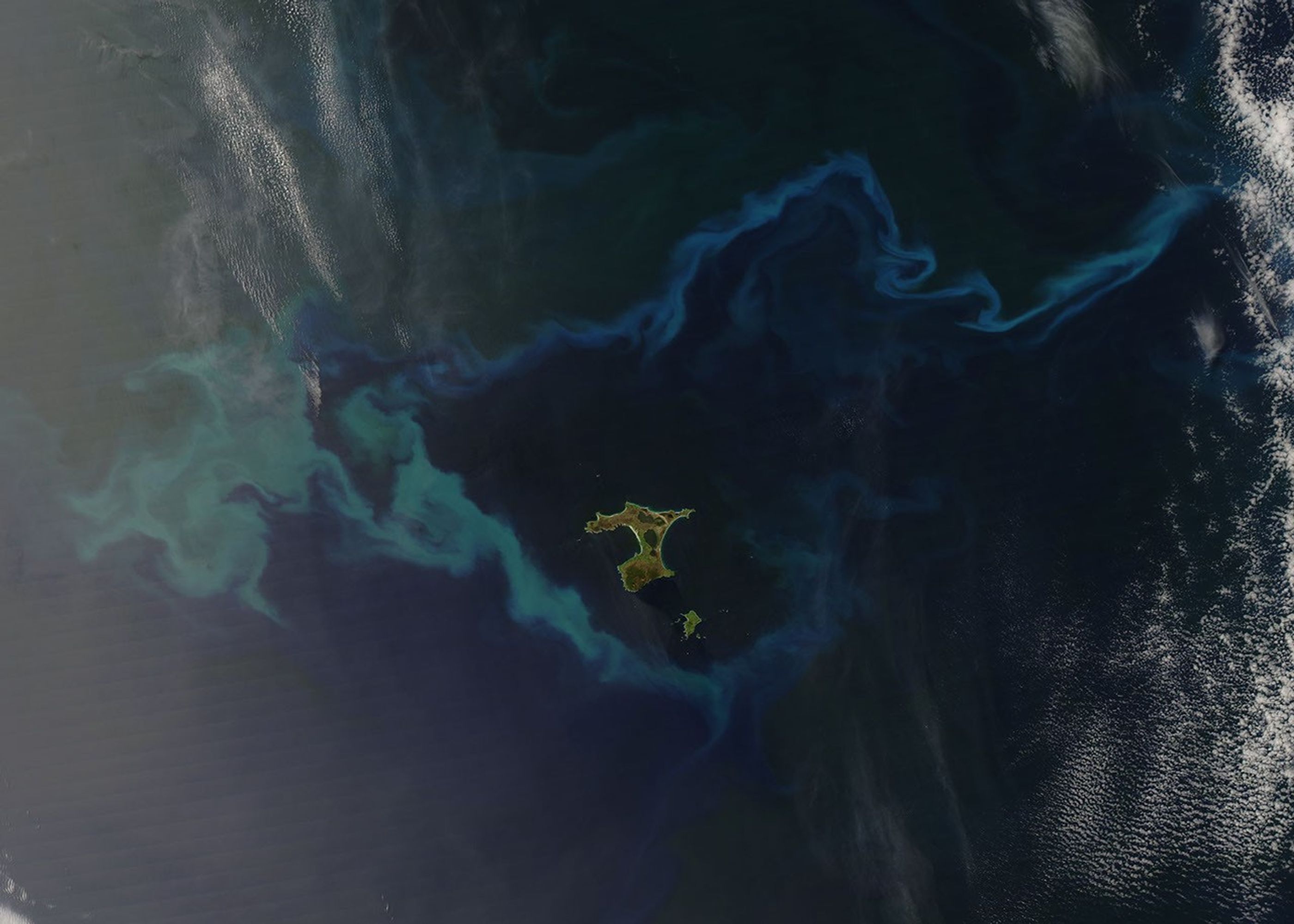


























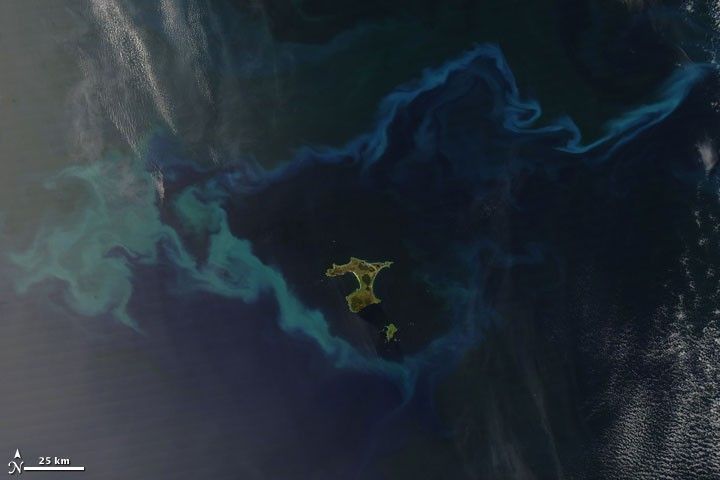
On November 15, 2008, a bloom of plant-like organisms known as phytoplankton encircled the Chatham Islands, which are in the southern Pacific Ocean about 800 kilometers east of New Zealand. Like plants, these organisms contain chlorophyll and other light-harvesting pigments for photosynthesis. The pigments change the way the surface of the ocean reflects and absorbs sunlight, creating colorful swirls that trace the location of the bloom. The very bright blue color of the bloom in the east suggests that it contained a kind of phytoplankton called coccolithophores. These plankton have a chalky (calcium carbonate) coating that is very reflective.
The Chatham Islands are at the eastern end of a feature called the Chatham Rise—an underwater plateau that stretches eastward from New Zealand’s South Island for about a thousand kilometers. The relatively shallow depth of the water over the rise, combined with its location at a subtropical front (a boundary where warm waters in the north mix with cold, sub-Antarctic waters to the south), make the area especially hospitable to phytoplankton blooms. The plankton support productive fisheries.
References & Resources
NASA image by Jeff Schmaltz, MODIS Rapid Response Team. Caption by Rebecca Lindsey.