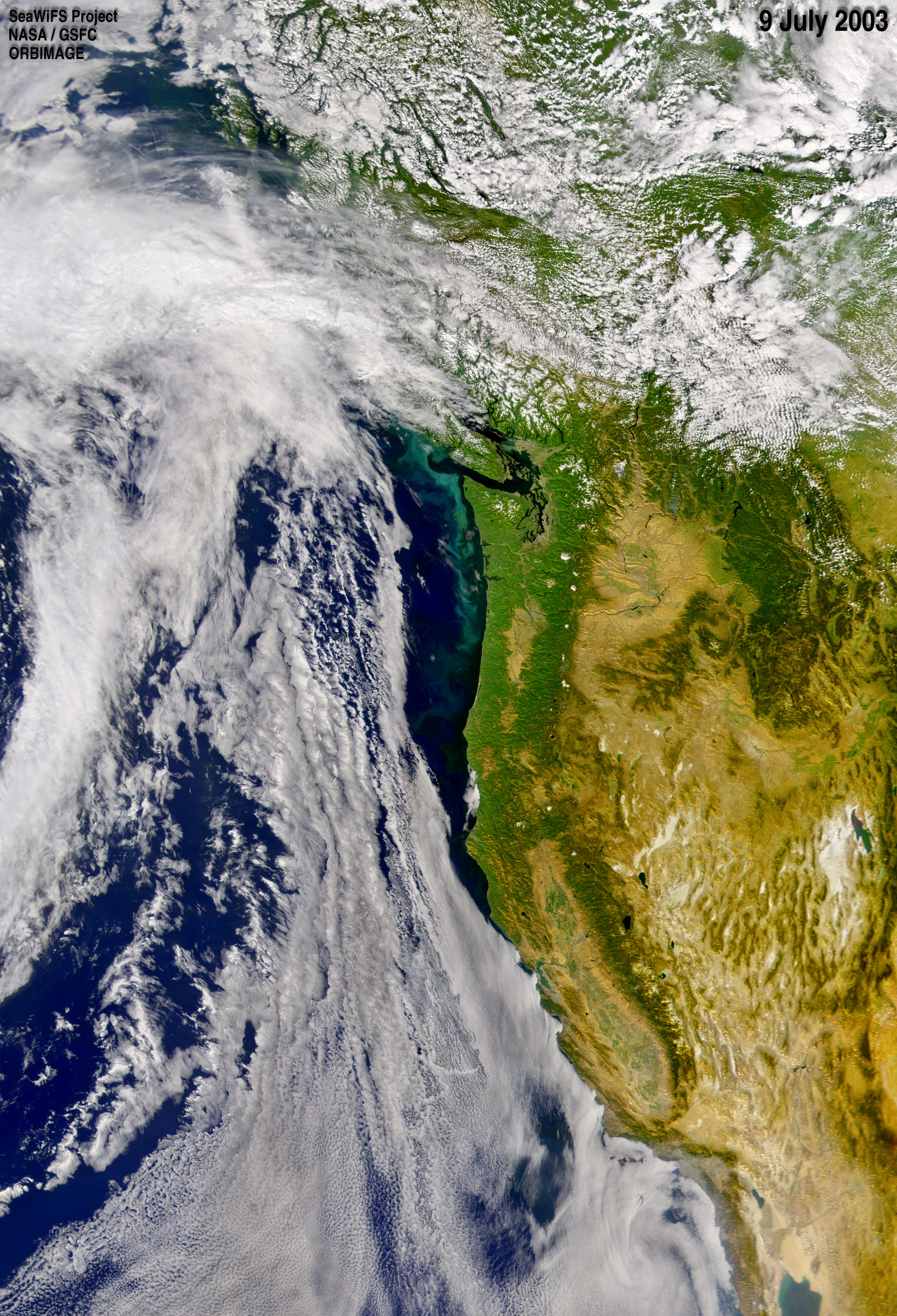



















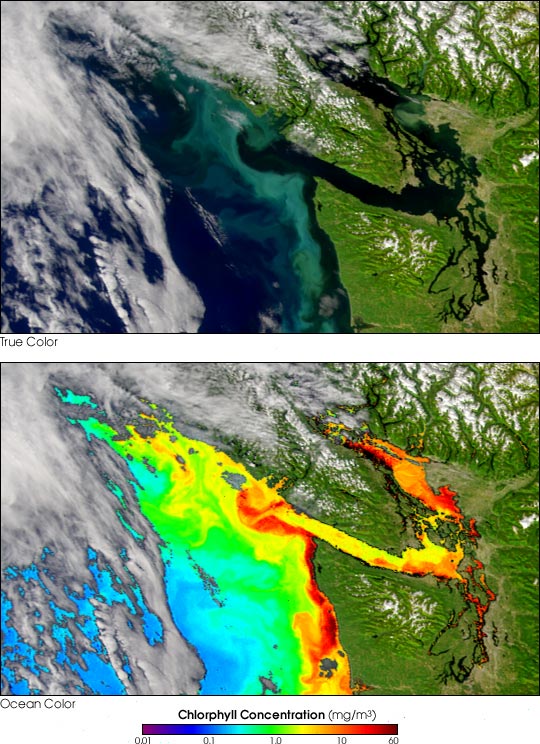
- True Color (1.3 MB JPEG)
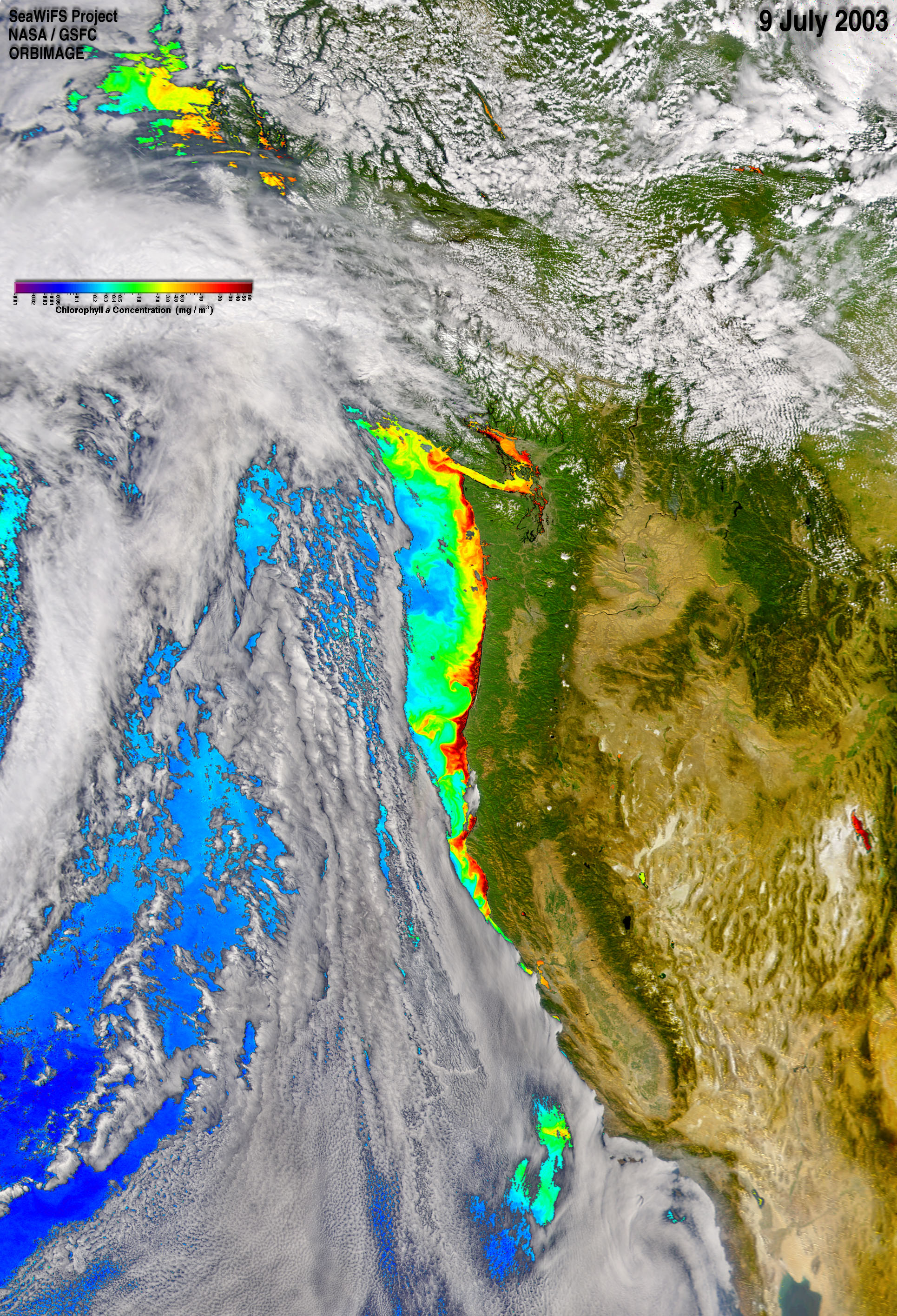
- Ocean Color (Chlorophyll Concentration) (2.5 MB JPEG)
The dark waters of Puget Sound (center) stand out in this image from July 9th, 2003. Although phytoplankton blooms often appear as areas of bright water from space, that is not always the case. Since light is absorbed by the chlorophyll in the tiny plants and converted to energy, thriving phytoplankton can turn ocean water almost black. Compare the true color image (top) with the chlorophyll concentration image (lower). Chlorophyll concentration is generally proportional to the amount of phytoplankton, and therefore the overall productivity, of ocean water. The highest concentrations of chlorphyll pigment are in the Sound and just along the coast. The brightgreen waters offshore contain a different community ofphytoplankton than the relatively dark waters inshore. For example, some species of phytoplankton have shells composed of calcite, a white mineral that can lead to innacurate chlorophyll measurements. (Bright aquamarine water often contains high concentrations of calcite.) The Sea-viewing Wide Field-of-view Sensor (SeaWiFS) instrument produces imagery like this to help scientists understand the role of the oceans in the carbon cycle.
References & Resources
Image courtesy the SeaWiFS Project, NASA/Goddard Space Flight Center, and ORBIMAGE
None