


















large images:
true color (1.1 MB JPEG)
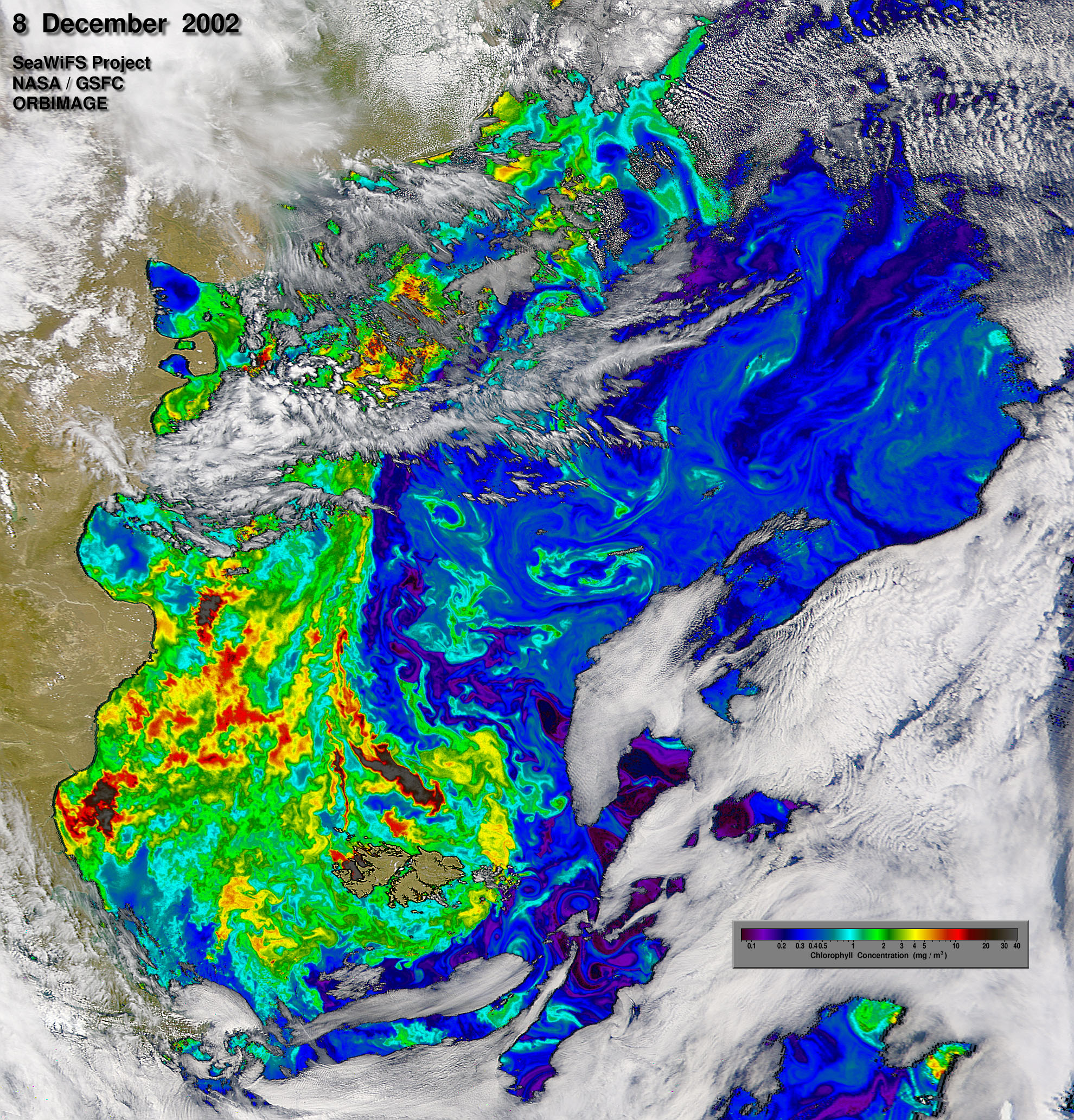
chlorophyll concentration (1.5 MB JPEG)
As summer rapidly approaches in the Southern Hemisphere,tiny marine plants are taking advantage of the long daysby growing vigorously. These images were acquired by the Sea-viewingWide Field-of-view Sensor (SeaWiFS) on December 8, 2002. The top true-colorimage shows how the masses of phytoplanktoncolor the water between the east coast of South America and the Falkland Islands.Green and black water indicates the presence of the highest concentrations ofphytoplantkon. Chlorophyll causes the green color. In black water, thephytoplankton are absorbing so much sunlight for food that only a little bit of lightis reflected back to space. Water tinted brown is filled with sediment flowing from river mouthsinto the sea. The brightest areas are probably coccolithophores—plants with calciumcarbonate shells that reflect light strongly.
The bottom image shows chlorophyll concentration, a measurement ofthe amount of phytoplankton. This area is particularly rich in phytoplanktonin part because of the convergence of the Malvinas and Brazil ocean currents.The turbulent interactions of these currents bring nutrient-rich water to theocean surface, allowing the phytoplankton to take full advantage of the long daysand strong sunlight. For more information, read ConvergenceZones: Where the Action Is.
References & Resources
Image courtesy the SeaWiFS Project, NASA/Goddard Space Flight Center, and ORBIMAGE
None