





























With an average temperature of 24 degrees Celsius (76 degrees Fahrenheit) in the month of February, the Mexican state of Sinaloa is a popular winter vacation spot. It is also ideal for winter crops. A sizable portion of Mexico’s corn is grown in Sinaloa, and much of that is winter corn. Planted in December and January, the corn is ready for harvest in May or June.
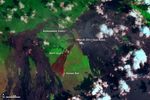
In February 2011, frigid winter weather crept south. Temperatures in Sinaloa dipped as low as -8 degrees Celsius (18 Fahrenheit) in a cold snap that lasted nearly a week. By the end of that week, frost had destroyed the corn crop. The damage appears in data acquired by the Moderate Resolution Imaging Spectroradiometer (MODIS) on NASA’s Terra satellite between February 18 and March 5, 2011. This image shows vegetation growth during that period compared with the average growth for the same time between 2000 and 2010.
The deep brown tones near the shore are areas that were growing significantly less than average. Sinaloa’s winter corn crop is mostly irrigated, so it normally grows much more vigorously than the surrounding vegetation. As a result, anything that impedes growth will appear to have a much greater impact on the irrigated crop, even though both natural vegetation and crops were damaged. This makes the damaged crops stand out in the comparison between average growing conditions and growth in February 2011.
According to the U.S. Department of Agriculture’s Foreign Agricultural Service, as much as 90 percent of Sinaloa’s winter corn crop—about 90,000 hectares—may have been damaged in the cold snap. Winter corn accounts for about 25 percent of Mexico’s total corn crop, and 75 percent of it is grown in Sinaloa.
References & Resources
- Trent, A. (2011, March). Mexico: Cold snap destroys winter corn in Sinaloa. In World Agricultural Production. United States Department of Agriculture Foreign Agricultural Service. Accessed March 14, 2011.
- Weather Underground. (2011, February). History for Los Mochis, Mexico. Accessed March 14, 2011.
NASA Earth Observatory image created by Jesse Allen, Earth Observatory, using data provided by Inbal Reshef, Global Agricultural Monitoring Project. Caption by Holli Riebeek.