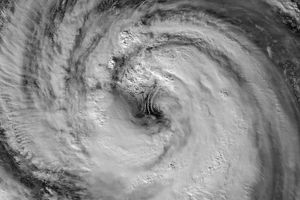
























Hurricane or tropical storm warnings extended from South Carolina to Maine as Hurricane Irene approached the U.S. East Coast on the afternoon of August 26, 2011. When the Moderate Resolution Imaging Spectroradiometer (MODIS) on NASA’s Aqua satellite acquired this image at 2:05 Eastern Daylight Time (18:05 UTC), Irene was a Category 2 storm with winds near 100 miles per hour (160 kilometers per hour). The storm is moving toward the North Carolina coast at 14 miles per hour (22 km/hr).
The image shows that Irene is a large storm. According to the National Hurricane Center, hurricane force winds extend 90 miles (150 kilometers) from the center of the storm, and tropical storm force winds reach 290 miles (465 km). This means that much of the densely populated urban corridor that extends from Washington, D.C. to Boston is at risk from the storm.
Current warnings are available from the National Hurricane Center.
References & Resources
- National Hurricane Center. (2011, August 26). Hurricane Irene public advisory. National Weather Service National Oceanic and Atmospheric Administration. Accessed August 26, 2011.
NASA image courtesy Jeff Schmaltz, MODIS Rapid Response Team at NASA GSFC. Caption by Holli Riebeek.