























To the untrained eye, Antarctica may look like a giant piece of solid ice that rarely changes, but scientists studying the continent have long known better. The icy surface is dynamic, with glaciers and “streams” of ice flowing toward the ocean. Underneath the ice, the picture is equally complex. Thick masses of ice may appear to rest on solid land, but they actually float on water, with scattered islands bumping into their underbellies. Well inland from these ice shelves, the terrain includes mountain ranges and watery basins buried in ice.
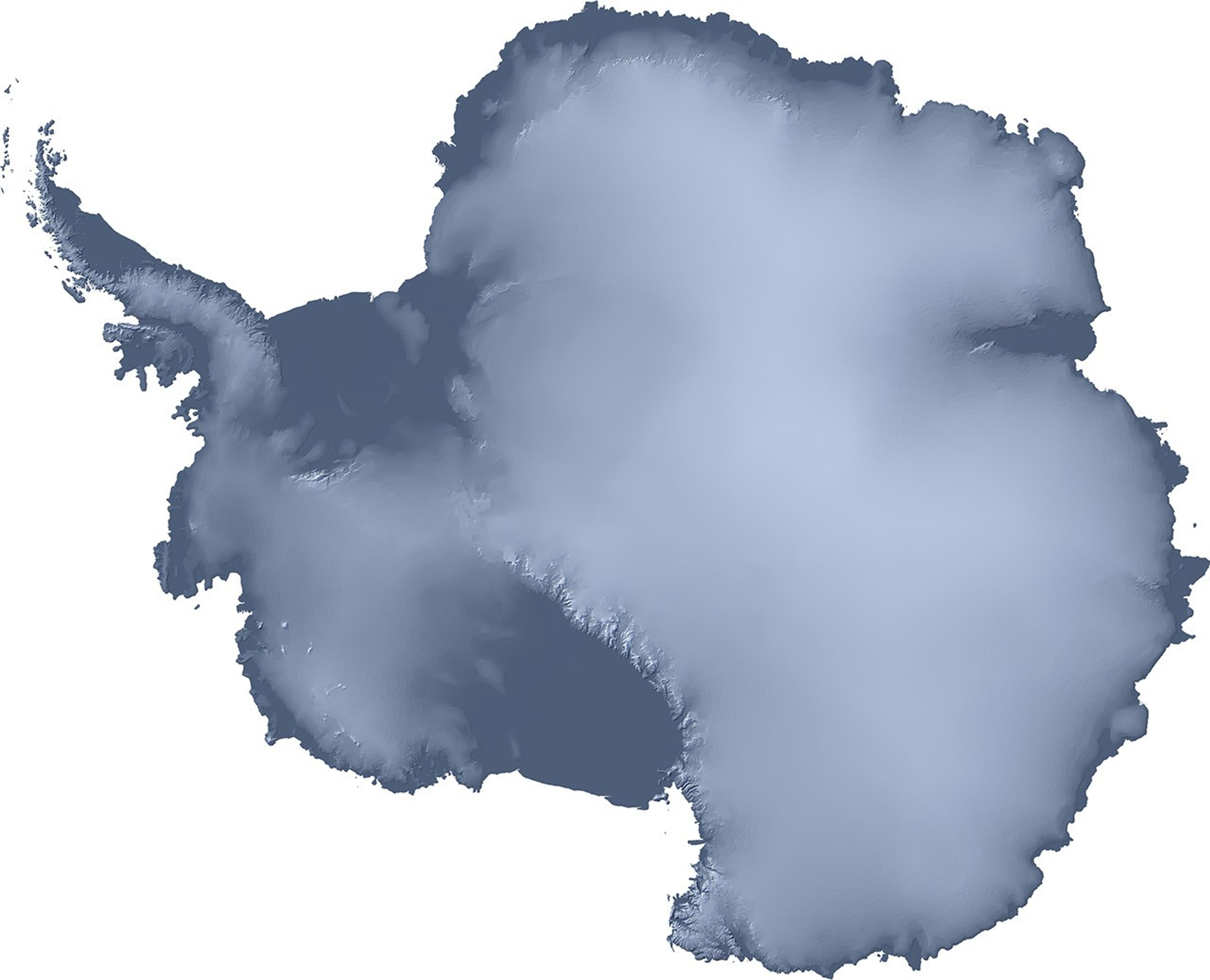
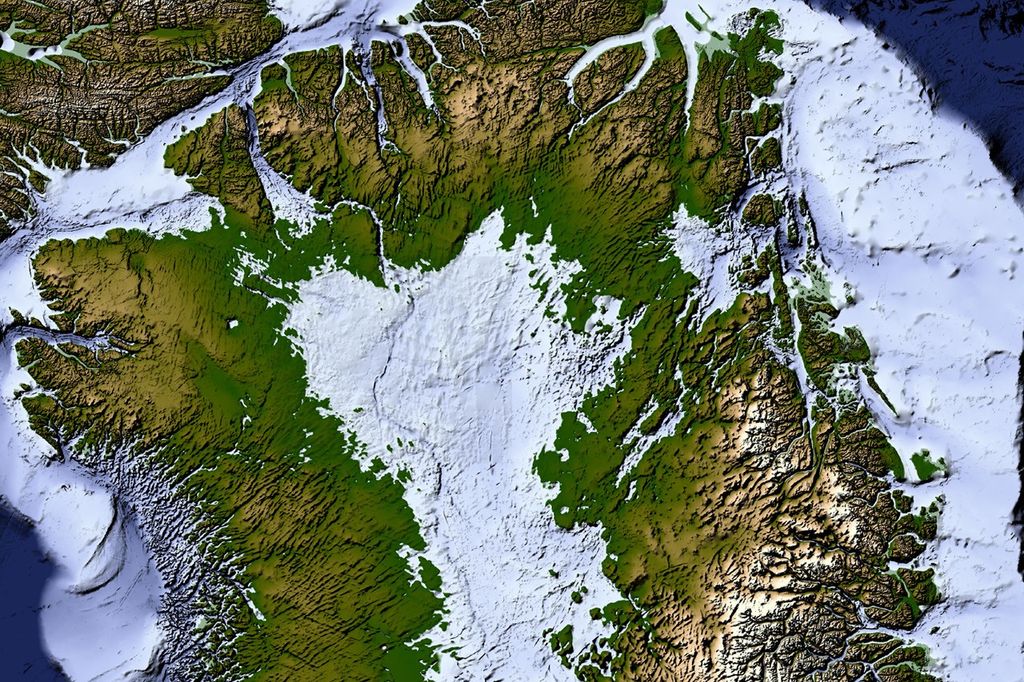
Although temperatures may be unimaginably cold on the surface of Antarctica’s ice, they are warmer under the ice. This relative warmth results partly from friction caused by the grinding of ice over the land surface, and while it’s hardly warm enough to be comfortable in shirtsleeves, it is warm enough to allow pools of water to form. As of spring of 2007, glaciologists had discovered more than 140 subglacial lakes lurking under Antarctica’s ice. Their locations are marked with dots on this map.
The white dots show the locations of several lakes that garnered a lot of scientific attention in 2007. In 2006, Helen Amanda Fricker, a geophysicist at Scripps Institution of Oceanography, was studying ice elevations in Antarctica when she noticed a dramatic change in the ice surface elevation over a three-year period. About a kilometer below the ice surface, she realized, a lake was draining. She and her collaborators ultimately found a complex network of lakes under West Antartica’s Mercer and Whillans Ice Streams. These interconnected lakes fill and drain in response to pressure from the overlying ice.
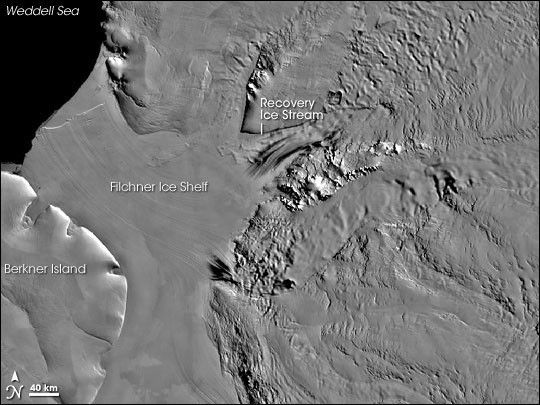
Also that year, another team of researchers published research describing subglacial lakes near the Recovery Ice Stream, an 800-kilometer-long river of ice that drains part of the East Antarctic Ice Sheet. The scientists explained the importance of these subglacial lakes to ice stream flow. According to the team, the Recovery Ice Stream “slips on the banana peel” of these subglacial lakes and accelerates. The slippage explained the previously puzzling fact that in some places, the ice stream flowed faster over flat areas than it did over steep slopes.
If Antarctica’s ice streams never left the continent, their behavior would be an interesting but abstract question concerning few people outside the scientific community. Ice streams, however, can affect sea level by delivering ice to the ocean. Each year, the Recovery Ice Stream deposits about 35 billion tons of ice into the ocean. Thoroughly understanding ice stream behavior enables scientists to develop more accurate models of future sea level.
To read more about these discoveries, see Something under the Ice is Moving on the NASA Earth Observatory.
- Fricker, H. A., Scambos, T., Bindschadler, R., and Padman, L. (2007). An active subglacial water system in West Antarctica mapped from space. Science, 315, 1544-1548.
- Bell, R. E., Studinger, M., Shuman, C. A., Fahnestock, M. A., and Joughin, I. (2007). Large subglacial lakes in East Antarctica at the onset of fast-flowing ice streams. Nature, 445, 904-907.
- National Geographic Society. (2002). Antarctica: A new age of exploration. National Geographic, 201(2), map supplement. February 2002.
References & Resources
NASA map by Robert Simmon, based on data from the Radarsat Antarctic Mapping Project, Ted Scambos, Chris Shuman, and Martin J. Siegert.