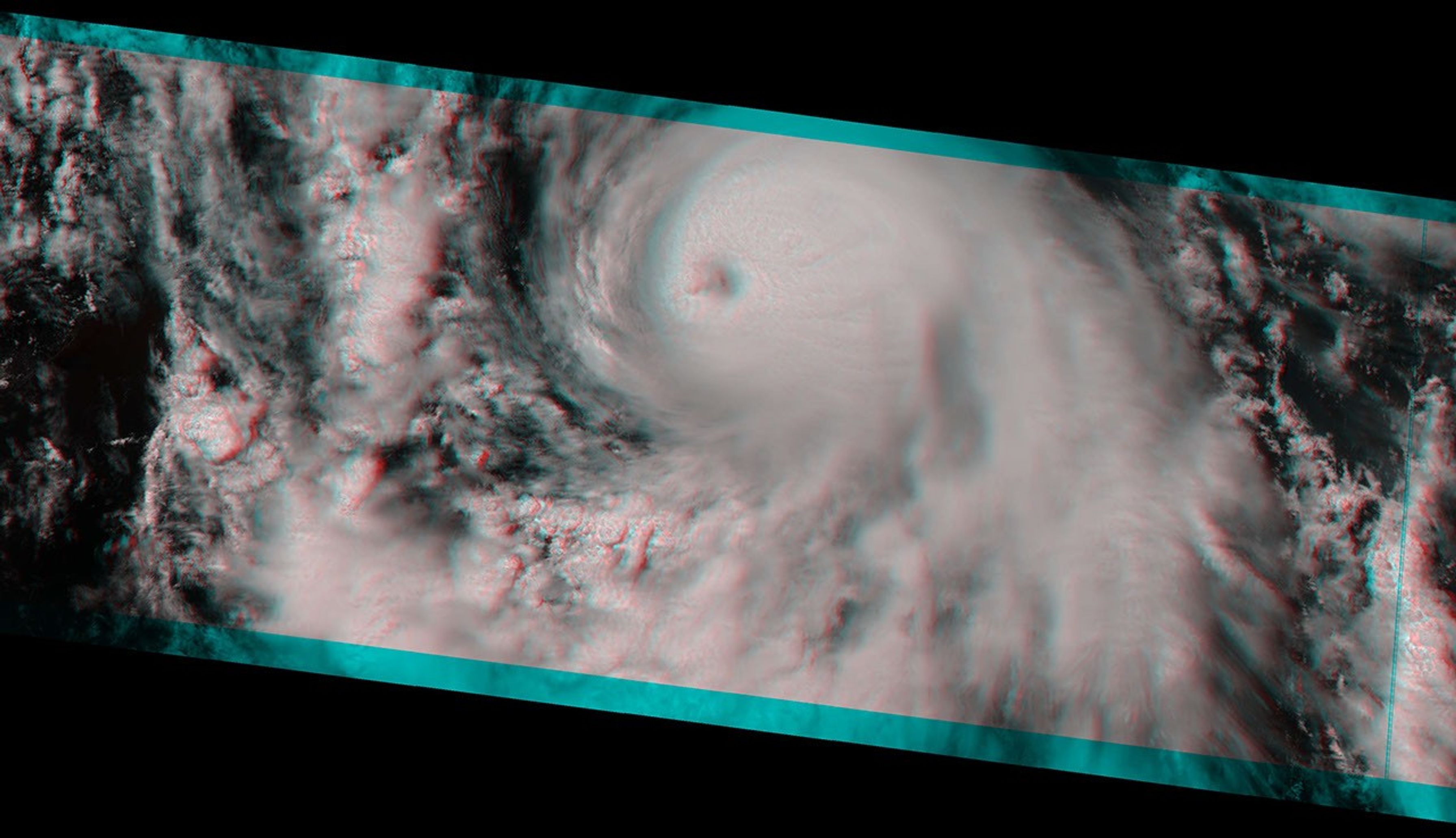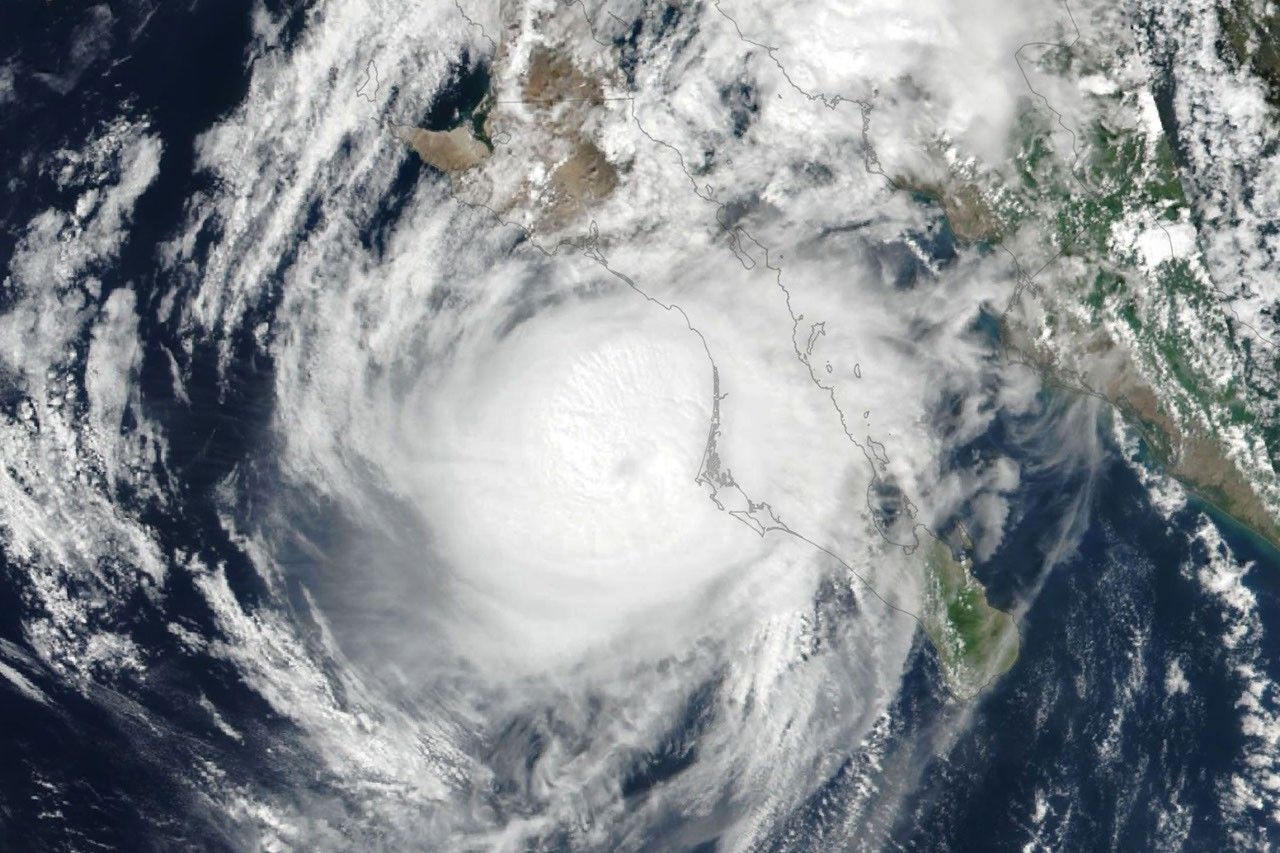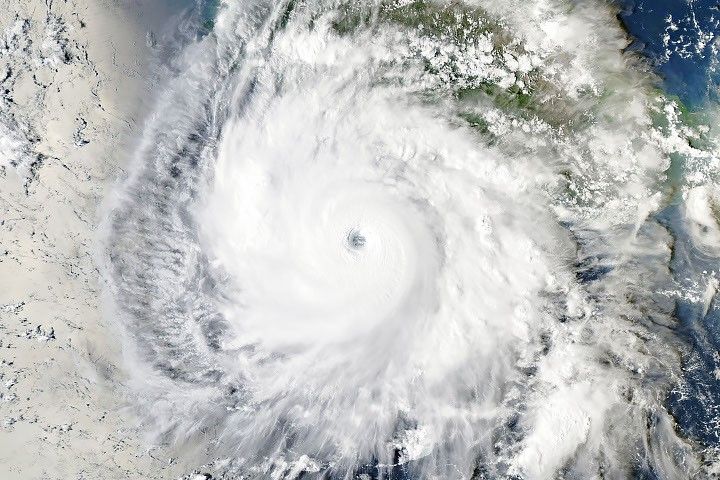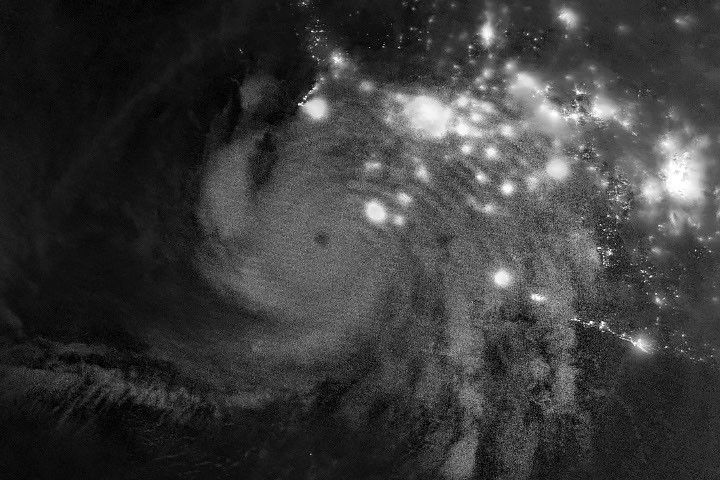





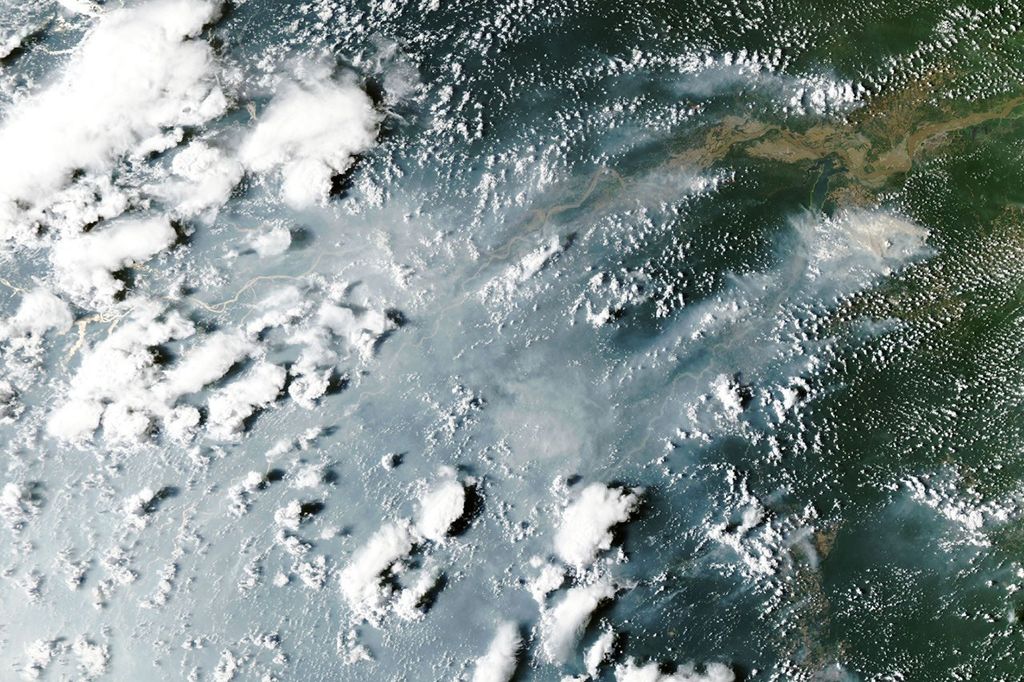
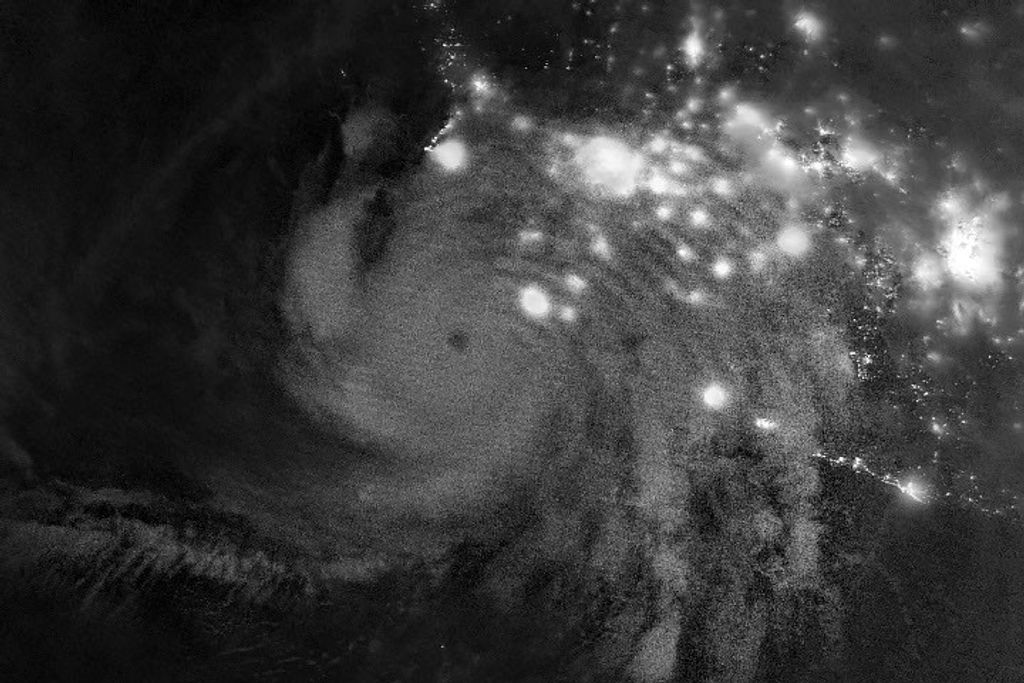
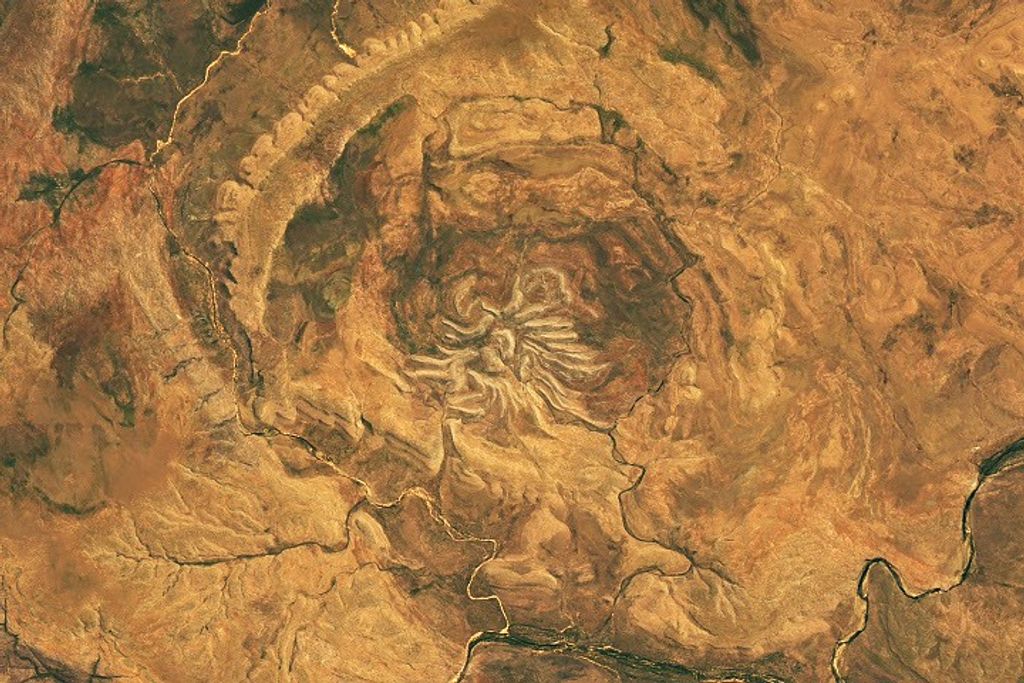



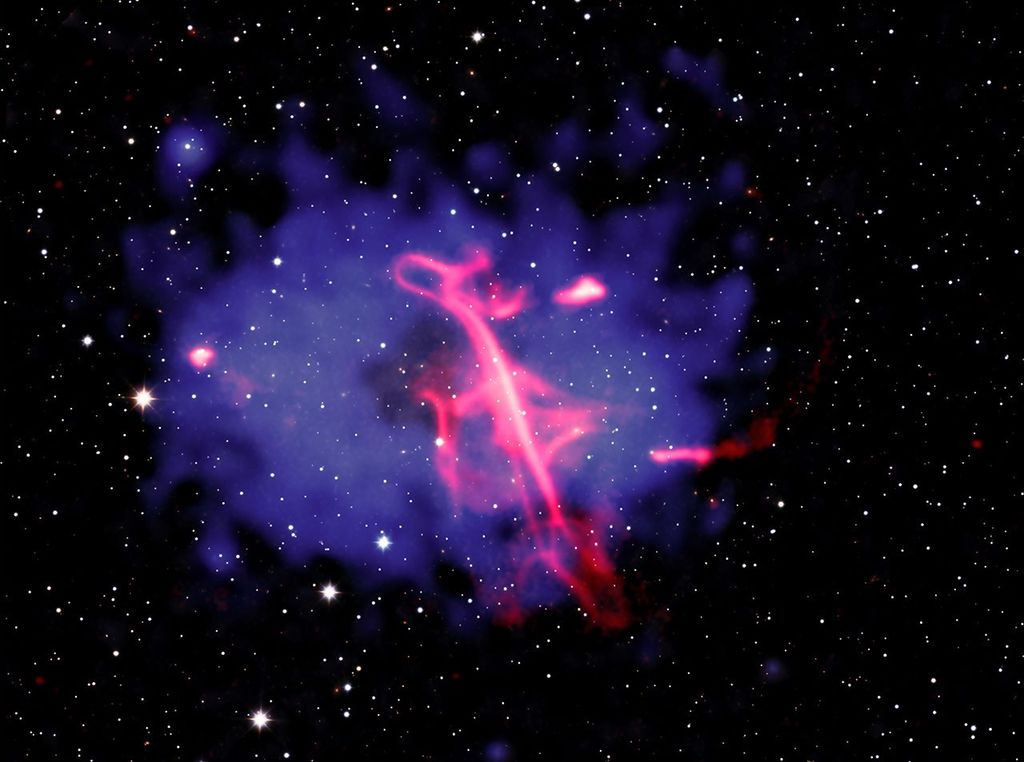











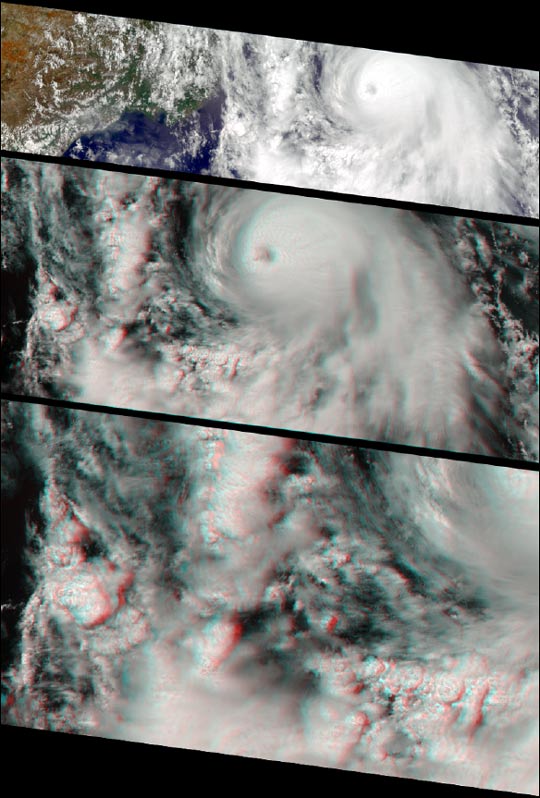
With winds reaching 155 mph, this year’s Hurricane Carlotta became thesecond strongest eastern Pacific June hurricane on record. These imagesfrom MISR show the hurricane on June 21, the day of its peak intensity.The pictures are oriented so that the spacecraft's flight path is fromleft to right; north is at the left.
The top image is a color view from MISR’s vertical (nadir) camera,showing Carlotta's location in the eastern Pacific Ocean, about 500 kmsouth of Puerto Vallarta, Mexico.
The middle image is a stereoscopic “anaglyph” created using MISR’s nadircamera plus one of its aftward-viewing cameras, and shows a closer viewof the area around the hurricane. Viewing with red/blue glasses (redfilter over the left eye) is required to obtain a 3-D stereo effect.
Near the center of the storm, the eye is about 25 km in diameter andpartially obscured by a thin cloud. About 50 km to the left of the eye,the sharp drop-off from high-level to low-level cloud gives a sense ofthe vertical extent of the hidden eye wall. The low-level cloud isspiraling counterclockwise into the center of the cyclone. It then risesin the vicinity of the eye wall and emerges with a clockwise rotation athigh altitude. Maximum surface winds are found near the eye wall.
The bottom stereo image is a zoomed-in view of convective clouds in thehurricane's spiral arms. The arms are breeding grounds for severethunderstorms, with associated heavy rain and flooding, frequentlightning, and tornadoes. Thunderstorms rise in dramatic fashion toabout the same altitude as the high cloud near the hurricane's center,and are made up of individual cells that are typically less than 20 kmin diameter. This image shows a number of these cells, some fairlyisolated, and others connected together. Their three-dimensionalstructure is clearly apparent in this stereo view.
MISR was built and is managed by NASA's Jet Propulsion Laboratory,Pasadena, CA, for NASA's Office of Earth Science, Washington, DC. TheTerra satellite is managed by NASA's Goddard Space Flight Center,Greenbelt, MD. JPL is a division of the California Institute ofTechnology.
For more information: http://www-misr.jpl.nasa.gov
References & Resources
Image NASA/GSFC/JPL, MISR Science Team