


























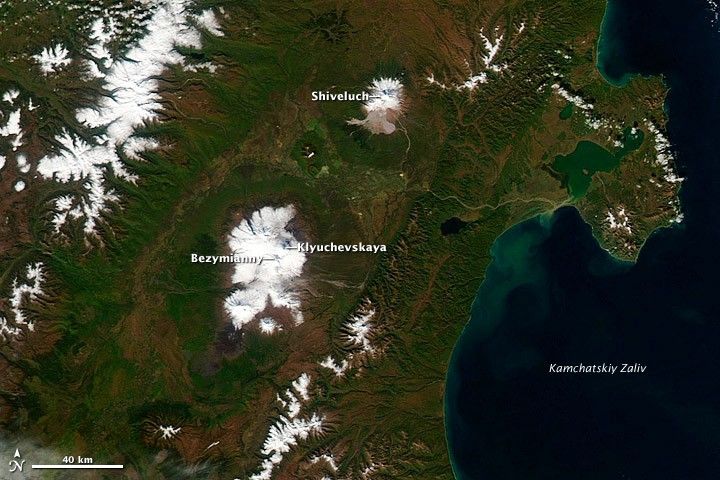
October 1-1, 2012
From Green to Brown
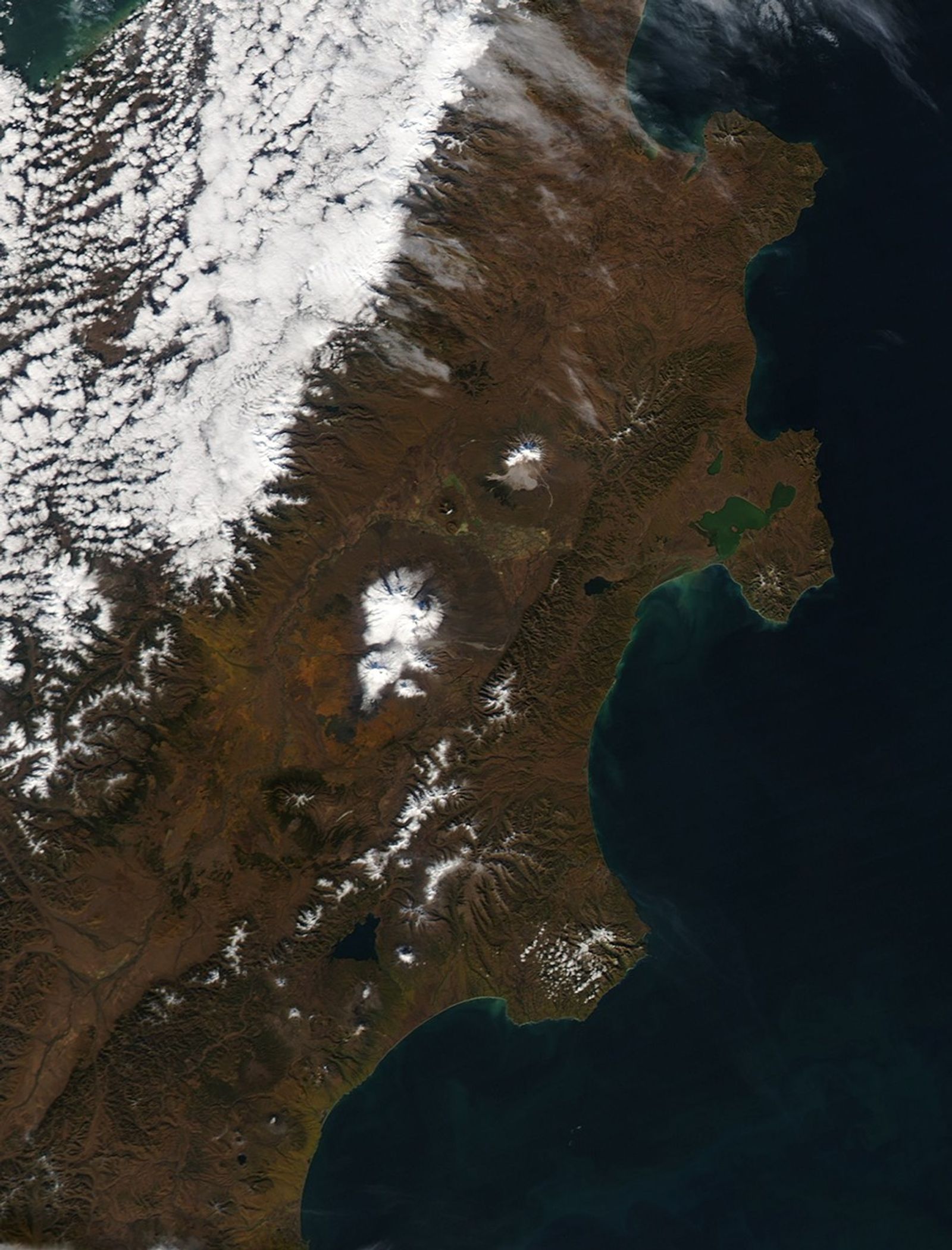
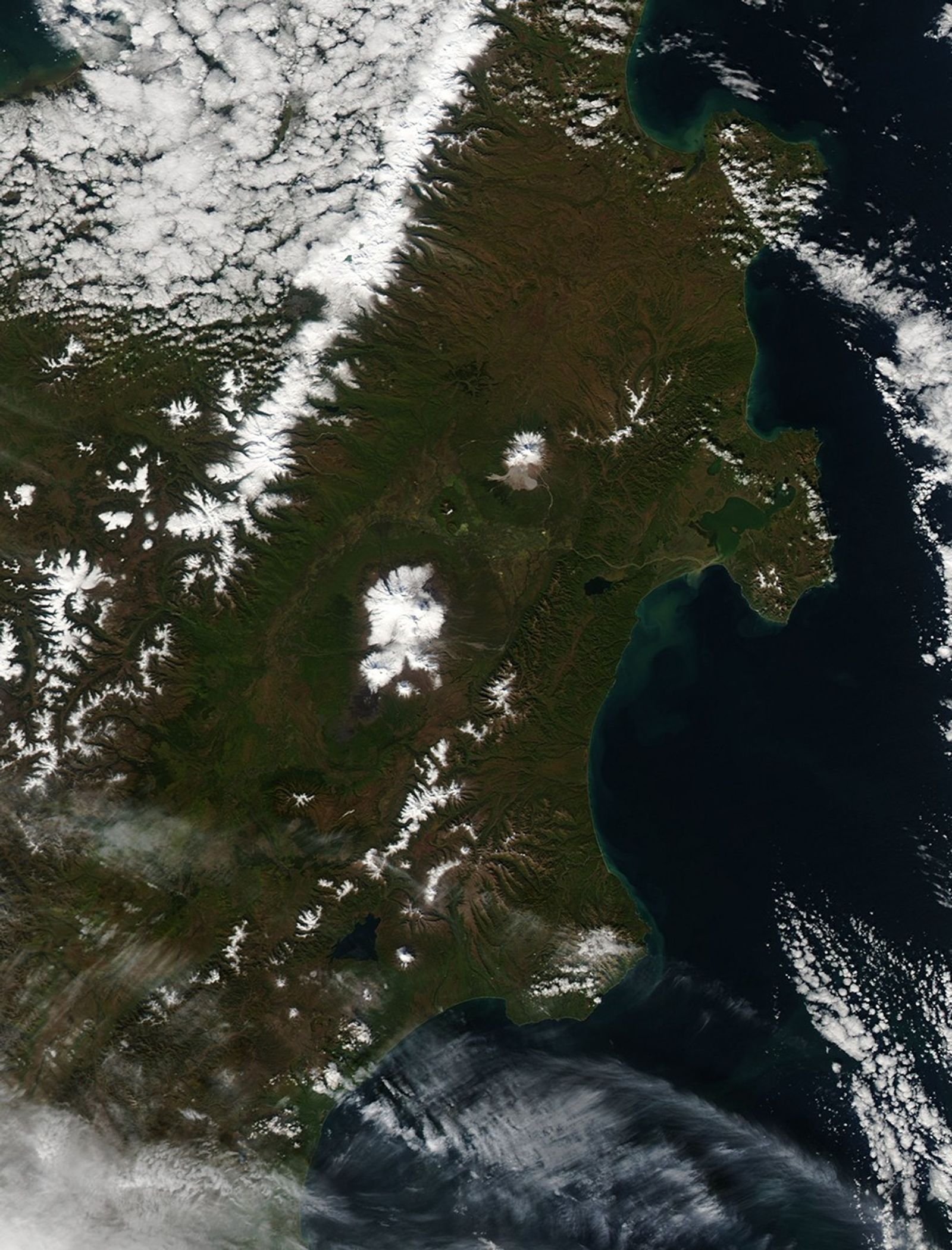
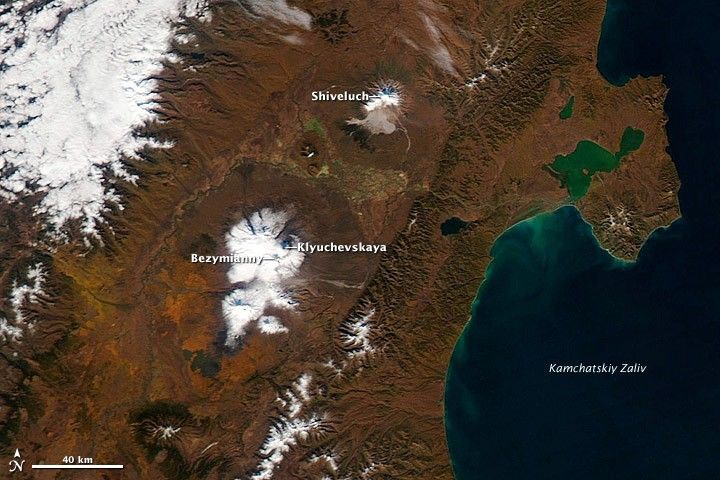
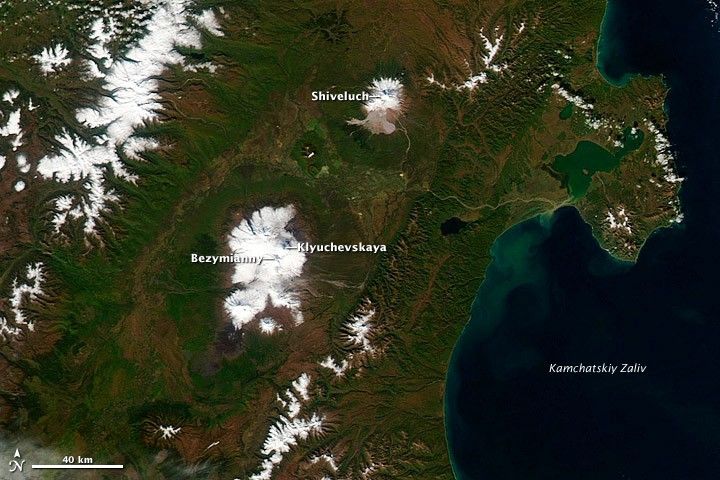
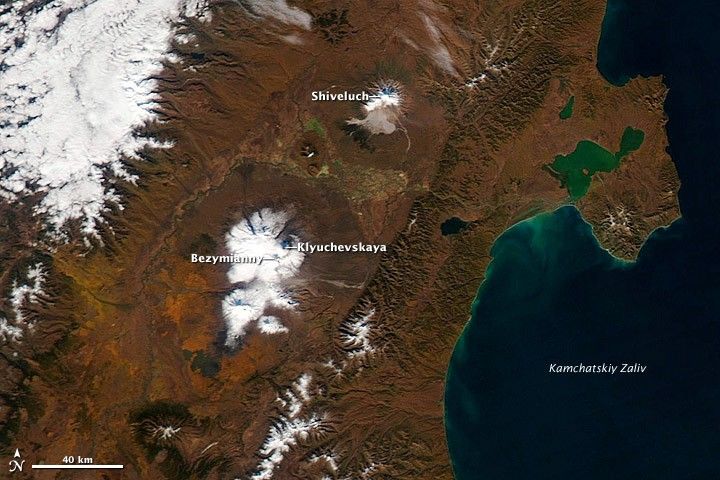
With temperatures dropping in the northern hemisphere, fall colors swept across the taiga forests of the Kamchatka Peninsula in September and October 2012. Within a span of 11 days, the forests of far eastern Siberia went from green—with only a slight hint of fall color—to a deep brown. Common tree species in the area include Erman's birch (Betula ermanii), Japanese stone pine (Pinus pumila), and Dahurian larch (Larix daurica).
The Moderate Resolution Imaging Spectroradiometer (MODIS) on NASA’s Aqua satellite captured the fall transformation in this pair of images from October 1 (top) and September 20, 2012. The forests shown are located near the snow-covered peaks of Bezymianny, Klyuchevskaya, and Shiveluch—all active volcanoes.
In the fall, leaves change colors as they lose chlorophyll, the molecule that plants use to synthesize food. Chlorophyll makes plants appear green because it absorbs the red and blue light from sunlight as it strikes leaf surfaces. However, chlorophyll is not a stable compound and plants have to continuously synthesize it, a process that requires ample sunlight and warm temperatures. So when temperature drop and days shorten in autumn, levels of chlorophyll do as well.
As concentrations of chlorophyll drop, the green color of leaves fades away, presenting an opportunity for other pigments within leaves—carotenoids and anthocyanins—to show off their colors. Carotenoids absorb blue-green and blue light, so in the absence of chlorophyll, they cause leaves to appear yellow. Anthocyanins absorb blue, blue-green, and green light, so light reflecting off the pigment appears red.
The range and intensity of autumn colors is strongly affected by the weather. Both low temperatures and bright sunshine destroy chlorophyll. So if the weather stays above freezing, it is easier for anthocyanins to form. Dry weather, which increases the sugar concentration in sap, also increases the amount of anthocyanin. So the brightest autumn colors occur when dry, sunny days are followed by cool, dry nights.
Further Reading
- NASA Earth Observatory. (2010, October 16) Fall colors in the Allegheny Mountains.
- NASA Earth Observatory. (2008, December 3) Fall colors in Pennsylvania.
References & Resources
- University of Wisconsin. (n.d.) The chemistry of autumn colors. Accessed October 2, 2012.
- USDA Forest Service. (n.d.) Why leaves change color. Accessed October 2, 2012.
- World Wildlife Foundation. (n.d.) Kamchatka taiga & grasslands. Accessed October 2, 2012.
NASA Earth Observatory image by Robert Simmon, courtesy of the LANCE/EOSDIS MODIS Rapid Response Team, GSFC. Caption by Adam Voiland.