
















March 18, 2014
Dust Storm Blows Across Texas
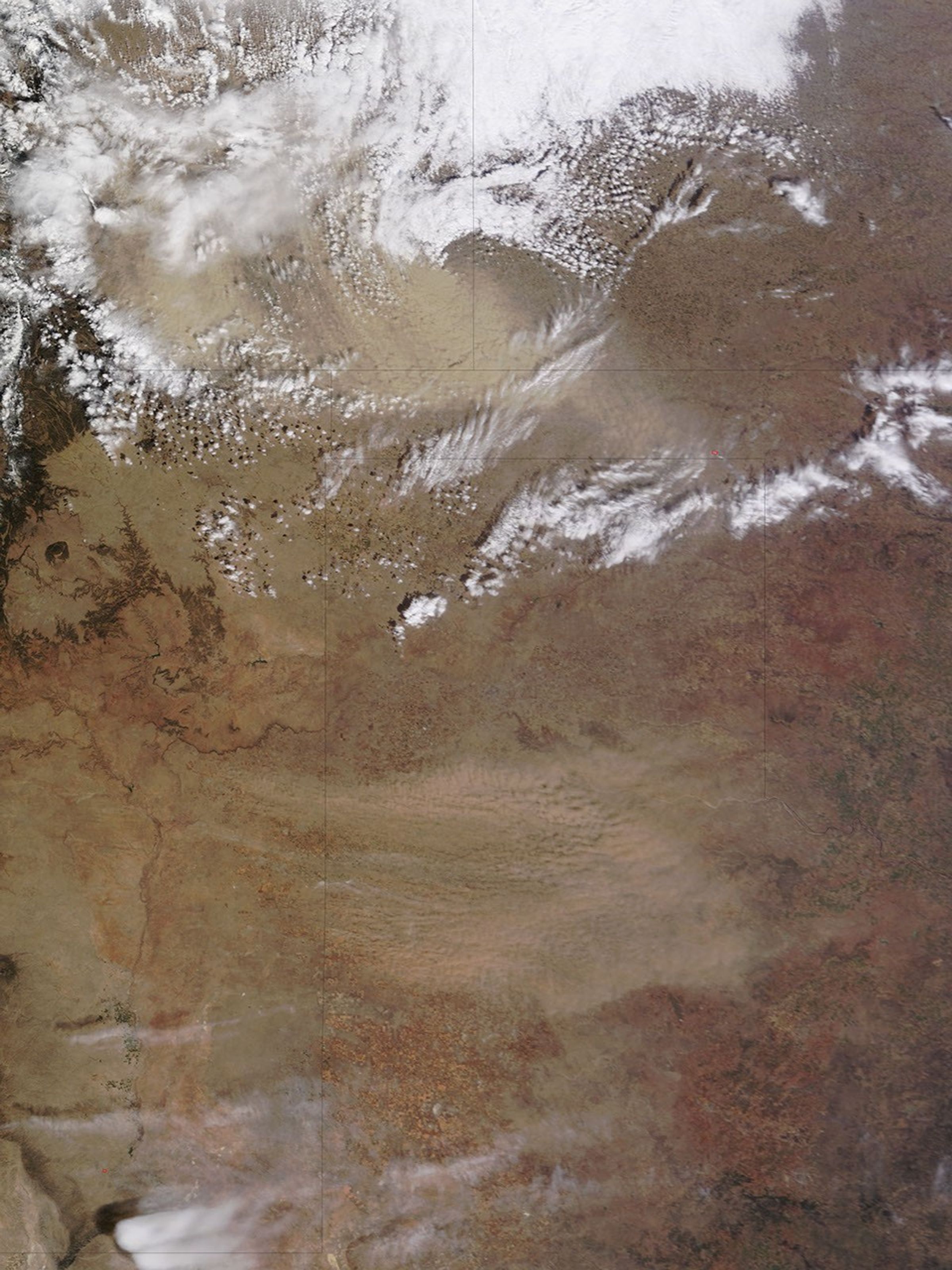
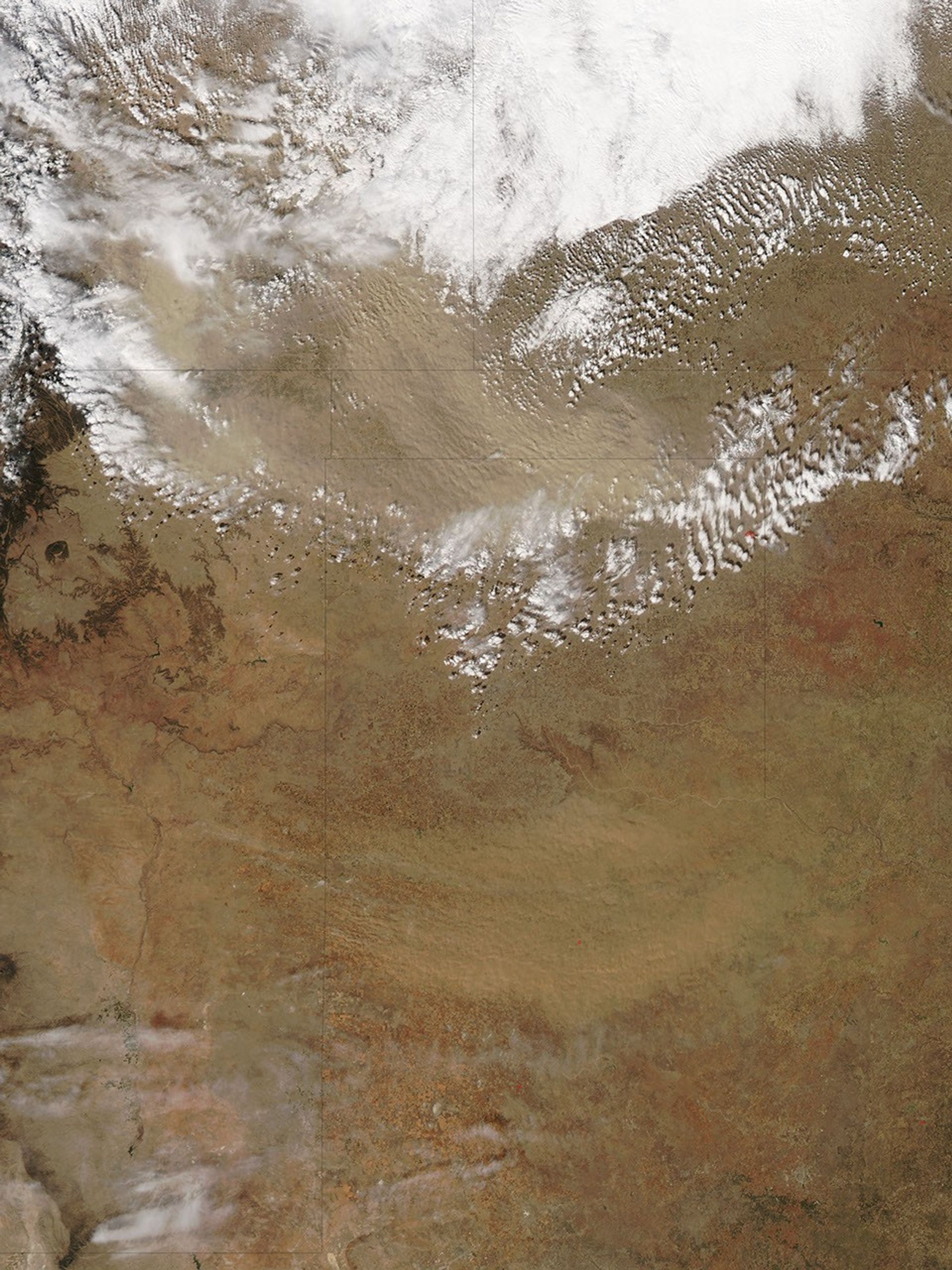
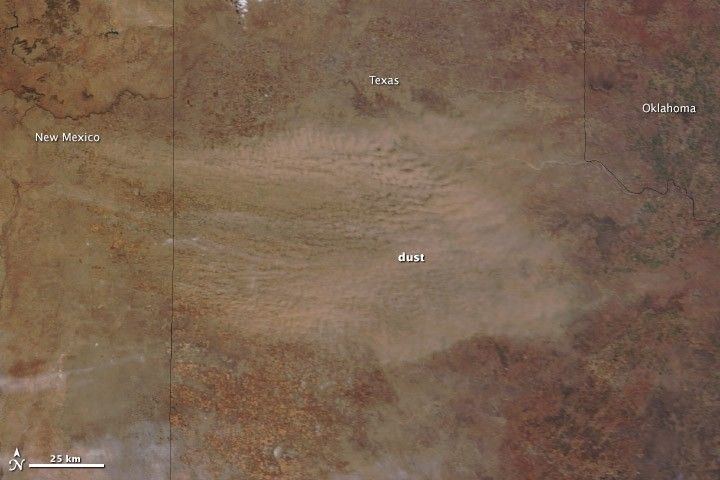
A low-pressure system brought strong winds—gusting to 55 miles (85 kilometers) per hour—to the Southern Plains on March 18, 2014. The winds picked up exposed soil from the parched landscape, resulting in a large dust storm that covered parts of Colorado, Kansas, Oklahoma, New Mexico, and Texas. The storm was the second in the past week to sweep across the region with similar wind patterns.
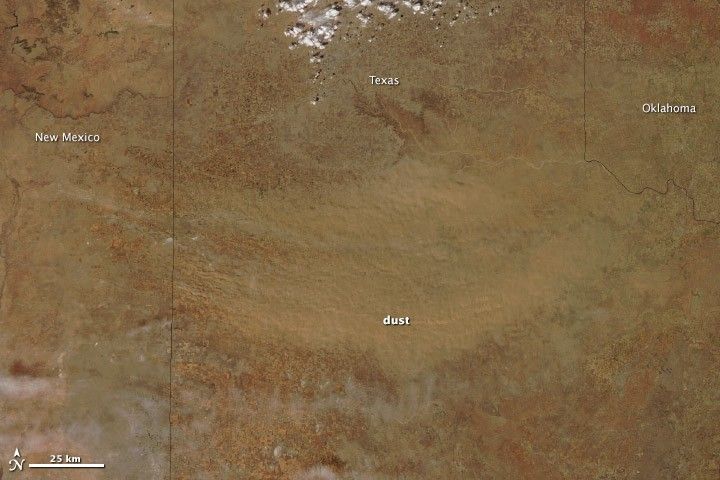
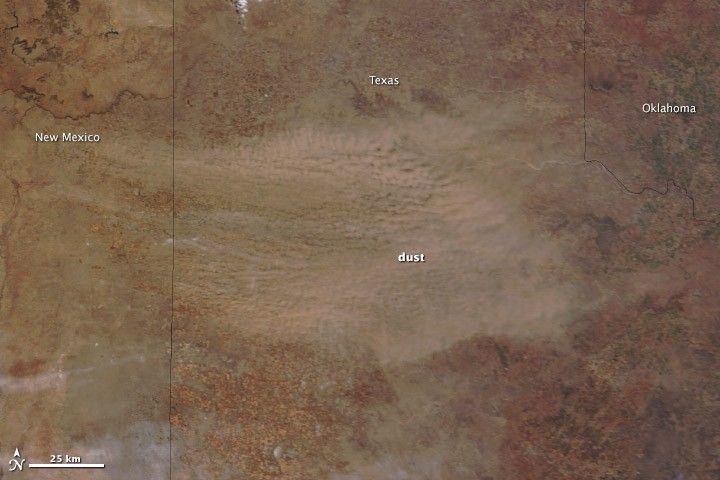
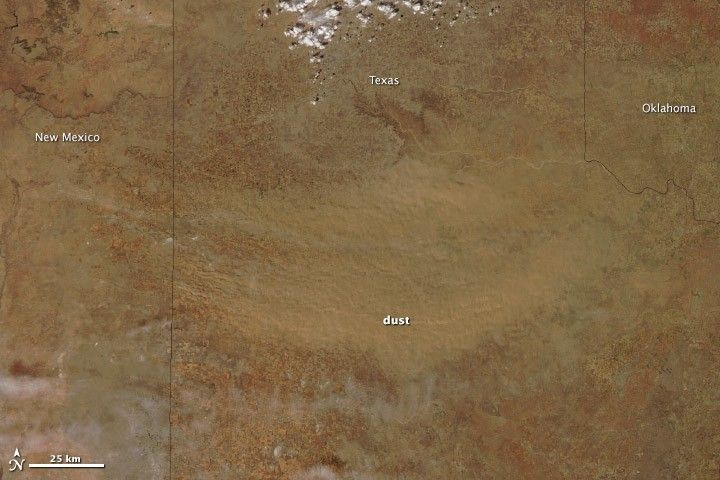
The Moderate Resolution Imaging Spectroradiometer (MODIS) acquired these images of the storm on March 18. The top image shows the dust over the Texas Panhandle at 1:15 p.m. Central Daylight Time from the MODIS instrument on NASA’s Terra satellite. The second image, from the Aqua satellite, was acquired at 2:50 p.m. Comparing the two images shows the development of the storm through the day. The differences in color are due to changes in lighting.
The dust in this image originated in New Mexico. The plume stretched across about 175 kilometers (110 miles) in the top image, but was somewhat dissipated a couple of hours later. The large images show dust across a wider area, including a second large dust plume in southern Colorado, Kansas, and Oklahoma.
The storm was one of three that MODIS observed this week. On March 16, a massive storm blew out of China’s Gobi Desert, and by March 18, the dust cloud reached northeastern China. MODIS also acquired an image of plumes of dust blowing off Baja California on March 16.
Globally, dust is one the most abundant aerosols in the atmosphere. Agriculture, drought, and deforestation all increase dust in the atmosphere, though the largest dust storms typically occur over deserts, particularly where there are dried rivers or lakebeds made up of fine soil.
References & Resources
- AccuWeather.com (2014, March 19) Photos: Texas towns engulfed by intense dust storm. Accessed March 19, 2014.
- CIMMS Satellite Blog (2014, March 18) Widespread blowing dust across the south-central US. Accessed March 20, 2014.
- Discover (2014, March 18) Here we go again: Massive dust storms pummel High Plains. Accessed March 19, 2014.
- National Weather Service Forecast Office Lubbock, TX (2014, March 11) Two rounds of wind and dust. Accessed March 19, 2014.
- NASA Earth Observatory (2010, November 2) Aerosols: Tiny particles, big impact.
- NBC News (2014, March 19) West Texas hit with 1,000-foot-high dust storm. Accessed March 19, 2014.
- United States Drought Monitor (2014, March 11) National drought summary for March 11, 2014. Accessed March 19, 2014.
- The Wide World of SPoRT (2014, March 18) RGB dust imagery via VIIRS and MODIS shows five-state impact. Accessed March 20, 2014.
NASA images courtesy Jeff Schmaltz, LANCE/EOSDIS MODIS Rapid Response Team at NASA GSFC. Caption by Holli Riebeek.