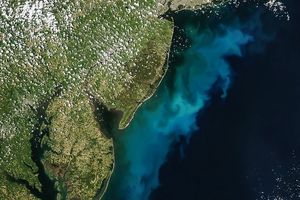















It is with great pleasure that the Sea-viewing Wide Field-of-view Sensor(SeaWiFS) Project announces that September 18, 2000, was the third anniversary of the start of SeaWiFS observations of this remarkable planet called Earth. This SeaWiFS image of our world depicts the global biosphere—the ocean's long-term average phytoplankton chlorophyll concentration acquired between September 1997 and August 2000 combined with the SeaWiFS-derived Normalized Difference Vegetation Index over land during July 2000.
This image shows where there is more or less plant life on our planet. On land, the dark greens show where there is abundant vegetation and tans show relatively sparse plant cover. In the oceans, red, yellow, and green pixels show dense phytoplankton blooms while blues and purples show where there is very little of the microscopic marine plant.
This along with many other images and data sets acquired during the first three years of this mission can be found on the SeaWiFSwebsite
References & Resources
Provided by the SeaWiFS Project, NASA/Goddard Space Flight Center, and ORBIMAGE