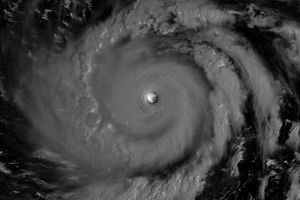





























On August 1, 2016, NASA’s International Space Station–Rapid Scatterometer (ISS-RapidScat) observed Typhoon Nida approaching southern China. The image (top) shows wind speed and direction near the ocean surface, as measured from space shortly after 09:00 Universal Time (5 p.m. local time). RapidScat sends out microwave pulses that reflect off the ocean’s surface back into the sensor. The choppier the water, the stronger the corresponding signal. Arrows indicate the direction of the wind. Colors indicate the range of speeds, with lighter shades representing stronger surface winds.
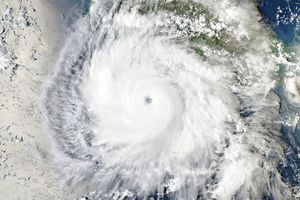
At 03:05 UTC (11:05 a.m. local time) on August 2, the Moderate Resolution Imaging Spectroradiometer (MODIS) on NASA’s Terra satellite acquired the second, natural-color image of the storm after it had made landfall near the Dapeng Peninsula, northeast of Hong Kong. According to news reports, Hong Kong received heavy rain and strong winds—canceling more than 180 flights—but there was no major damage.
References & Resources
- Hong Kong Observatory (2016, July 29) Landing east or west? Accessed August 2, 2016.
- South China Morning Post (2016, August 1) Typhoon Nida: Hong Kong locked down by year’s first No 8 storm. Accessed August 2, 2016.
- The Weather Channel (2016, August 2)Typhoon Nida Crossing Southern China After Making a Direct Hit on Philippines. Accessed August 2, 2016.
NASA Earth Observatory map by Joshua Stevens using RapidScat data from the Jet Propulsion Laboratory . Caption by Kathryn Hansen.