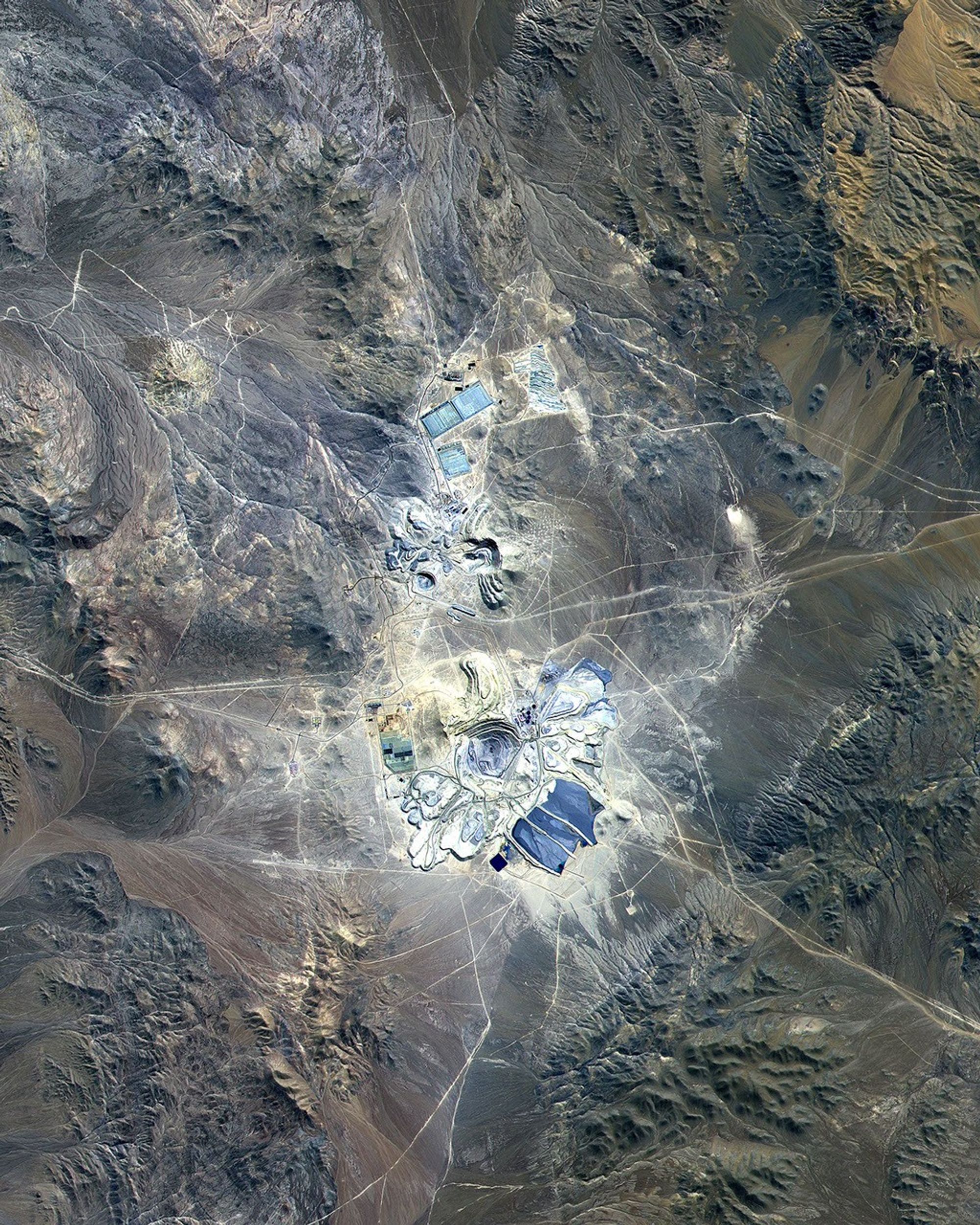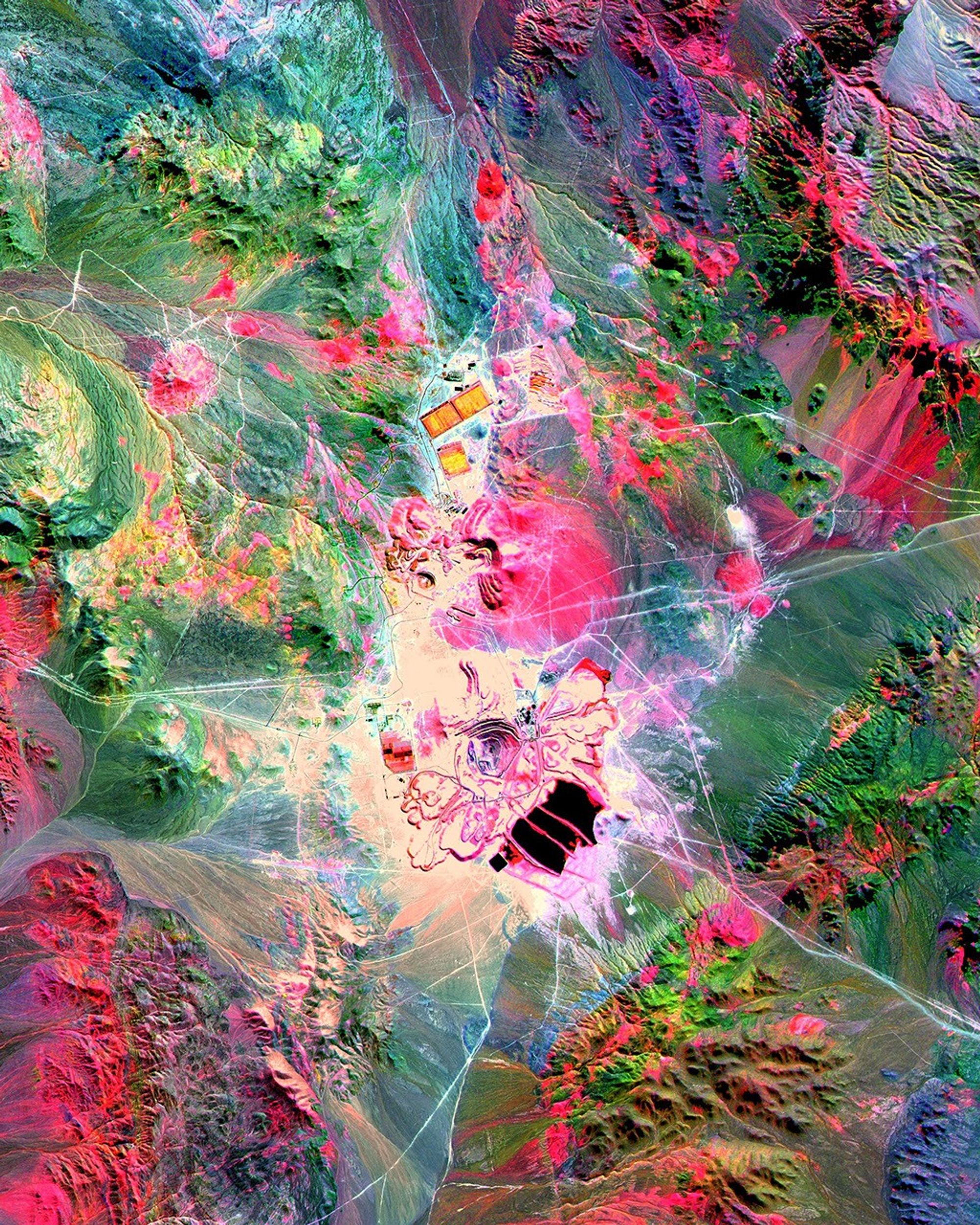




















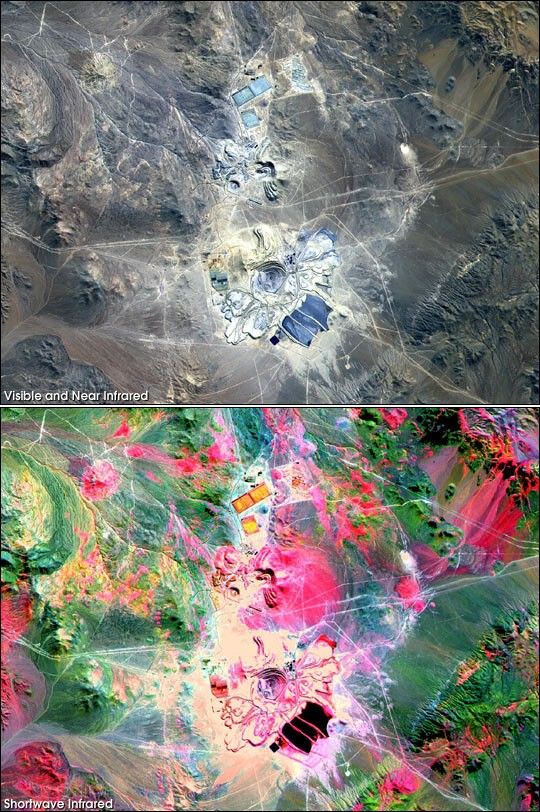
This Advanced Spaceborne Thermal Emission and Reflection Radiometer (ASTER) image covers 30 by 23 km (full images 30 x 37 km) in the Atacama Desert, Chile, and was acquired on April 23, 2000. The Escondida copper, gold, and silver open-pit mine is at an elevation of 3050 m, and began operations in 1990. Current capacity is 127,000 tons/day of ore; in 1999 production totaled 827,000 tons of copper, 150,000 ounces of gold, and 3.53 million ounces of silver. Primary concentrate of the ore is done on-site; the concentrate is then sent to the coast for further processing through a 170 km long, 9-inch pipe. Escondida is related geologically to three porphyry bodies intruded along the Chilean West Fissure Fault System. A high grade supergene cap overlies primary sulfide ore. The top image is aconventional 3-2-1 (near infrared, red, green) RGB composite. The bottom image displays shortwave infrared bands 4-6-8 (1.65µm, 2.205µm, 2.33µm) in RGB, and highlights the different rock types present on the surface, as well as the changes caused by mining.
References & Resources
Image courtesy NASA/GSFC/MITI/ERSDAC/JAROS, and U.S./Japan ASTER Science Team.