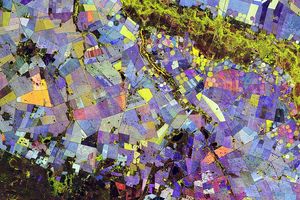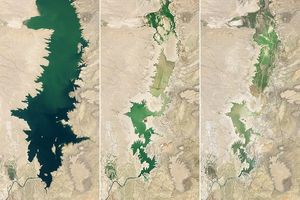


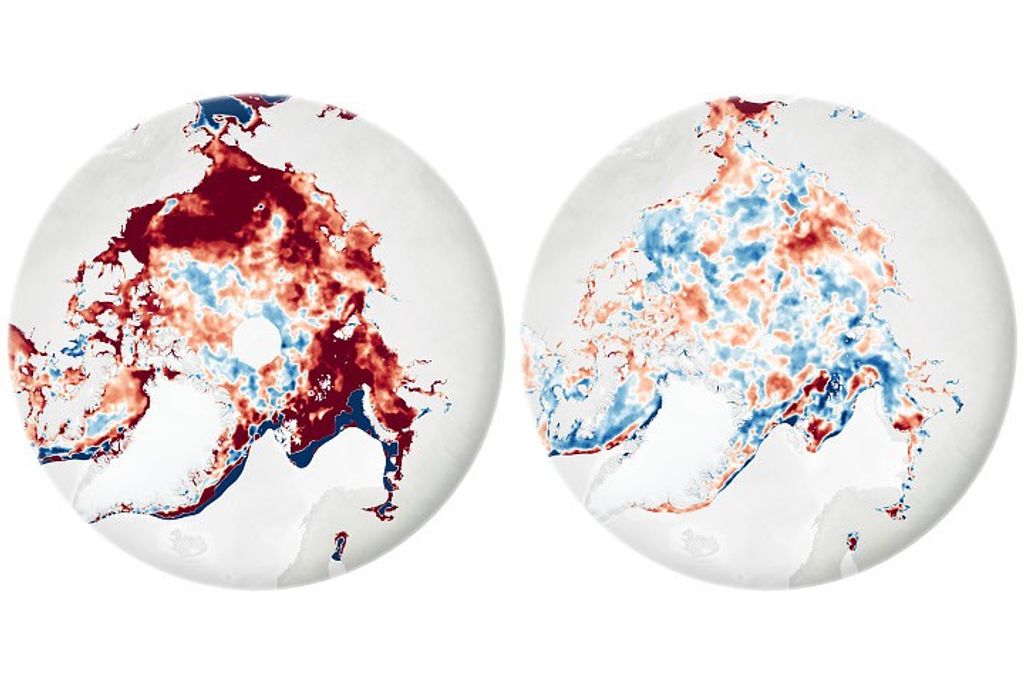
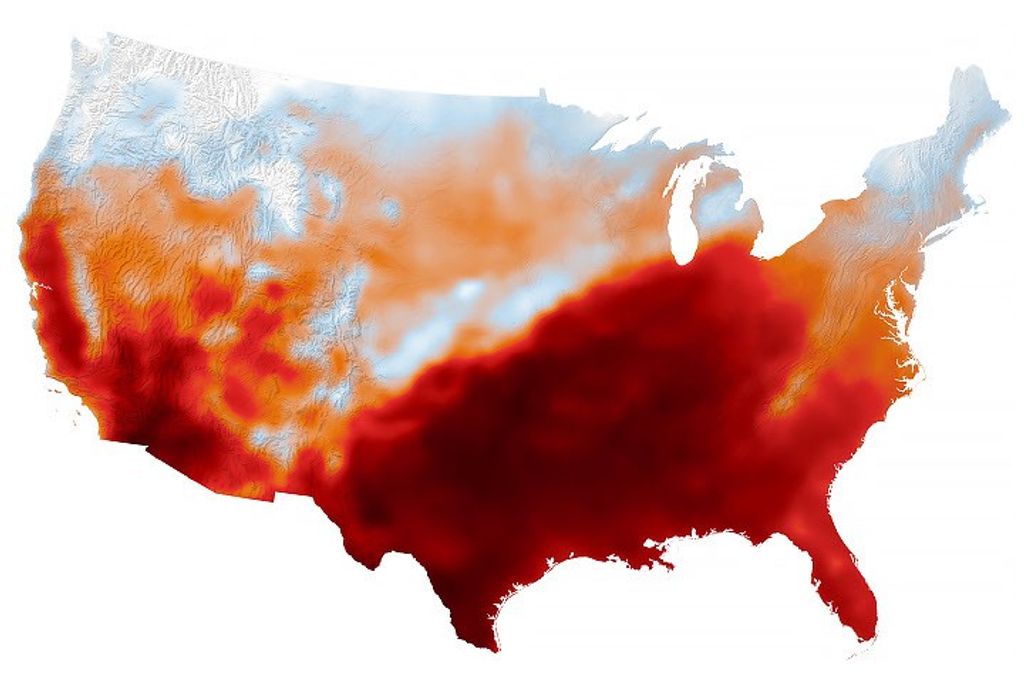

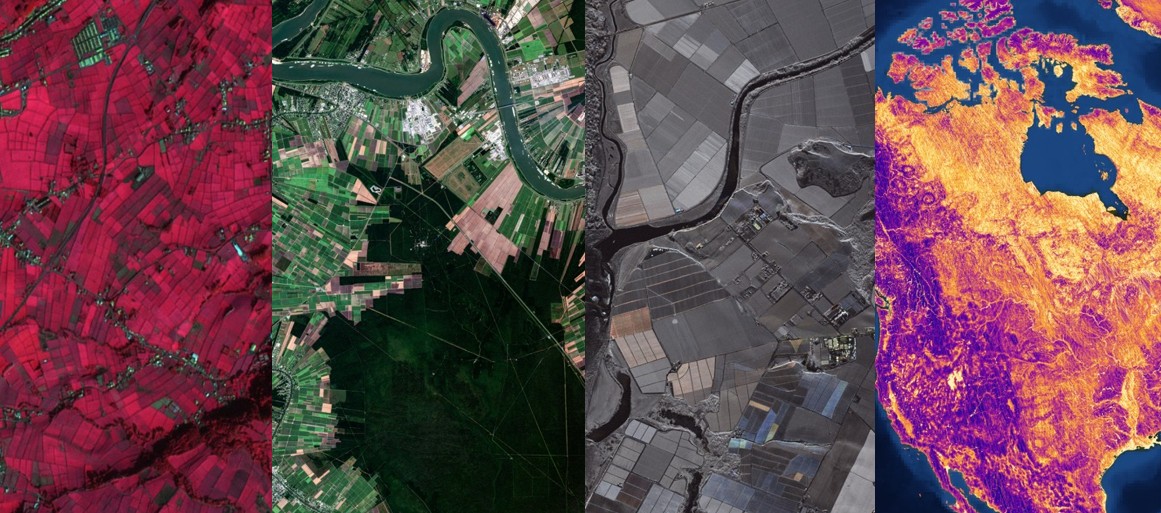













These three false-color images demonstrate some of the applications ofremote sensing in precision farming. The goal of precision farming is toimprove farmers’ profits and harvest yields while reducing the negativeimpacts of farming on the environment that come from over-application of chemicals. The imageswere acquired by the Daedalus sensor aboard a NASA aircraftflying over the Maricopa Agricultural Center in Arizona. The top image shows thecolor variations determined by crop density (also referred to as#147;Normalized Difference Vegetation Index”, or NDVI), where dark blues andgreens indicate lush vegetation and reds show areas of bare soil. Themiddle image is a map of water deficit, derived from the Daedalus’reflectance and temperature measurements. Greensand blues indicate wet soil and reds are dry soil. Thebottom image shows where crops are under serious stress, as isparticularly the case in Fields 120 and 119 (indicated by red and yellowpixels). These fields were due to be irrigated the following day.
For more information, read Precision Farming.
References & Resources
Images courtesy Susan Moran, Landsat 7 Science Team and USDA Agricultural Research Service.
None