














As the basis of the marine foodchain, phytoplankton are importantindicators of change in the oceans. These marine flora also extractcarbon dioxide from the atmosphere for use in photosynthesis, and playan important role in global climate. Phytoplankton blooms that occurnear the surface are readily visible from space, enabling a globalestimation of the presence of chlorophyll and other pigments. There aremore than 5,000 different species of phytoplankton however, and it isnot always possible to identify the type of phytoplankton present usingspace-based remote sensing.
Coccolithophores, however, are a group of phytoplankton that areidentifiable from space. These microscopic plants armor themselves withexternal plates of calcium carbonate. The plates, or coccoliths, givethe ocean a milky white or turquoise appearance during intense blooms.The long-term flux of coccoliths to the ocean floor is the main processresponsible for the formation of chalk and limestone.
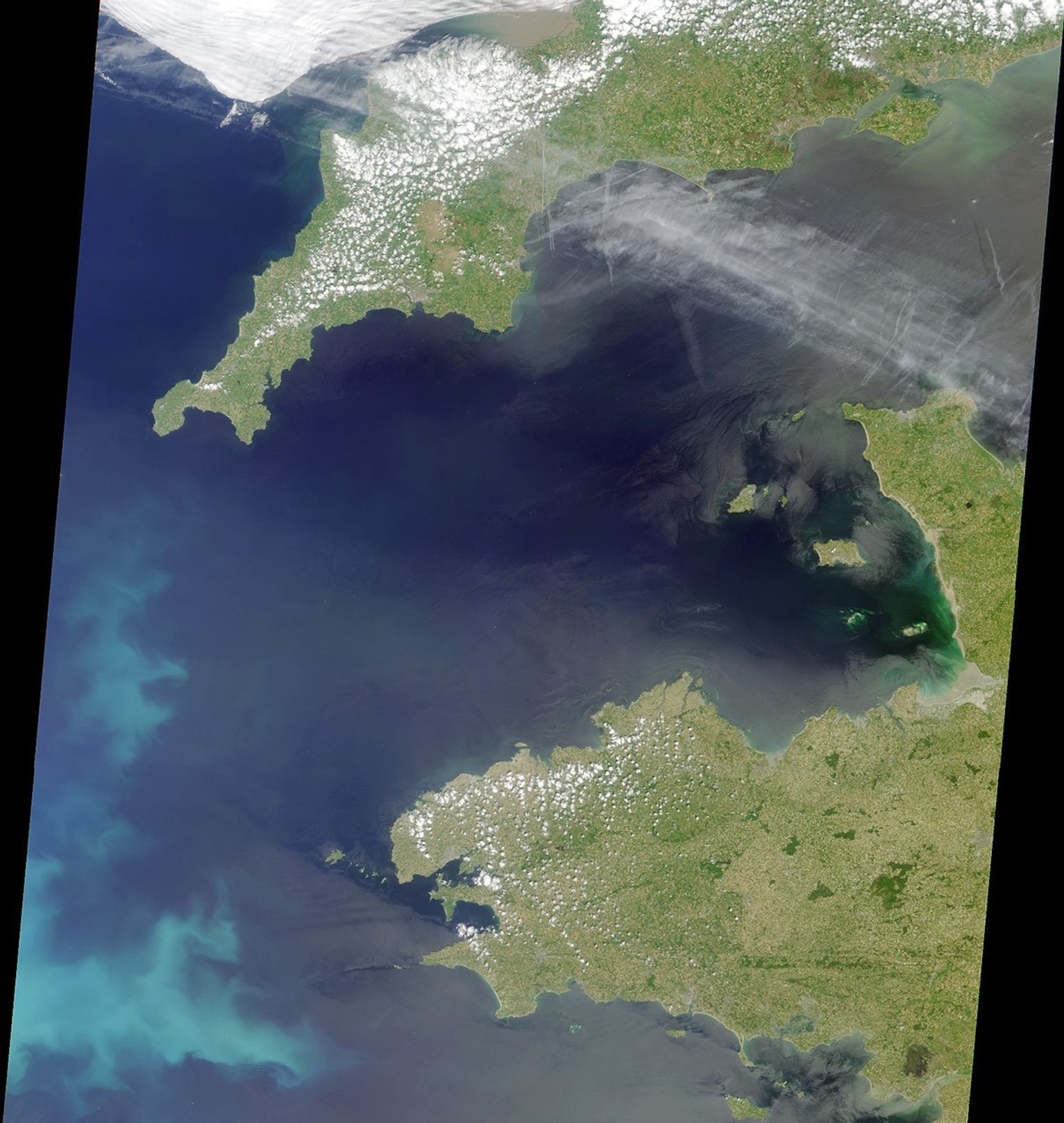
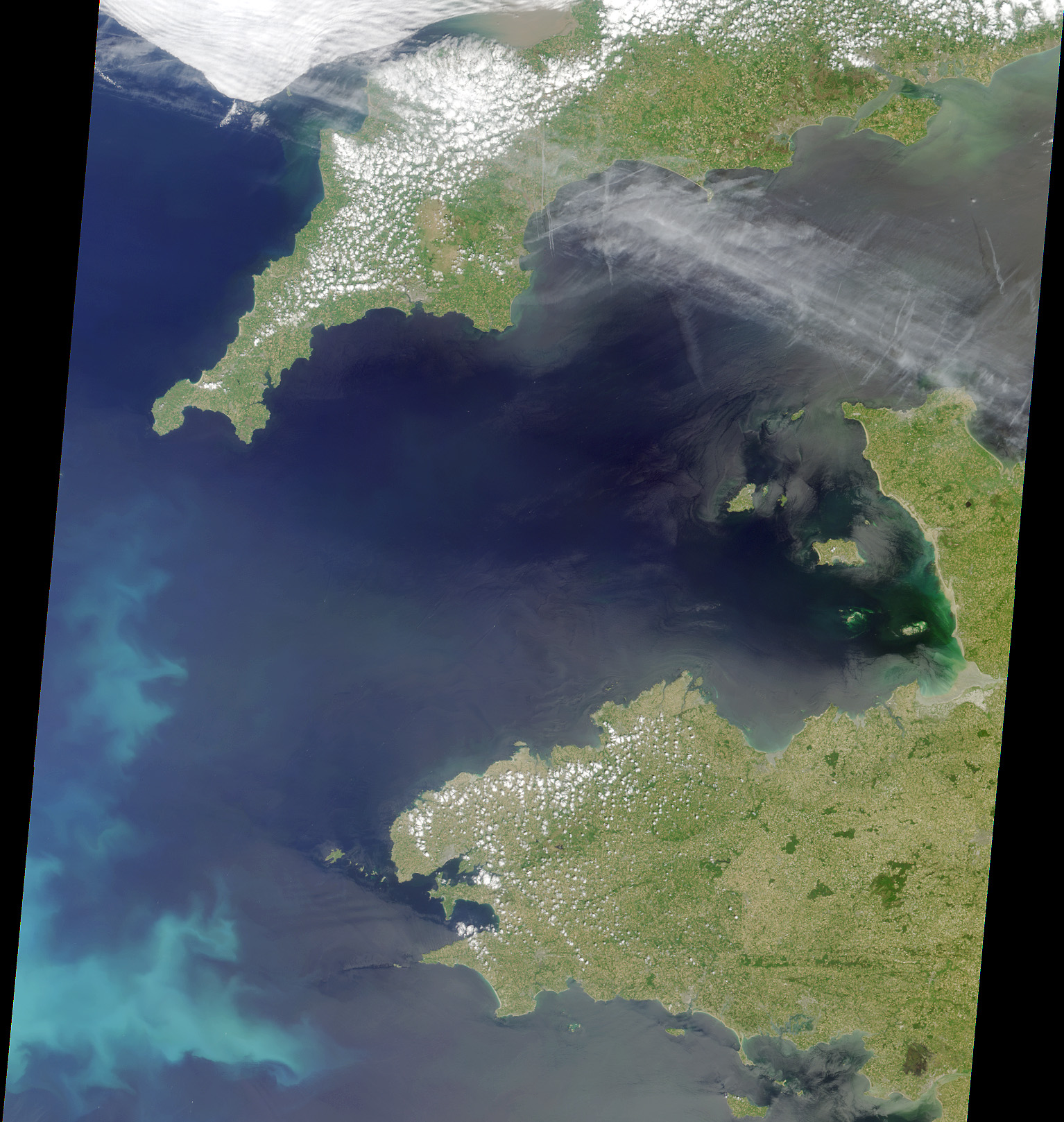
This image is a natural-color view of the Celtic Sea and EnglishChannel regions, and was acquired by the Multi-angle ImagingSpectroRadiometer’s nadir (vertical-viewing) camera on June 4, 2001. It represents an area of 380 kilometers by 445kilometers, and includes portions of southwestern England andnorthwestern France. The coccolithophore bloom in the lower lefthandcorner usually occurs in the Celtic Sea for several weeks in summer. Thecoccoliths backscatter light from the water column to create a brightoptical effect. Other algal and/or phytoplankton blooms can also bediscerned along the coasts near Portsmouth, England, and Granville,France.
At full resolution, evidence of human activity is also apparent inthis image. White specks associated with ship wakes are present in theopen water, and aircraft contrails are visible within the high cirrusclouds over the English Channel.
For more informatiuon, read What are Phytoplankton? andWhat is a Coccolithophore?
References & Resources
Image courtesy NASA/GSFC/LaRC/JPL, MISR Team