





















In the first week of January 2025, a potent winter storm delivered snow, ice, and freezing temperatures to the central and eastern United States. An initial burst of cold air arrived in the north-central U.S. at the start of the month and then spread south and east. By January 6, frigid air had spread across most of the country.
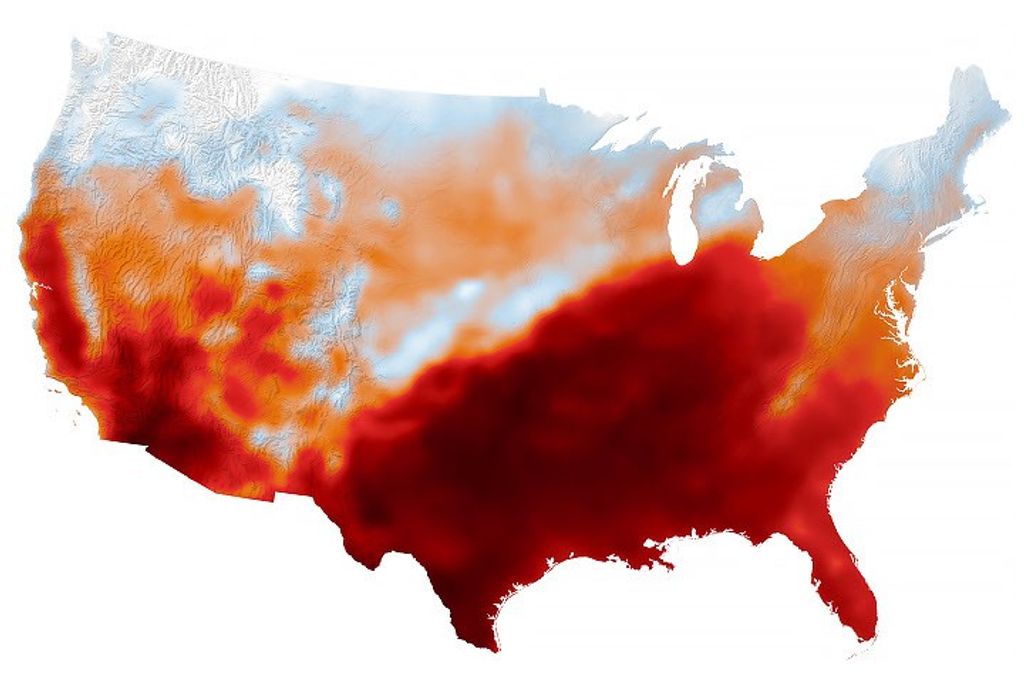
This map shows the extent of the cold snap on January 6. The map was derived from the GEOS (Goddard Earth Observing System) model and represents air temperatures at 2 meters (about 6.5 feet) above the ground. The darkest blue areas are where the model indicates temperatures reached as low as minus 22 degrees Fahrenheit (minus 30 degrees Celsius). White areas are where temperatures were around 32°F (0°C).
In Wichita, Kansas, the National Weather Service reported daytime highs in the mid-teens Fahrenheit on January 6. Farther north in Grand Forks, North Dakota, the temperature that day barely reached above the single digits. And in northern Texas and the Mid-Atlantic, temperatures were 5°F to 20°F below average, according to news reports.

The early January chill accompanied a potent storm system that dumped snow and ice on states from the Plains to the Mid-Atlantic. This image, acquired on January 6 by the MODIS (Moderate Resolution Imaging Spectroradiometer) instrument on NASA’s Aqua satellite, shows a band of fresh snow across several Midwest states, including Kansas, Missouri, Nebraska, and Iowa. (Note that some of the white areas are clouds, which can be distinguished in a false-color version of the image.)
On January 5, Chapman, Kansas, north of Wichita, received 18 inches (46 centimeters) of snow—the largest amount measured in the state, according to local news reports. Kansas City International Airport recorded 11 inches (28 centimeters) that day. As the storm moved east, it continued to snarl traffic and led to the cancellation of hundreds of flights.
As people dug out from the most recent storm, forecasters watched another system that could bring more winter weather to the U.S. South and up to the East Coast by the end of the week.
References & Resources
- CNN (2025, January 7) Cold snap grips northern Texas to mid-Atlantic as storm moves offshore. Accessed January 7, 2025.
- National Weather Service (2025, January 7) Short Range Public Discussion. Accessed January 7, 2025.
- The Washington Post (2025, January 6) Winter storm dumps heavy snow across Midwest and Mid-Atlantic, killing at least 3. Accessed January 7, 2025.
NASA Earth Observatory images by Michala Garrison, using GEOS-5 data from the Global Modeling and Assimilation Office at NASA GSFC and MODIS data from NASA EOSDIS LANCE and GIBS/Worldview . Story by Kathryn Hansen.