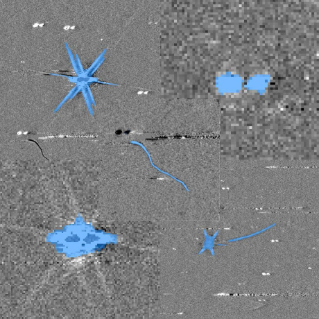













Join the Rubin Comet Catchers project, and help scientists discover comets and other active objects in our solar system! The Rubin Comet Catchers project invites you to examine early images from the NSF-DOE Vera C. Rubin Observatory, funded by the U.S. National Science Foundation and the U.S. Department of Energy's Office of Science. You’ll look for faint tails and other signs of cometary activity that telescopes and software alone might miss.
Finding new comets can help answer key questions about how much water was delivered to Earth after it formed and where that water originated.
"We think Rubin may produce a sample of about 10,000 comets over its 10-year lifetime,” said Zeljko Ivezic, Director of the Rubin Observatory Construction Project. “I wish you a lot of fun!"
Citizen scientists working on NASA’s Sungrazer Project have already discovered thousands of comets… which make up most of the comets that have ever been imaged! The comets found by the Sungrazer Project are on special orbits that take them near the Sun. Comet Catchers, on the other hand, will look in the opposite direction – away from the Sun.
Rubin Comet Catchers was developed based on Active Asteroids, another NASA-sponsored citizen science project that asks volunteers to search for asteroids with comet-like activity in data from NOIRLab’s Dark Energy Camera. With your help, the Active Asteroids team has published more than 20 scientific papers and research notes – based on data from a telescope that’s 4 meters in diameter. The data you’ll view in the Comets Catchers project comes from a telescope that’s a whopping 8.4 meters in diameter!
To join this new search, visit cometcatchers.net and read a short online tutorial. No experience needed – just your eyes and curiosity.