



















Roman Infrared Nearby Galaxies Survey
Wide-Field Science – Large
Benjamin Williams / University of Washington – Seattle, PI
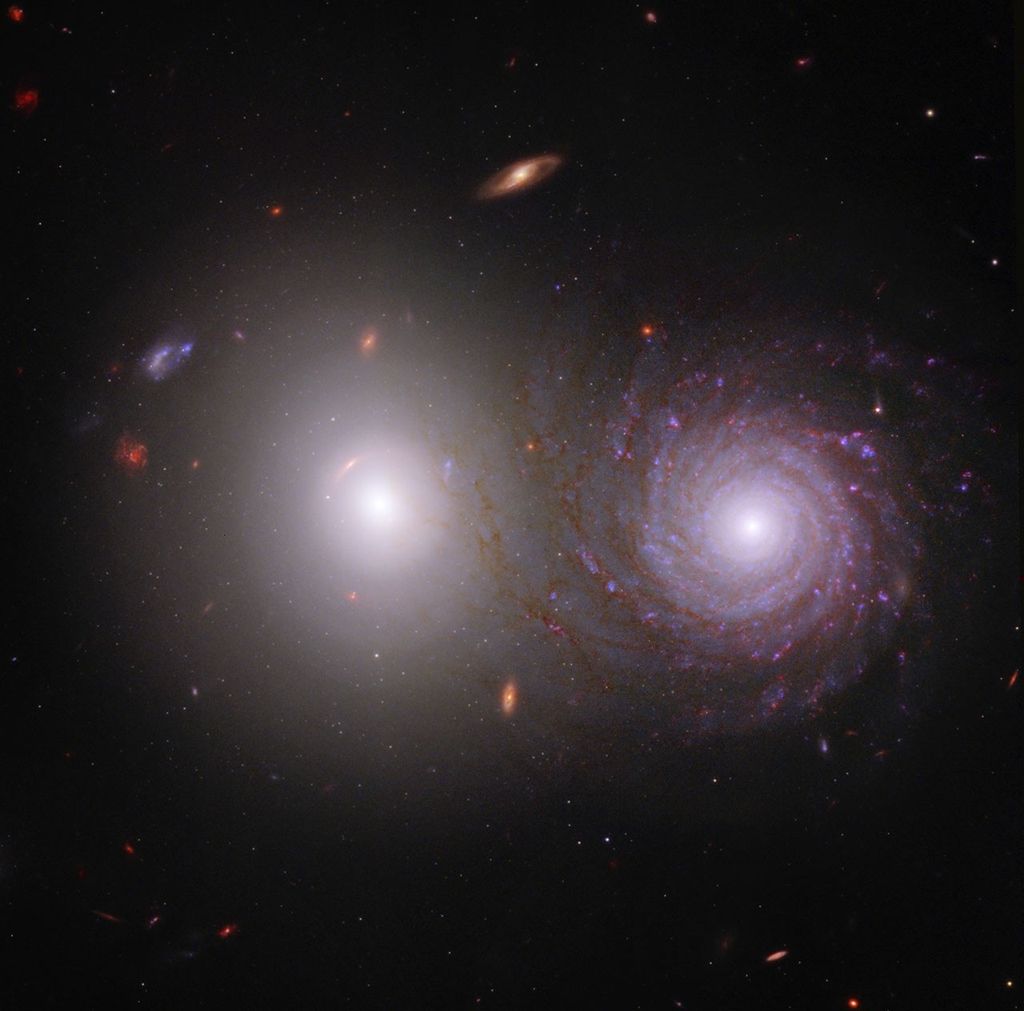
We propose a large Wide Field Science program to develop software for the community to simulate and analyze Roman surveys of nearby galaxies. Roman’s wide field, superb sensitivity to faint stars and compact sources, and near-infrared bandpasses will permit panoramic mapping of hundreds of nearby galaxies out to their virial radii, simultaneously giving insight into the star formation histories of the central galaxy, its satellites, and its streams; charting its assembly from the cosmic web; and mapping its dark matter halo. With the help of powerful planning tools to optimize its potential, Roman will improve our current sample sizes of these resolved star maps a hundredfold, down to surface brightness limits comparable to those currently reached only in the Local Group and >4 magnitudes fainter than achievable from the ground. The tools we develop will build mock Roman imaging data from numerical simulations to test model predictions related to all these long-standing science topics, making it simple and reliable to optimize observing strategies to answer key science questions. Many of the tools necessary for planning Roman observations in this level of detail are the same as those necessary to reduce and analyze those observations once they are made. Our suite will thus enable the community to efficiently plan and analyze Roman observations of resolved stellar populations, in both crowded and low surface brightness regions, from the very start of the mission.
Roman can resolve individual stars to map galaxy structure down to an equivalent surface brightness of 35 mag/sqarcsec, for any galaxy within 10 Mpc of the Sun. Such maps will reveal tidal streams in stellar halos and constrain the mass function of dwarf satellites around hundreds of hosts, providing stringent tests of galaxy formation and dark matter models on galactic and even sub-galactic scales, where the Lambda-CDM model has the most tension with observations. Roman imaging will also transform studies of star formation in galaxy disks, by tracking stellar mass growth as a function of time and position within a galaxy. Roman’s precision photometry will constrain critical stellar evolution models of the near-infrared bright, rapidly evolving stars that contribute significantly to the integrated light of galaxies in the near-infrared. Thus, with Roman we can derive the detailed evolution of individual galaxies, reconstruct the complete history of star formation in the nearby universe, and put crucial constraints on the theoretical models used to interpret near-infrared extragalactic observations.
To revolutionize the study of nearby galaxies, the community must have the necessary tools in place to take full advantage of Roman’s capabilities. The tools we propose to develop will make it straightforward and efficient to produce and analyze simulated (and real) Roman imaging of nearby galaxies and their halos to maximize the scientific yield in the limited observing time available, ensuring the most effective use of the mission and maximizing the value of the final data archive. Consequently, these tools will allow both optimization of observing strategies (e.g., filters, coverage, depth) based on numerical simulation predictions and efficient analysis of real Roman observations.
These tools will be built, tested, and released by a Wide Field Science team that has decades of experience using nearby galaxies to inform fundamental topics in astrophysics and working with numerical simulations to test observables related to near-field cosmology, dark matter, and galaxy formation and evolution. Our team members have led the charge in observational and theoretical studies of resolved stellar populations and stellar halos. With our combined background, we are poised to help the community to take full advantage of the opportunities for discovery that Roman will offer to scientists studying the galaxies in our backyard.