













Fornax Initiative at the 248th AAS Meeting
The meeting will be jam-packed with great scientific content and provide ample opportunity for networking with friends and colleagues.
Location
Pasadena, California
Dates
14-18 June 2026
Community
Fornax Initiative
Type
Meeting
Sunday, 14 June 2026
Fornax Workshop
| Time | Session | Location |
|---|---|---|
| 2:00pm ‑ 4:00pm | An Introduction to Fornax: Scalable Data and Compute for Scientific Analysis | Pasadena Convention Center - Conference Center, 101 |
Related Workshops
| Time | Session | Location |
|---|---|---|
| 10:00am ‑ 12:00pm | High Energy Science Analysis with HEASARC Services | Pasadena Convention Center - Conference Center, 102 |
| 10:00am ‑ 11:30am | Euclid Data in the Cloud: Access, Analysis, and Science Opportunities | Pasadena Convention Center - Conference Center, 101 |
Wednesday, 17 June 2026
| Time | Session | Title | Speaker | Location |
|---|---|---|---|---|
| 10:00am ‑ 11:30am | Simulated Universes for Precision Cosmology | Accessing and Analyzing OpenUniverse 2024 Simulations through IRSA and Fornax | Vandana Desai | Pasadena Convention Center - Exhibit Halls & Ballrooms, Ballroom F |
Thursday, 18 June 2026
| Time | Session | Title | Speaker | Location |
|---|---|---|---|---|
| 2:00pm ‑ 3:30pm | 40 Years of Community Engagement at IPAC: Lessons Learned | Building User Support for Fornax: Community Engagement for Cloud-Based Astrophysics | Vandana Desai | Pasadena Convention Center - Exhibit Halls & Ballrooms, Ballroom |
Related Sessions of Interest
| Date | Session Title | Time | Location |
|---|---|---|---|
| Monday, 15 June | NASA's Future Large Gamma-ray Mission Concepts Working Group | 10:00am ‑ 11:30am | Pasadena Convention Center ‑ Conference Center, 204 |
| Tuesday, 16 June | NASA's Big Science, Small Missions | 10:00am ‑ 11:30am | Pasadena Convention Center ‑ Conference Center, 204 |
American Astronomical Society
The 248th Meeting of the AAS
The 248th AAS meeting (joint with the High Energy Astrophysics and the Laboratory Astrophysics Divisions) will be held 14-18 June 2026 in Pasadena, California.
Learn More
American Astronomical Society (AAS)
The Fornax Initiative
NASA Astrophysics is developing the Fornax Initiative, a cloud-based system that brings together data, software, and computing so that researchers can focus on science.
Learn More about The Fornax Initiative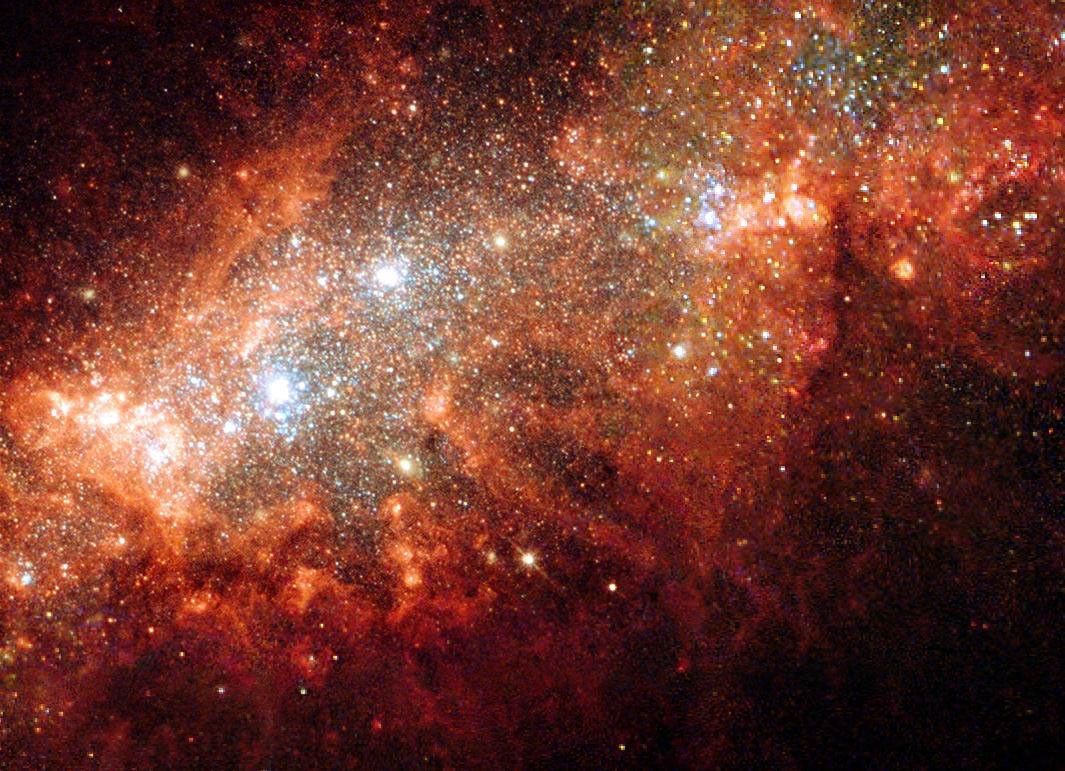
News Straight to Your Inbox
Subscribe to your community email news list
We will never share your email address.