


























APOD
Astronomy Picture of the Day
Discover the cosmos! Each day a different image or photograph of our fascinating universe is featured, along with a brief explanation written by a professional astronomer.

The Case of the Very Dusty Binary Star
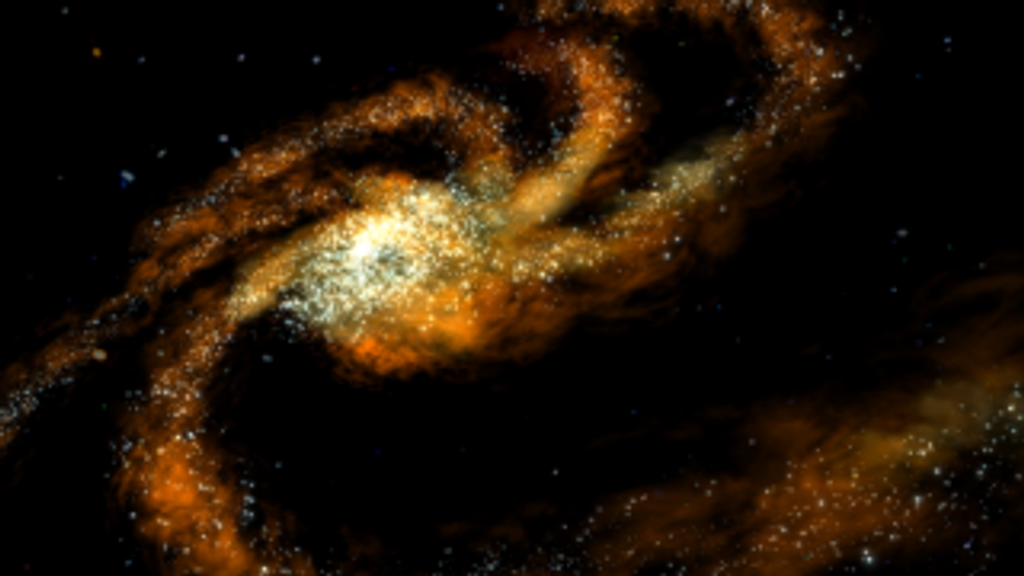
Explanation: For astronomers , close binary star system BD+20 307 originally stood out because it is extremely dusty. A substantial amount of warm dust surrounding it causes the system to appear exceptionally bright at infrared wavelengths. Of course, dust associated with planet formation is often detected around young stars , stars only a few million years old. But the BD+20 307 system has now been found to be at least a few billion years old, an age comparable to the age of our own Solar System. The large amount of warm dust is likely the debris from a relatively recent collision of planet-sized objects on the scale of, say, Earth and Venus, in the BD+20 307 system. Reminiscent of the classic scifi novel When Worlds Collide , the dramatic illustration offers a depiction of the catastrophic event. Ironically, this indirect evidence of a destructive planetary collision could also be the first indication that planetary systems can form around close binary stars . BD+20 307 is about 300 light-years distant toward the headstrong constellation Aries .
| Date | September 25, 2008 |
|---|---|
| Credit | Illustration Credit & Copyright: Lynette Cook |
| Authors & editors: | Robert Nemiroff (MTU) & Jerry Bonnell (UMCP) |
| A service of: |
ASD at NASA / GSFC, NASA Science Activation & Michigan Tech. U. |