




















APOD
Astronomy Picture of the Day
Discover the cosmos! Each day a different image or photograph of our fascinating universe is featured, along with a brief explanation written by a professional astronomer.

Ten Billion Earths
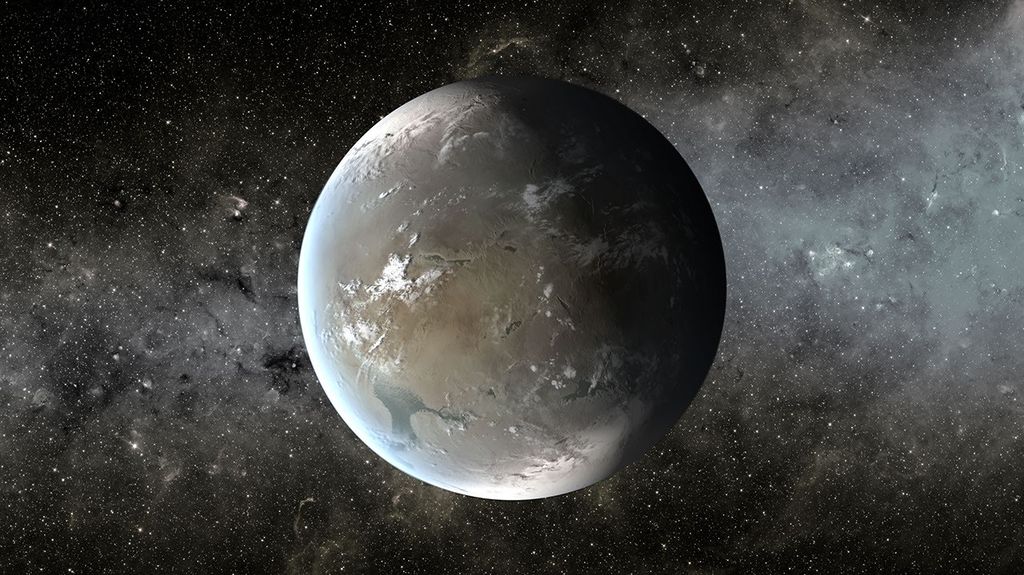
Explanation: How common are Earth-sized planets? Quite common, according to extrapolations from new data taken by NASA's orbiting Kepler spacecraft . Current computer models are indicating that at least one in ten stars are orbited by an Earth-sized planet, making our Milky Way Galaxy the home to over ten billion Earths. Unfortunately, this estimate applies only to planets effectively inside the orbit of Mercury, making these hot-Earths poor vacation opportunities for humans. This histogram depicts the estimated fraction of stars that have close orbiting planets of various sizes. The number of Sun-like stars with Earth-like planets in Earth-like orbits is surely much less, but even so, Kepler has also just announced the discovery of four more of those.
| Date | January 12, 2013 |
|---|---|
| Credit | Illustration Credit: NASA , F. Fressin ( Harvard CfA ) |
| Authors & editors: | Robert Nemiroff (MTU) & Jerry Bonnell (UMCP) |
| A service of: |
ASD at NASA / GSFC, NASA Science Activation & Michigan Tech. U. |