




















APOD
Astronomy Picture of the Day
Discover the cosmos! Each day a different image or photograph of our fascinating universe is featured, along with a brief explanation written by a professional astronomer.

Fractal Interstellar Dust Up-Close
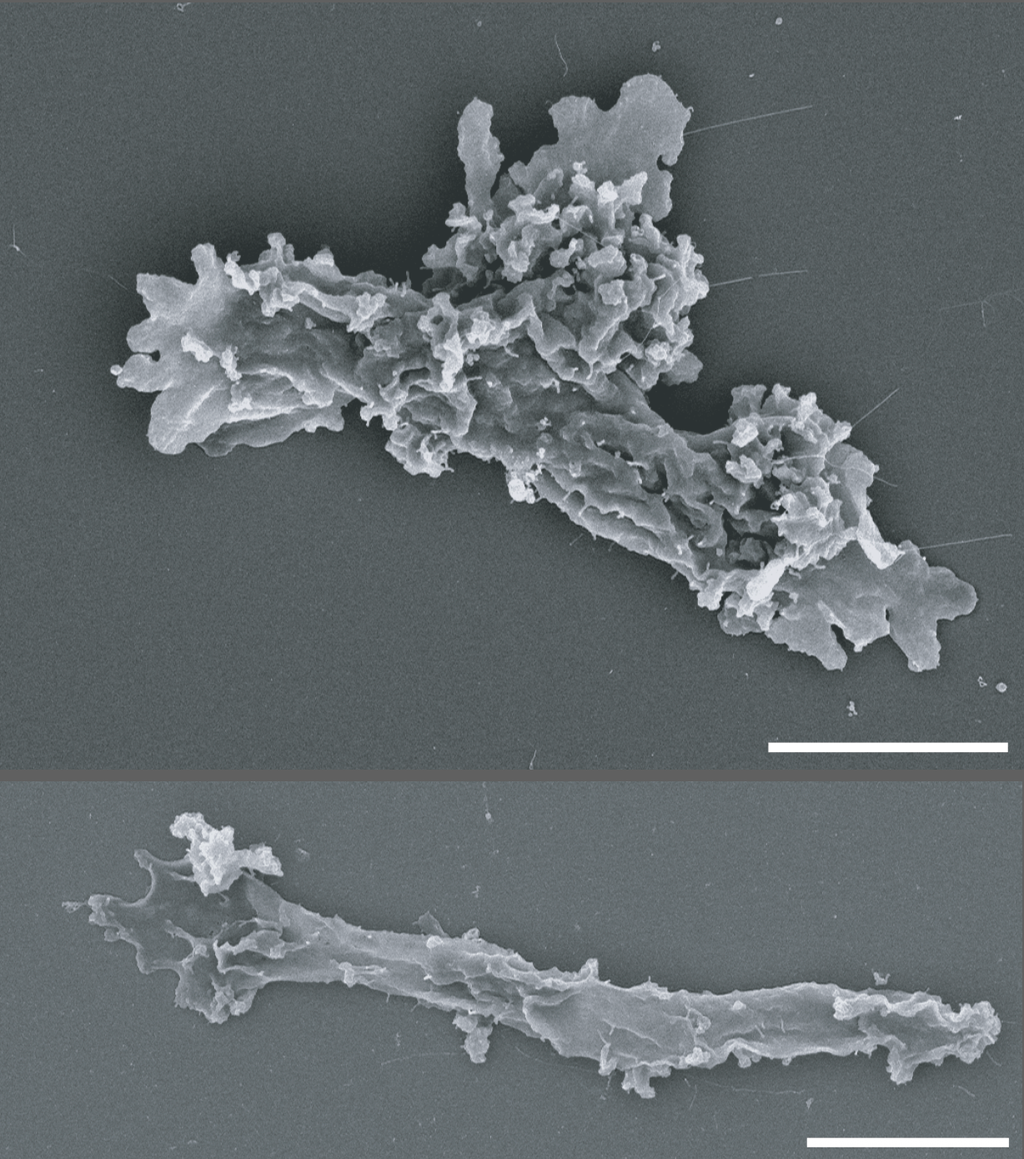
Explanation: Our universe is a very dusty place. Dust usually shows its presence by blocking out light emitted from stars or nebulae behind it, sometimes creating the illusion of a horse's head or a sombrero hat . But nobody really knows what a typical interstellar dust grain looks like. By studying how dust absorbs , emits , and reflects light, astronomers do know that interstellar dust is much different than the cell and lint based dust found around a typical house . Interstellar dust grains are composed mostly of carbon , silicon , and oxygen and are usually less than about 1/1000 of a millimeter across. Recent work indicates that most dust grains are not spherical . The above picture shows the result of a fractal adhesion model for dust grains involving random conglomerates of spherical compounds of different properties, here artificially highlighted by different colors.
| Date | July 6, 2003 |
|---|---|
| Credit | Credit & Copyright: E. L. Wright ( UCLA ) |
| Authors & editors: | Robert Nemiroff (MTU) & Jerry Bonnell (UMCP) |
| A service of: |
ASD at NASA / GSFC, NASA Science Activation & Michigan Tech. U. |