












Kilonova Catcher
When massive, dense objects like neutron stars merge with each other or a black hole, they generate some of the biggest explosions of energy in the Universe. These explosions can generate bursts of light called kilonovae. Kilonovae last days to weeks, powered by radioactive decay. If you know where to look and have a powerful enough backyard telescope, you can spot them from Earth!
Kilonova Catcher invites you to join a global network of professional and amateur astronomers who search for and document kilonovae and other fleeting cosmic events, collecting and sharing data. Kilonova Catcher will message you when an explosion goes off, and you’ll try to spot it with your telescope. Your data will reveal how these events grow brighter or dimmer with time, helping to improve our understanding of the physics of collisions between extremely dense astronomical objects.
project task
Collecting data with special equipment
division
Universe
where
In the field
launched
2019
What you'll do:
- Receive alerts when a Kilonova goes off.
- Point your telescope at the likely locations of kilonovae and document these cosmic explosions.
- Participate in a global network of professional and amateur astronomers working together to learn more about gravitational waves, kilonovae, gamma-ray bursts, and the collisions that generate them.
Requirements
- Time: A few hours of training; a few hours per event.
- Equipment: 8 inch (200 mm) or larger aperture telescope, camera capable of producing FITS or RAW images, and photometric filters. See project website for further details.
- Knowledge: None required, though telescope experience is useful. Project provides detailed guides and in-person support. Many Kilonova Catcher volunteers learn the required techniques through project trainings.
Get started!
- Visit the project website to learn more about the project's science, operations, and what equipment you need..
- Create an account to receive alerts for observing opportunities. Don’t have your own telescope? Time on a shared or remote telescope works, too.
- Attend an orientation webinar and complete our online training. Access additional support by emailing the team.
- Get ready to respond to an alert!
Learn more:
The Kilonova Catcher website’s Science pages provide detailed information on multi-messenger astronomy and the cataclysmic collisions that are studied by these methods. The interactive Games pages provide practice in reading and responding to gravitational wave alerts. The Frequently Asked Questions (FAQ) pages provide additional information on everything from the science to required equipment and tips for getting started.
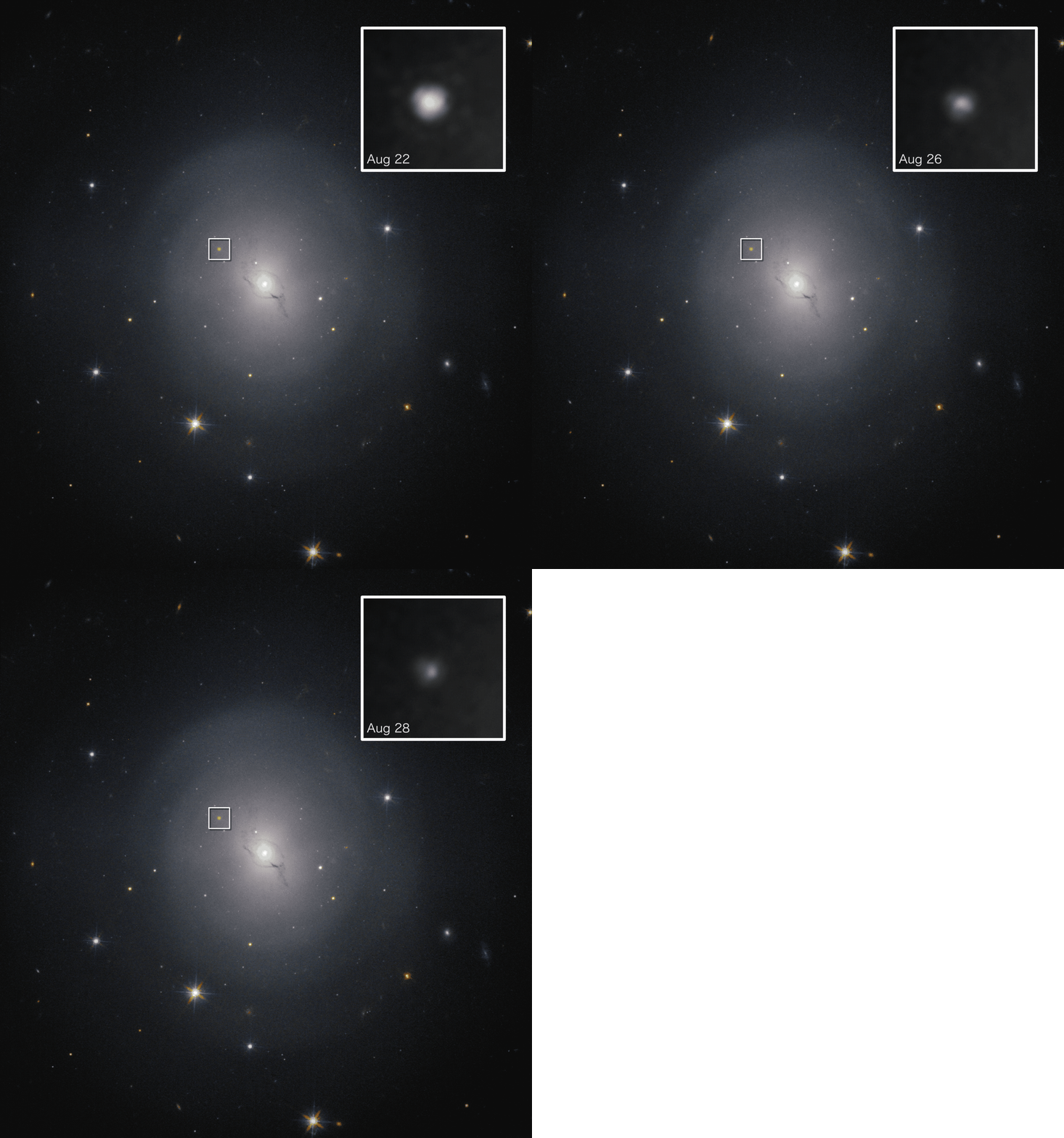
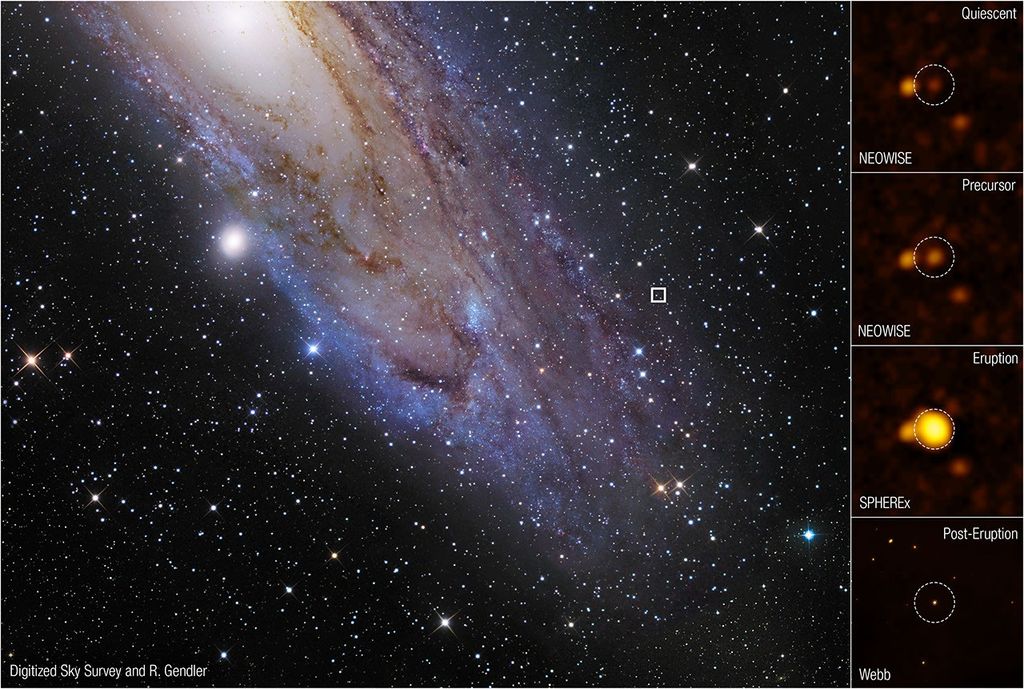
spacetime) AND light from the same cosmic event: two neutron stars colliding 130 million light-years away. The gravitational wave signal, named GW170817, arrived first. Within seconds, satellites detected a gamma-ray burst (GRB170817A). Hours later, telescopes worldwide spotted the optical counterpart - a kilonova called AT2017gfo, shown here in the center of the white box. This single event launched "multi-messenger astronomy": combining gravitational waves, light, neutrinos, and cosmic rays to decode the universe's most violent phenomena.
Get to know the people of Kilonova Catchers!

Damien Turpin
Astrophysicist and Researcher at CEA/Irfu, and Principal Investigator of Kilonova Catcher
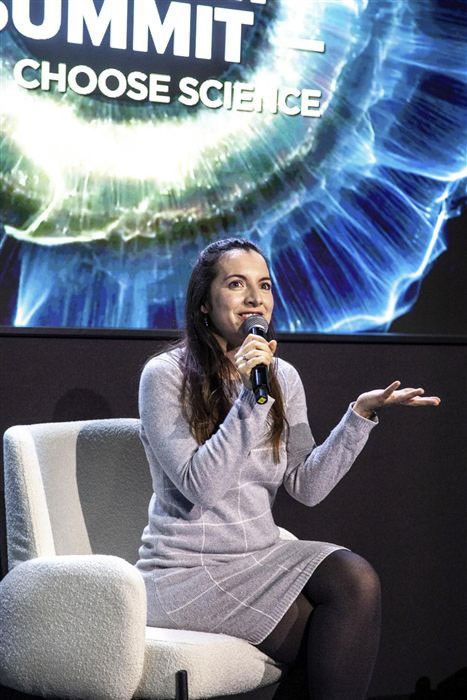
Sarah Antier
Astrophysicist, Principal Investigator of GRANDMA (Global Rapid Advanced Network Devoted to the Multi-messenger Addicts)
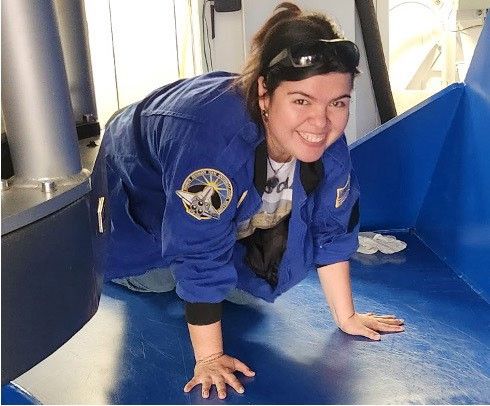
Cristina Andrade
Research Scientist at the Minnesota Institute for Astrophysics (UMN) and Head of Operations for Kilonova Catcher