





















APOD
Astronomy Picture of the Day
Discover the cosmos! Each day a different image or photograph of our fascinating universe is featured, along with a brief explanation written by a professional astronomer.

Dusty Galaxy Centaurus A
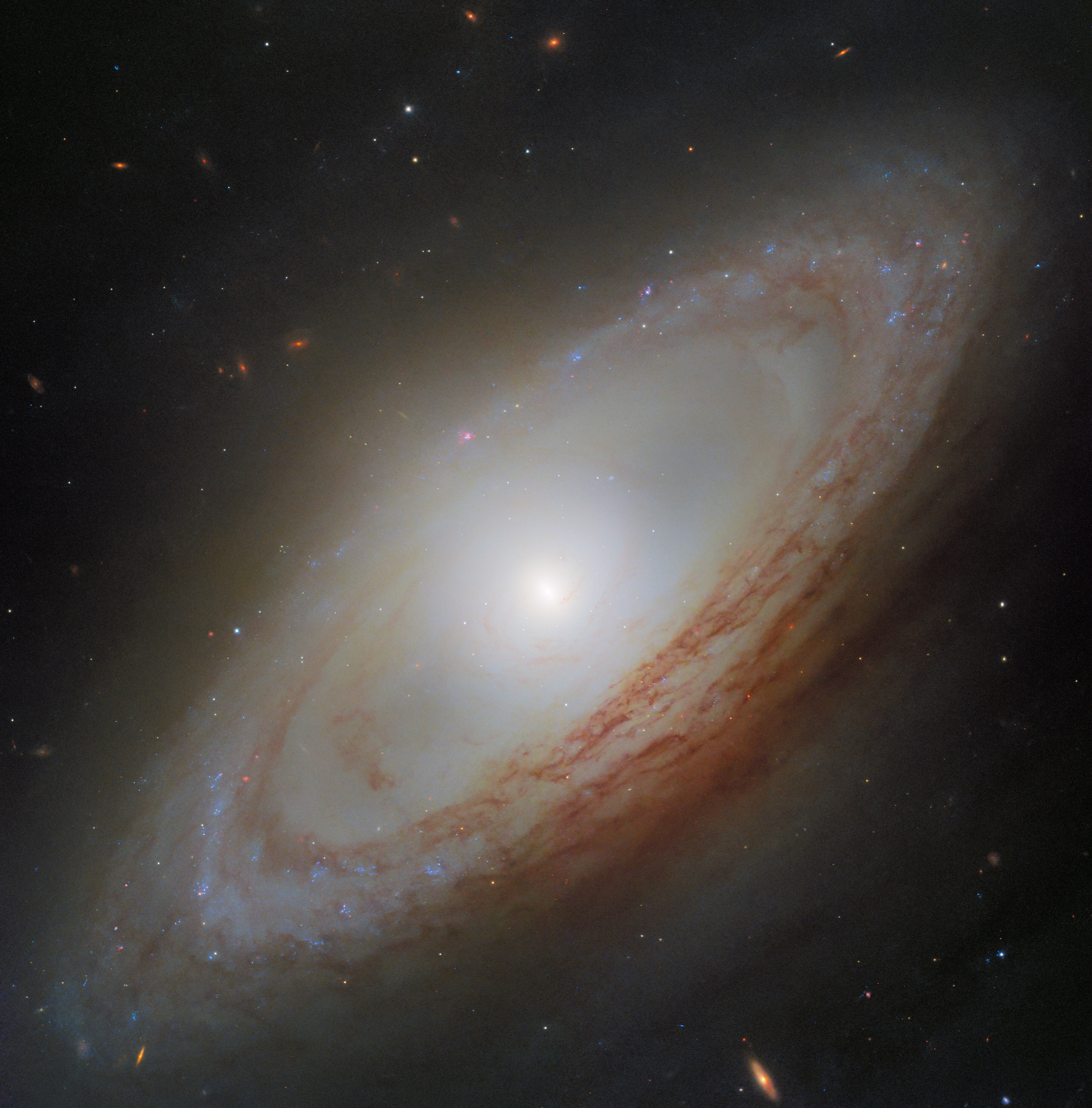
Explanation: Why is peculiar galaxy Centaurus A so dusty? Dramatic dust lanes that run across the galaxy's center mark Cen A . These dust lanes are so thick they almost completely obscure the galaxy's center in visible light . This is particularly unusual as Cen A's red stars and round shape are characteristic of a giant elliptical galaxy , a galaxy type usually low in dark dust. Cen A , also known as NGC 5128, is also unusual compared to an average elliptical galaxy because it contains a higher proportion of young blue stars and is a very strong source of radio emission . Evidence indicates that Cen A is likely the result of the collision of two normal galaxies . During the collision, many young stars were formed, but details of the creation of Cen A's unusual dust belts are still being researched. Cen A lies only 13 million light years away, making it the closest active galaxy . Cen A spans 60,000 light years and can be seen with binoculars toward the constellation of Centaurus .
| Date | August 6, 2003 |
|---|---|
| Credit | Credit: Marina Rejkuba ( ESO-Garching ) et al., ISAAC , VLT ANTU telescope , ESO Paranal Obs. |
| Authors & editors: | Robert Nemiroff (MTU) & Jerry Bonnell (UMCP) |
| A service of: |
ASD at NASA / GSFC, NASA Science Activation & Michigan Tech. U. |