



















APOD
Astronomy Picture of the Day
Discover the cosmos! Each day a different image or photograph of our fascinating universe is featured, along with a brief explanation written by a professional astronomer.
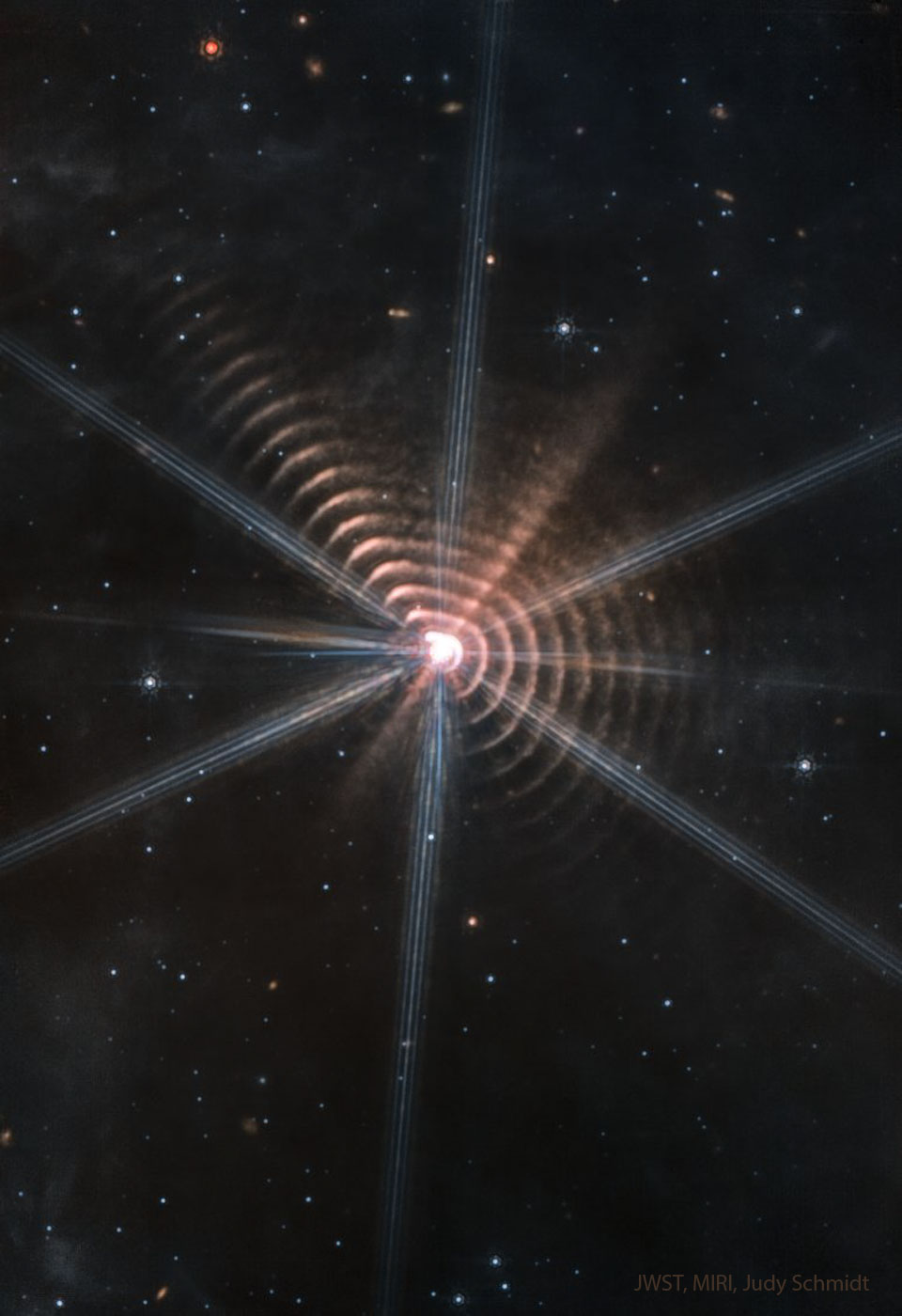
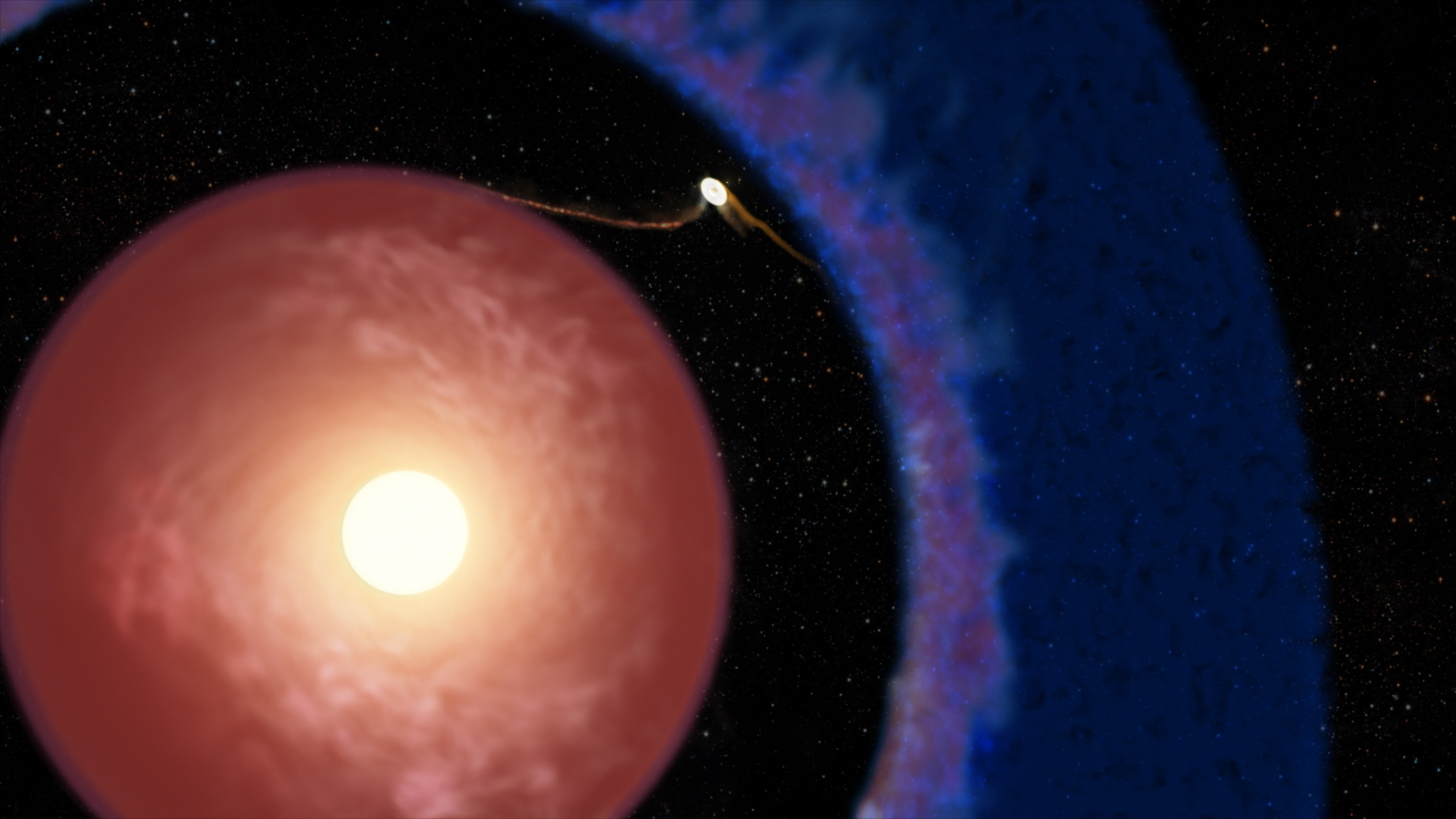
Dust Shells around WR 140 from Webb
Explanation: What are those strange rings? Rich in dust, the rings are likely 3D shells -- but how they were created remains a topic of research . Where they were created is well known: in a binary star system that lies about 6,000 light years away toward the constellation of the Swan (Cygnus) -- a system dominated by the Wolf-Rayet star WR 140 . Wolf-Rayet stars are massive, bright, and known for their tumultuous winds . They are also known for creating and dispersing heavy elements such as carbon which is a building block of interstellar dust . The other star in the binary is also bright and massive -- but not as active . The two great stars joust in an oblong orbit as they approach each other about every eight years. When at closest approach, the X-ray emission from the system increases, as, apparently, does the dust expelled into space -- creating another shell . The featured infrared image by the new Webb Space Telescope resolves greater details and more dust shells than ever before.
| Date | October 13, 2022 |
|---|---|
| Credit | Image Credit: NASA , ESA , CSA , JWST , MIRI , ERS Program 1349 ; Processing: Judy Schmidt |
| Authors & editors: | Robert Nemiroff (MTU) & Jerry Bonnell (UMCP) |
| A service of: |
ASD at NASA / GSFC, NASA Science Activation & Michigan Tech. U. |