





















Suggested Searches

XRISM

X-ray Imaging and Spectroscopy Mission
Active Mission

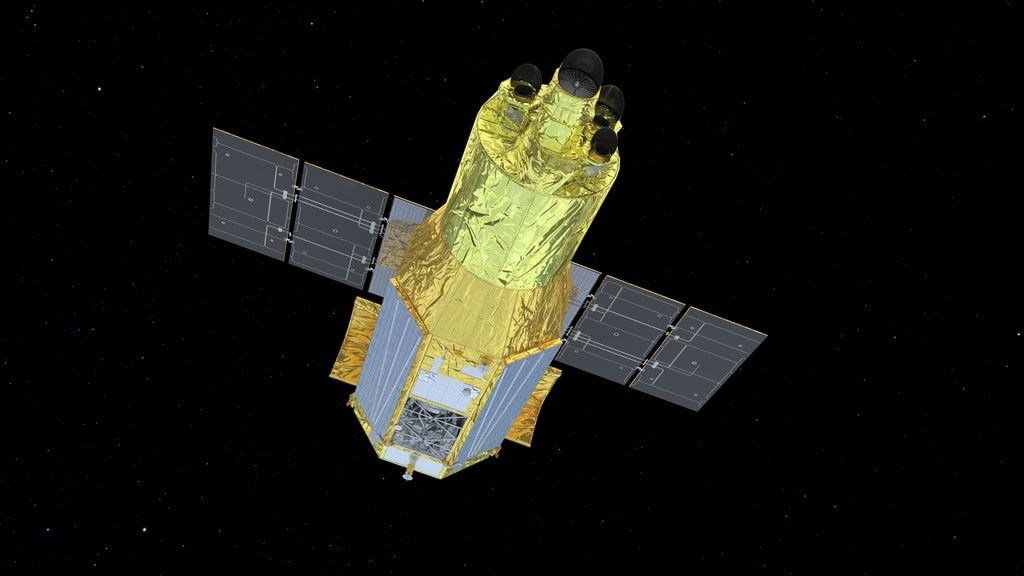
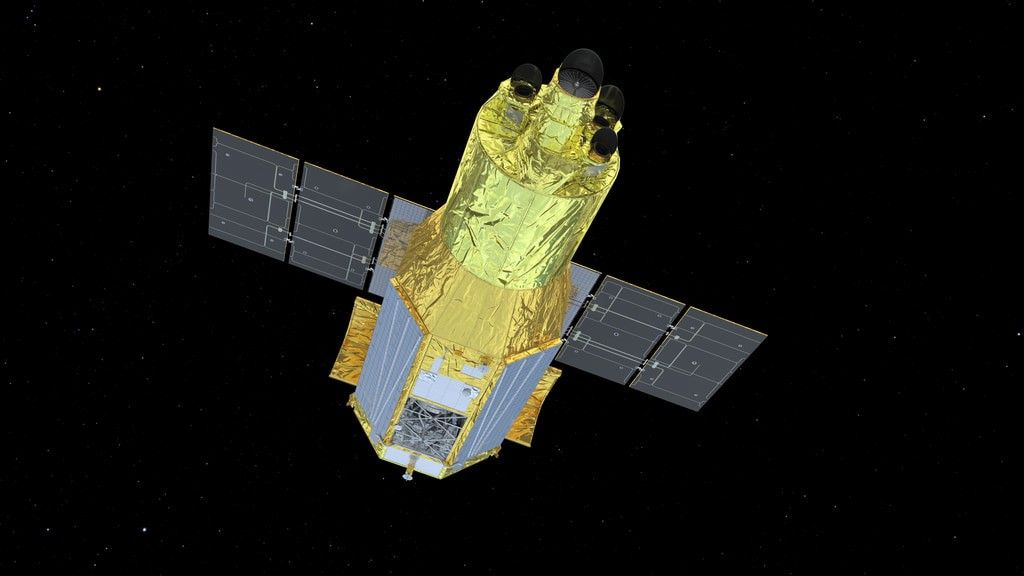
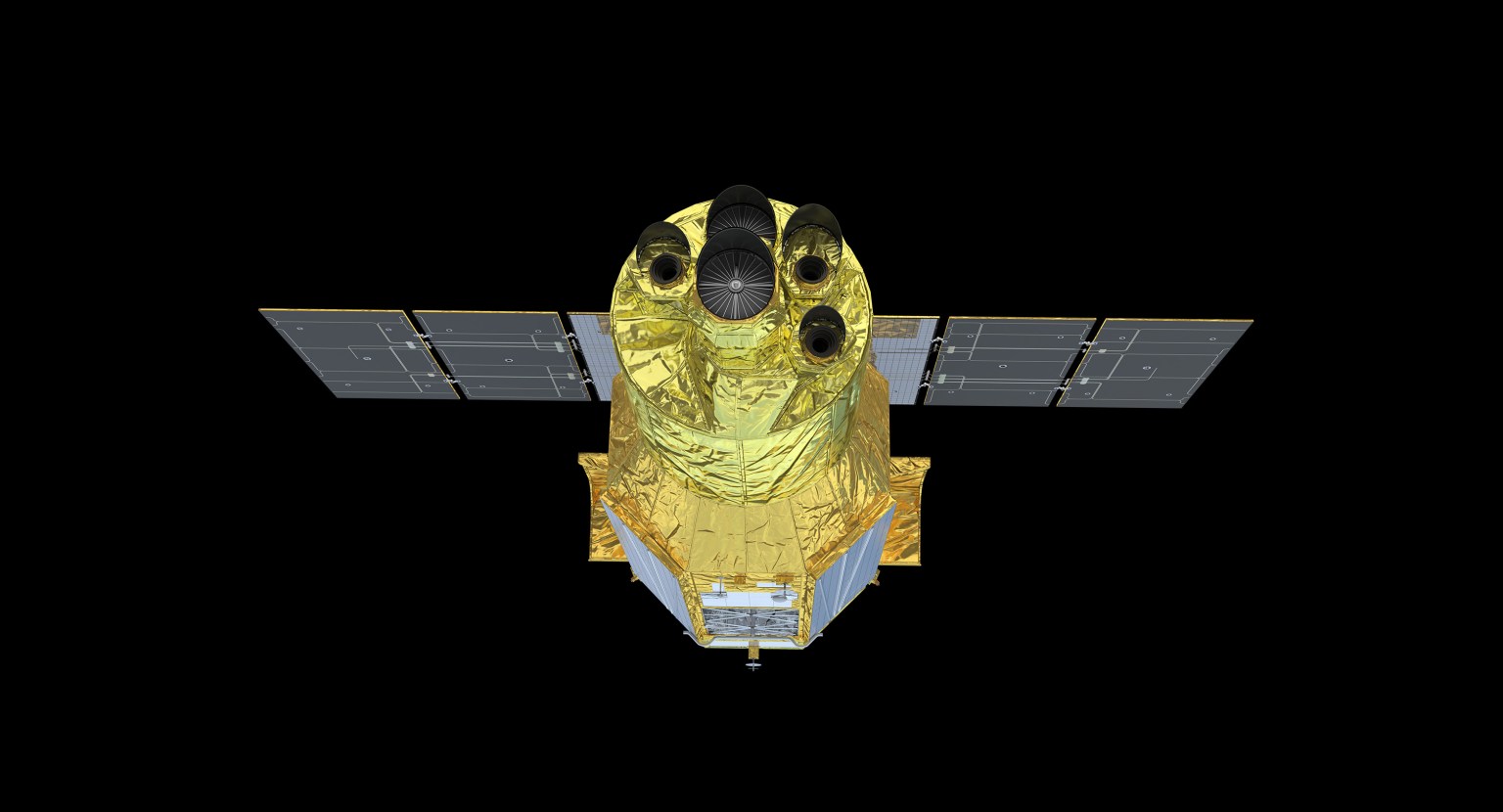
XRISM observes the universe in X-ray light, studying the most extreme environments in the cosmos. The mission investigates big cosmic questions, such as how the largest structures in the universe came to be, what happens to matter under extreme gravitational force, and how high-energy particle jets work. XRISM is a collaborative mission between JAXA (Japan Aerospace Exploration Agency) and NASA, with participation by ESA (European Space Agency). NASA’s contribution includes science participation from the Canadian Space Agency.

Type

Space telescope

Launched

Sept. 6, 2023

Wavelength

X-rays

Nasa lead

Goddard
Featured Story

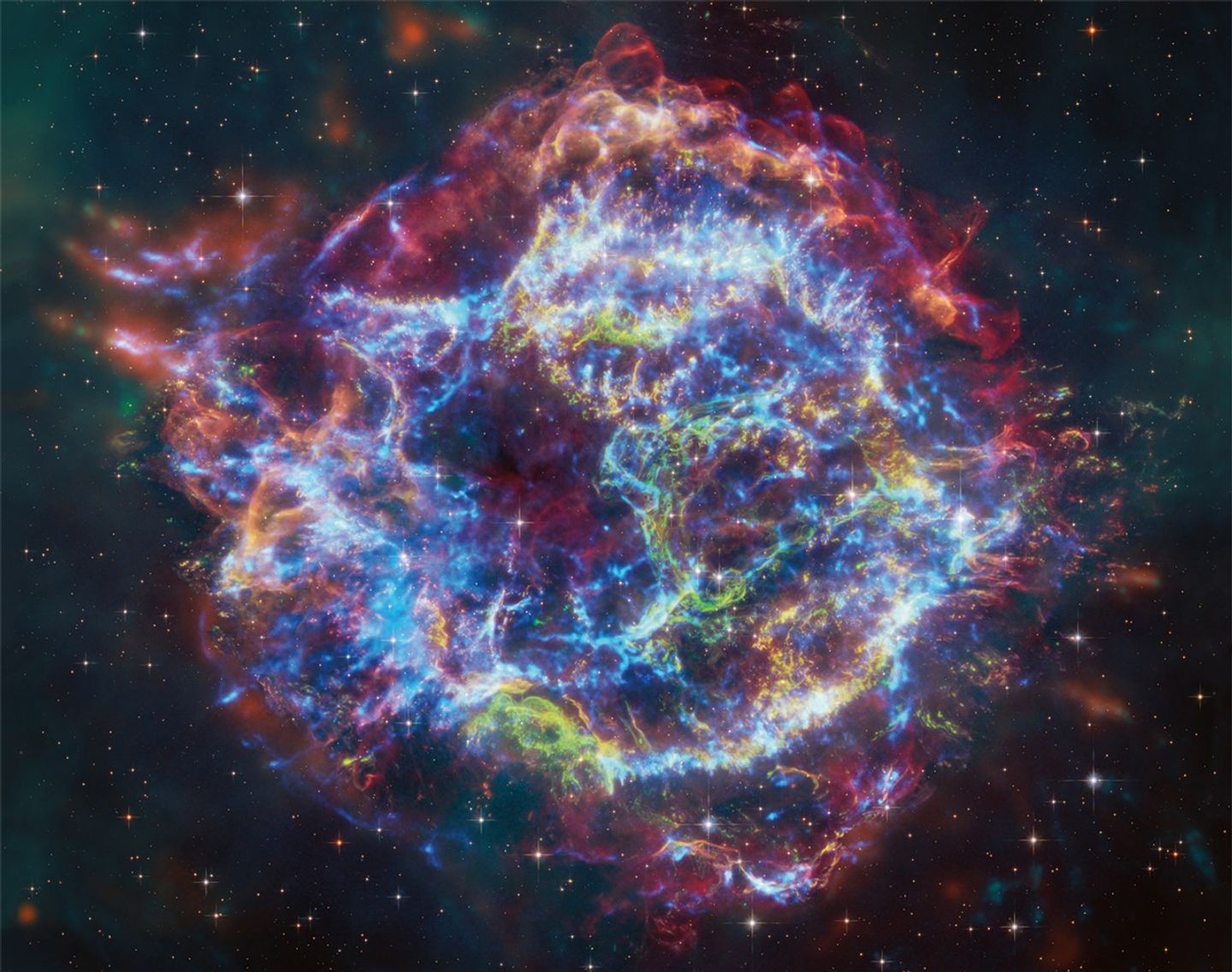
NASA-JAXA XRISM Finds Elemental Bounty in Supernova Remnant

For the first time, scientists have made a clear X-ray detection of chlorine and potassium in the wreckage of a…

Read the Story

XRISM News From JAXA and Other Institutions

XRISM updates from JAXA (Japanese Aerospace Exploration Agency) and others.

Cosmic clouds of pink and purple, some with bright centers, are surrounded by dark areas that appear like black space dotted with bright blue stars. A group of small clouds to the right is more red than any other area of the image.

MSU: The Milky Way’s black hole is hiding an explosive past, evidence suggests

Artist's concept of a supermassive black hole ejecting high speed gas

JAXA: XRISM finds black hole outburst similar to outbursts on the Sun

Artist's rendering of the innermost regions around the supermassive black hole in the active galaxy MCG–6-30-15.  The event horizon (black region in center) marks the boundary between the black hole and the surrounding accretion disk, where the gas orbits at nearly the speed of light before plunging in.  The extreme gravity and spin of the black hole combine to warp the shape of both the event horizon and the accretion disk as predicted by General Relativity, even bending the light from the back side of the disk up into our line of sight.  The wind driven from the innermost regions of this system is depicted by outflowing streamlines.  The component of this wind along our line of sight absorbs some of the X-rays emitted from the innermost disk.  Inset image: The corresponding XRISM/Resolve spectrum of MCG–6-30-15, with its best-fitting model shown in cyan.  Note the prominent, highly broadened iron line emitted by the gas in the innermost accretion disk.  Instead of appearing as a narrow, symmetrical emission line at 6.4 keV, as it would if emitted by gas in a laboratory on Earth, the line is broadened and skewed toward lower energies by the same relativistic effects that distort the appearance of the disk and event horizon.  Only XRISM/Resolve has the spectral resolution to separate this broad emission line from the narrow features imprinted on the spectrum from the wind and reflection from more distant gas, seen in emission absorption in the same energy range. Credit: CfA/Melissa Weiss

CfA: New X-ray Space Telescope Gives Sharpest-Ever Glimpse at Growth of a Rapidly-Spinning Black Hole

Keep Exploring

Discover More Topics From NASA