















Science Interest Group
Diffuse Gas in Cosmic Ecosystems
The Diffuse Gas in Cosmic Ecosystems Science Interest Group (DGCE SIG) offers an opportunity for researchers across all career stages studying diffuse gas.
About DGCE SIG
Exploring Diffuse Gas Throughout the Universe
The Diffuse Gas in Cosmic Ecosystems Science Interest Group (DGCE SIG) provides a forum for researchers and students who are interested in diffuse gas throughout the universe, in the interstellar, circum-galactic, circum-quasar, and intergalactic media, to come together to discuss the latest discoveries and ideas.
This SIG will host monthly topical talks by experts on diffuse gas and its properties, along with regular discussion on what observations and instruments are needed to move the field forward. The talk schedule is monthly, on the 4th Thursday of the month at 4pm Eastern/1pm Pacific time.
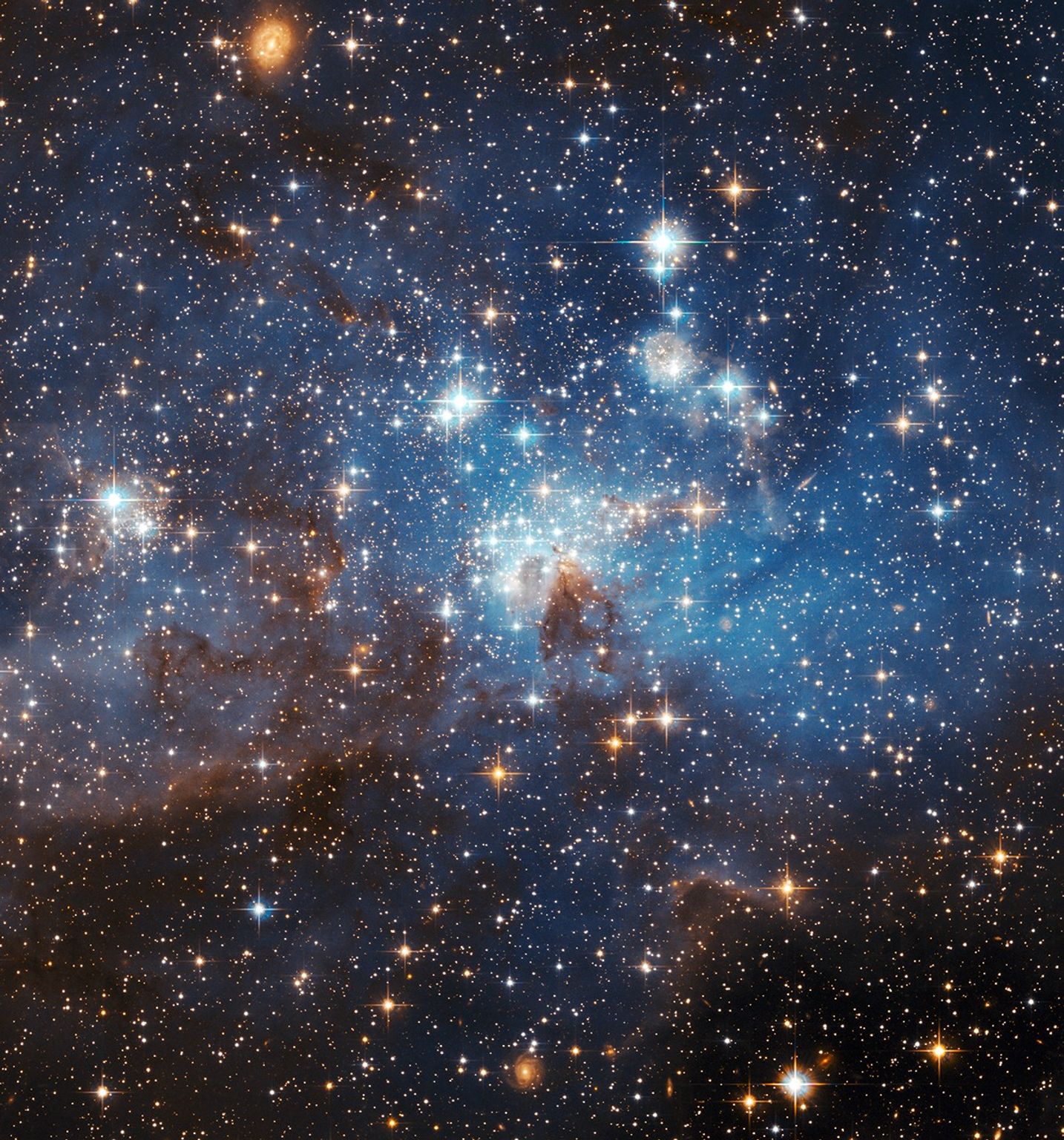
DGCE SIG motivation: Most of the ordinary matter in the universe is found in the tenuous gas between stars and galaxies. This matter is mostly diffuse and found in a mixture of phases, spanning a huge range of size scales, connecting galaxies to each other in a massive cosmic web, while also playing a key role in star and planet formation. The physical processes that govern the behavior of this material are the same, regardless of the scale. This Science Interest Group (SIG) organizes community input on Diffuse Gas found across Cosmic Ecosystems, emphasizing the interconnectedness of the systems at all scales. The SIG focus includes the circumgalactic and intergalactic media, and the interstellar medium environment of gas/diffuse plasma between stars and galaxies, as well as the flows within and around each of these media as they connect to each other. This SIG enhances the voice of this critical field within the broader astronomical community.
Subscribe to the DGCE SIG Email List
To join the list, send an email to DGCE-SIG-join@lists.nasa.gov with Subject="join"
To unsubscribe, send an email to DGCE-SIG-leave@lists.nasa.gov with Subject="leave"
Your email address will be used only for the purpose of subscription to the selected email distribution list. For further information, read the NASA Web Privacy Policy.
News & Events
Seminars, meetings, conferences, workshops, and other news and events for DGCE SIG
Pioneering Emission Mapping of the CGM with Aspera: The Path to Launch. Speaker: Dr. Carlos J. Vargas, University of Arizona & Steward Observatory
How the Faint Radio Sky is Changing Our Understanding of Star Formation and Galactic Outflows. Speaker: Allison Matthews
Open Questions in Galactic Wind Physics and Phenomenology. Speaker: Todd Thompson, Professor and Department Chair, Ohio State University
From Micro to Macro: Connecting the Physics of Galaxy Formation Across Scales. Speaker: Drummond Fielding, New York University
Cosmic Origins Science in the New Landscape of Space Astrophysics. Speaker: Swara Ravindranath, Deputy Chief Scientist of NASA’s Cosmic Origins Program (NASA GSFC)
The Effect of Various Physical Processes on Gas Flows in the CGM. Speaker: Freeke van de Voort, Cardiff University
Leadership Council
| Name | Affiliation & Email |
|---|---|
| Hsiao-Wen Chen, Chair | U Chicago |
| Danielle Berg | UT Austin |
| Sanchayeeta Borthakur | ASU |
| Erika Hamden | U Arizona |
| Gwen Rudie | Carnegie |
| Claudia Scarlata | U Minnesota |
| Carlos J. Vargas | U Arizona |
| Jessica Werk | U Washington |
News Straight to Your Inbox
Subscribe to your community email news list
We will never share your email address.