















Cosmic Origins Community
Opportunities
Research Opportunities
Astrophysics research usually begins with writing a proposal. A proposal is a document that is submitted in response to a specific solicitation. This table shows the most common solicitations relevant to NASA astrophysics. Solicitations are released to the public on a specific date, called the Release Date, which is usually about the same day each year for a given solicitation. Some solicitations require submitting a Notice of Intent (NOI). This is a short document declaring your intention to submit a proposal at a later date. If one is required by the solicitation, the deadline is shown in column NOI. Proposals must be submitted by the deadline, called the Submission Date, or they will generally not be accepted. Proposal writing takes time (e.g., three months or more for a first-time proposer). Use the submission date to plan in advance. Hyperlinks on the proposal name will take you to the solicitation. Before you begin writing a proposal, read the solicitation to determine whether you are an eligible proposer, whether your science interests broadly align with the goals of the solicitation, and what will be required to write the full proposal. Good luck!
| Opportunity Name and Description | Release Date | Notice of Intent (NOI) Date | Submission Date |
|---|---|---|---|
| Research Opportunities in Space and Earth Sciences 2026 (ROSES-2026) This is the omnibus NASA science solicitation. It includes multiple astrophysics programs, referred to as individual program elements. It is usually released each year on February 14. | July 2026 | — | — |
| Research Opportunities in Space and Earth Sciences 2025 (ROSES-2025) This is the omnibus NASA science solicitation. It includes multiple astrophysics programs, referred to as individual program elements. It is usually released each year on February 14. | 10 July 2025 | — | — |
| NSF Graduate Research Fellowship Program (GRFP) The National Science Foundation Graduate Research Fellowship Program (GRFP) provides three years of financial support inclusive of an annual stipend for graduate students. Target Audience: Students | — | — | 23 Oct 2026 |
| Hubble Fellowship Program (NHFP) NASA Hubble Fellowship Program (NHFP) supports independent postdoctoral research which contributes to NASA Astrophysics, including theory, observation, experimentation, or instrument development. Fellowships may be done at a US institution over a period of up to three years. Target Audience: Postdocs | — | — | 28 Oct 2026 |
| NASA Postdoctoral Program (NPP) The NASA Postdoctoral Program (NPP) supports post-doctoral research at a NASA center. Astrophysics applications are typically reviewed following the November 1 deadline, although NPP applications are accepted for March 1, July 1, November 1 deadlines. Target Audience: Postdocs | — | — | 1 Nov 2026 |
| NSF 26-522: MPS Astronomical Sciences Research Programs (MPS Astro). The U.S. National Science Foundation Directorate for Mathematical and Physical Sciences (NSF MPS) supports multiple research programs in the astronomical sciences. NSF MPS funds foundational astronomical sciences research and instrumentation focused on exploring space and advancing fundamental understanding of the universe. (Formerly NSF Astronomy and Astrophysics Grants (AAG) and NSF Advanced Technologies & Instrumentation (ATI)) | — | — | 16 Nov 2026 |
| NSF Particle Astrophysics — Experiment Supports research on the fundamental nature of matter, energy, space and time in the following areas: cosmic phenomena, underground physics and IceCube research support. | — | — | ~ Dec 2026 |
| NSF Particle Astrophysics and Cosmology — Theory Supports research in theoretical cosmology, including standard Big-Bang cosmology and alternative cosmologies motivated by new ideas in particle physics. Also supports theoretical particle astrophysics, which tests ideas for physics beyond the Standard Model. | — | — | ~ Dec 2026 |
| Nuclear Spectroscopic Telescope Array (NuSTAR) The Nuclear Spectroscopic Telescope Array (NuSTAR) General Observer Program (ROSES program element D.9) solicits proposals for science investigations relevant to the NuSTAR mission. NuSTAR focuses high energy X rays (E > 10 keV), with an effective bandpass of 3–79 keV. NOTICE: Amended October 1, 2026. This amendment releases a second opportunity to propose to the NuSTAR observatory in ROSES-25. NuSTAR General Observer (GO) Cycle 12 was previously solicited in Section 4. This amendment invites proposals for NuSTAR General Observer Cycle 13 as in Section 11. The due date for Phase-1 Proposals (submitted via ARK RPS) for is January 28, 2027. | — | N/A | 28 Jan 2027 |
| NASA Infrared Telescope Facility (IRTF) Observing time on IRTF is scheduled in six-month semesters. The semester and application periods are as follows: Semester A. Feb – July. Application open during September (Due Oct 1). Semester B. Aug – Jan Application open during March (Due Apr 1). | March 2026 | — | 1 Apr 2027 |
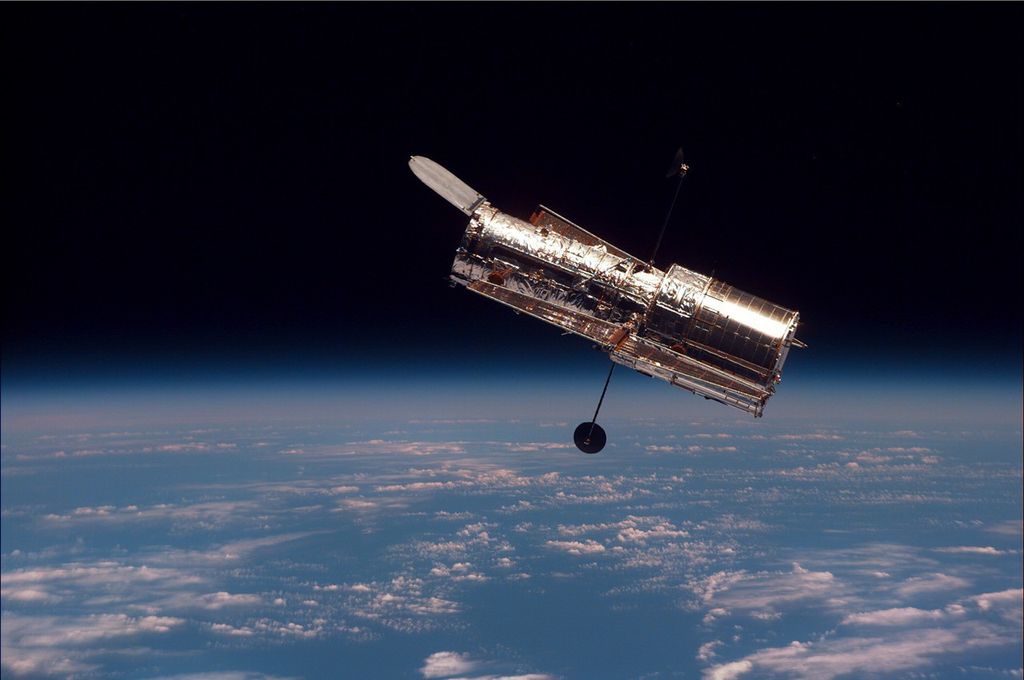
| Hubble Space Telescope (HST) STScI solicits proposals for Hubble Space Telescope (HST) Observing, Archival, and Theoretical Research. The full details are made available through two documents, the Call for Proposals, and the HST Primer. Downloadable PDF collections of these articles are provided as a courtesy, made available and updated when feasible. The online documentation is the authority, and will be updated with the latest information. | — | — | ~ Apr 2027 |
| Astrophysics Decadal Survey Precursor Science The Astrophysics Decadal Survey Precursor Science (ROSES program element D.16) supports research in areas of relevance to strategic missions identified as priorities in the National Academies Astrophysics Decadal Survey Report. | 10 July 2025 | — | — |
| PI Launchpad NASA SMD, the University of Arizona, the University of Michigan, NASA ARC, NASA GSFC, JPL, and the Heising-Simons Foundation will host the PI Launchpad to guide participants through ways to turn their science question into a mission concept. | ~ 2027 | — | — |
| Nancy Grace Roman Technology Fellowship (RTF) The Nancy Grace Roman Technology Fellowship Program (RTF) supports early career researchers to develop skills related to flight instrument development. Applications are concurrent with an APRA or SAT proposal. Target Audience: Postdocs | — | — | — |
| Euclid The Euclid General Investigator program (ROSES program element D.18) solicits science investigations relevant to the Euclid mission. Euclid explores the composition and evolution of the dark energy and dark matter. Amendment 24. | 10 Jul 2025 | — | — |
| Astrophysics Data Analysis Astrophysics Data Analysis Program (ADAP) supports analysis of archival data that includes NASA assets. Call for proposals is bundled in the ROSES omnibus solicitation as program element D.2. NOTICE: NASA may solicit this program in ROSES-2025 contingent on budget | 10 July 2025 | 19 Dec 2025 | 30 Jan 2026 |
| Fermi Gamma Ray Space Telescope The Fermi Gamma Ray Telescope General Investigator program (ROSES program element D.6) solicits proposals for science investigations relevant to the Fermi mission. Fermi observes gamma rays from 20 MeV to >300 GeV over the entire celestial sphere, and observes transient gamma-ray sources with energies extending from 8 keV up to 300 GeV. | 10 July 2025 | N/A | 27 Feb 2026 |
| Transiting Exoplanet Survey Satellite (TESS) The Transiting Exoplanet Survey Satellite (TESS) General Investigator Program supports science investigations relevant to the TESS mission. TESS was designed to monitor the brightness of nearby F,G,K, and M stars to search for transiting exoplanets. | 10 July 2025 | TBD | 27 Feb 2026 |
| X-ray Imaging and Spectroscopy Mission The X-ray Imaging and Spectroscopy Mission General Observer program (XRISM; ROSES program element D.17) supports XRISM observations (type 1 proposals) and related supporting atomic physics investigations (type 2 proposals). NOTICE: Amended December 6, 2024. This program element has been deferred to ROSES-2025. | 10 July 2025 | N/A | 27 Feb 2026 |
| NASA Keck Observations with the ground-based Keck telescopes. NASA Keck time is administered through NASA Exoplanet Science Institute (NExScI). Note: Requests for letters of endorsement for Habitable Worlds Observatory (HWO) Technology Maturation proposals: Deferred Solicitation to 2026B. | 12 Feb 2026 | — | 12 Mar 2026 |
| Nancy Grace Roman Space Telescope The Nancy Grace Roman Space Telescope Project Cycle 1 Call for Proposals marks the first opportunity to submit proposals to conduct scientific investigations with Roman’s Wide Field Instrument (WFI). | 10 Dec 2025 | — | 17 Mar 2026 |
| Chandra X-ray Observatory The Chandra X-Ray Observatory program supports science investigations relevant to astrophysical sources of high energy radiation. Observing Cycle 28. | 18 Dec 2025 | — | 18 Mar 2026 |
| Astrophysics Pioneers The Astrophysics Pioneers (ROSES program element D.13) space and sub-orbital science investigations program supports small spacecraft such as CubeSats and comparable flight projects. | 10 July 2025 | 11 Feb 2026 | 2 Apr 2026 |
| Future Investigators in NASA Earth and Space Science and Technology Future Investigators in NASA Earth and Space Science and Technology (FINESST). Funding for graduate students in NASA related science. This program element is expected to solicit proposals in FY 2024, but final details and dates are not yet determined. Target Audience: Students | 10 July 2025 | TBD | 14 July 2026 |
| Imaging X-ray Polarimetry Explorer (IXPE) The Imaging X-ray Polarimetry Explorer (IXPE; ROSES program element D.16) measures the polarization of X-ray sources in the 2–8 keV band. The due date for IXPE Phase-1 Proposals (submitted via ARK RPS) remains September 17, 2026. | — | N/A | 17 Sept 2026 |
| Neutron Star Interior Composition Explorer (NICER) The Neutron Star Interior Composition Explorer observes X-ray sources in the range 0.2–12 keV, especially neutron stars and other rapidly variable sources, with high-resolution timing and spectroscopy. It is onboard the International Space Station. The Phase-1 Proposal due date (submitted via ARK RPS) for both IXPE and NICER remains unchanged at September 17, 2026. | — | N/A | 17 Sept 2026 |
| Neil Gehrels Swift Observatory The Neil Gehrels Swift Observatory General Investigator Program (ROSES program element D.5) solicits proposals for basic research relevant to the Swift gamma-ray burst mission. | — | N/A | 17 Sept 2026 |
| NSF Astronomy and Astrophysics Postdoctoral Fellowships (AAPF) The National Science Foundation Astronomy and Astrophysics Postdoctoral Fellowship (AAPF) supports early career scientists for independent research for up to three years at any qualifying institution. Target Audience: Postdocs | — | — | 15 Oct 2026 |
NASA Career Opportunities
NASA Astrophysics
Undergraduate
- Research Experience for Undergraduates (REU)
- Blue Marble Young Scientists Program
- National Space Grant College and Fellowship Program
- NASA Pathways Internship Program
- NASA International Internships
- NASA Internships
- NASA JPL Internships
- L’SPACE Program
- USRA Distinguished Undergraduate Awards
Graduate
- Future Investigators in NASA Earth and Space Science and Technology (FINESST)
- NASA Space Technology Graduate Research Opportunities (NSTGRO)
- National Space Grant College and Fellowship Program
- NASA Fellowship Activity
- NASA International Internships
- NASA Internships
- NASA JPL Internships
- NASA Science Mission Design Schools
- NASA Pathways Recent Graduate Program
Postdoctoral
- NASA Postdoctoral Program (NPP)
- NASA Hubble Fellowship Program (NHFP)
- Nancy Grace Roman Technology Fellowships for Early Career Researchers
- NASA JPL Postdoctoral Program
- NASA Science Mission Design Schools
NASA Science Continuing Opportunities
Early Career Workshops
- Cosmic Origins First Early Career Workshop, 21-23 October 2025
- Cosmic Origins Second Early Career Workshop, 20-22 October 2026
News Straight to Your Inbox
Subscribe to your community email news list
We will never share your email address.
