























Launchpad: Atmosphere and Optical Telescopes
Learn about the effect of our atmosphere on optical telescopes. Discover how the geography of Mauna Kea, Hawaii helps astronomers overcome the problems of light pollution and the atmosphere. See why you might need a coat to visit the Big Island!
Discussion and writing prompts
1. Earth’s atmosphere can bend, scatter, and distort light before it reaches a telescope. How can these atmospheric effects change the images astronomers observe? Explain why stars appear to “twinkle” when viewed from Earth. Then describe how atmospheric motion can affect the clarity of images collected by ground-based optical telescopes.
2. Engineers have developed technologies that help ground-based telescopes compensate for atmospheric distortion. Why is it valuable to improve the performance of telescopes on Earth instead of placing every telescope in space? Compare the advantages and challenges of operating a telescope on Earth with those of operating a telescope in space. Use evidence to explain which location might be best for a particular type of astronomical investigation.
3. Earth’s atmosphere is constantly changing, so the amount of distortion affecting a telescope can change from moment to moment. How can scientists and engineers use measurements and technology to correct for these changes?
Background Information
Grades 3 through 12
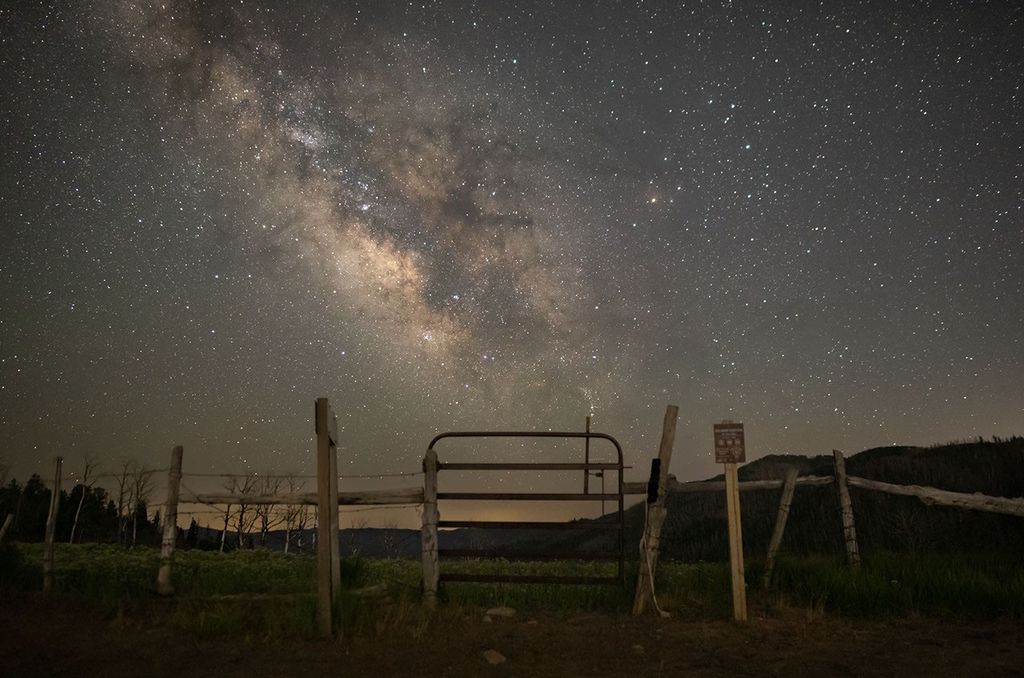
- NASA Milky Way Panorama from Mauna Kea (webpage)
Grades 6 through 12
Grades 9 through 12
- NASA Hubble Multimedia (webpage)
- NASA Infrared Astronomy (webpage)
- NASA Infrared Telescope Facility (webpage)
Activities
Grades 2 through 8
- NASA The Science of Color (webpage)
Gades 3 through 12
- NASA Infrared Zoo (interactive)
Grades 5 through 8
- NOAA/NASA Understanding Infrared Light (pdf)
Grades 9 through 12
- University of California, Berkeley Light Detectives: Using WISE Data to Identify Brown Dwarfs and ULIRGs (pdf)
- Cool Cosmos Infrared Lesson Plans (webpage)