









![Request for Information – Potential [Placeholder for Prize]](https://assets.science.nasa.gov/dynamicimage/assets/science/psd/solar/2023/09/s/solarsystem_0.jpg?w=1024)






Galaxies Science Interest Group Seminar 6 March 2024
Date: 6 March 2024, 1:00pm ET
The Role of UV Spectroscopy to Interpret the Properties of the First Galaxies
Speaker
Matilde Mingozzi
Abstract
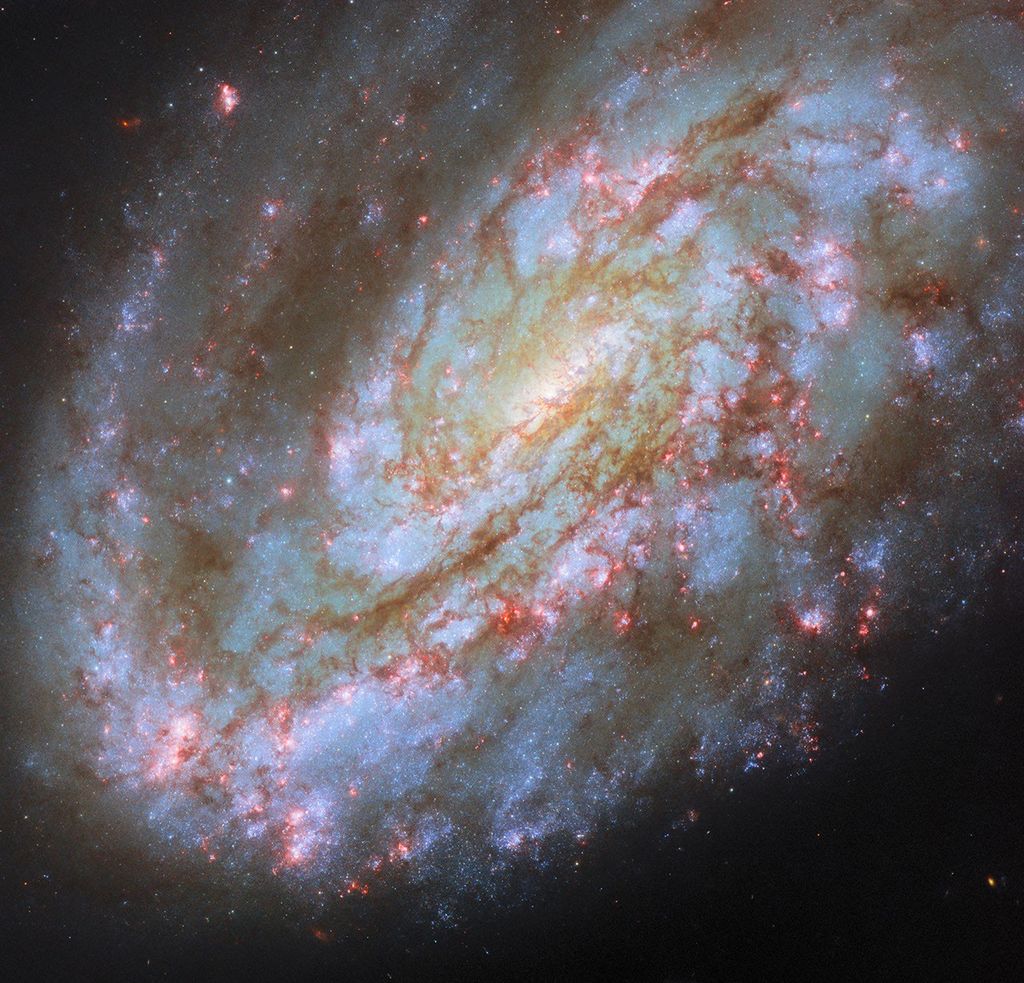
Rest-frame UV spectra play a key role in the understanding of massive stellar populations, chemical evolution, feedback processes, and reionization. In particular, in the current JWST era, the UV spectroscopic frontier has been pushed to higher redshifts than ever before, to finally reveal the first galaxies in the distant Universe. It is thus fundamental to understand the diagnostic power of UV lines. To do this, I will discuss how HST UV spectra of local high-z analogues can represent a powerful ideal laboratory, thanks to the level of data quality and spatial resolution the local Universe can offer. Taking a step further, in order to fully understand the physical conditions that give rise to the excitation of UV lines, I will show how we can spatially tackle them using HST imaging to isolate the sources of the UV photons within these systems. These studies represent an ideal pathfinder for a future UV integral field unit (IFU) on Habitable Worlds Observatory (HWO). In particular, I will discuss how a large-scale UV IFU would allow us to perform chemo-dynamic studies with UV diagnostics of nearby high-z analogues at pc-scales for the first time. Overall, this will be crucial to interpret high-z spatially resolved spectra in the rest-frame UV revealed with current and future IR and optical observatories, such as JWST and the future ELTs.
Connection information for the Galaxies SIG seminars can be found at the link here: Zoom link for seminars
Be sure to follow the Galaxies SIG seminar schedule for the talk in the series. Seminar Schedule: Every first Wednesday of the month, 1pm – 2pm ET
News Straight to Your Inbox
Subscribe to your community email news list
We will never share your email address.
