







IR STIG Seminar
Infrared Science and Technology Interest Group
Location
Virtual
Dates
2 February 2026
3:00pm ET
Community
IR STIG
Type
Seminar
Space Interferometry for Astrophysics in the 2030s?
Speaker
William C. Danchi, NASA Goddard Space Flight Center
Abstract
Space interferometry is the next evolutionary step for high angular resolution astronomy, given the maturity and many accomplishments of ground-based interferometry in the past 40+ years. These include imaging the accretion disks around black holes (e.g. NGC 1068), characterizing exoplanet atmospheres, images of motion of material in protoplanetary disks at the au scale, images of the surfaces of stars, material transfer between binary stars, ejection of material from the surface of AGB stars, precision narrow field astronomy, all with resolutions of ~1 mas and below.
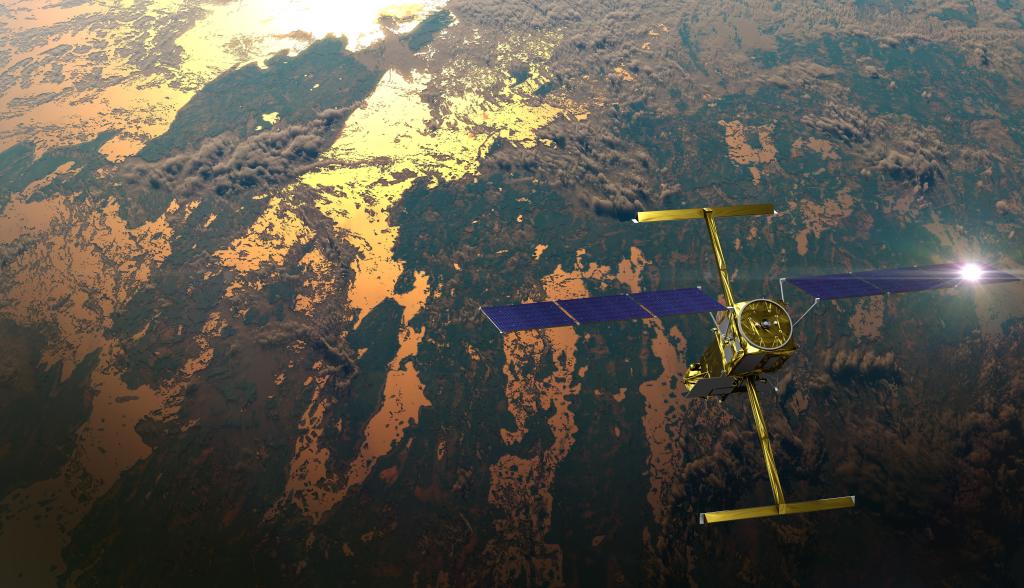
In this talk I will review the state of the art of ground-based interferometry, commonly done every day of the year, with US and European facilities. Space based interferometers have many advantages across the electromagnetic spectrum. Several mission concepts that have been developed in the past 20 years will be discussed, emphasizing their importance in the near-, mid-, and far- infrared. It is possible to fly a path breaking interferometer by the mid-2030s if funding is available.
Seminar Connection
News Straight to Your Inbox
Subscribe to your community email news list
We will never share your email address.