











IR STIG Seminar
Infrared Science and Technology Interest Group STIG
Location
Virtual
Dates
3 November 2025
3:00pm ET
Community
IR STIG
Type
Seminar
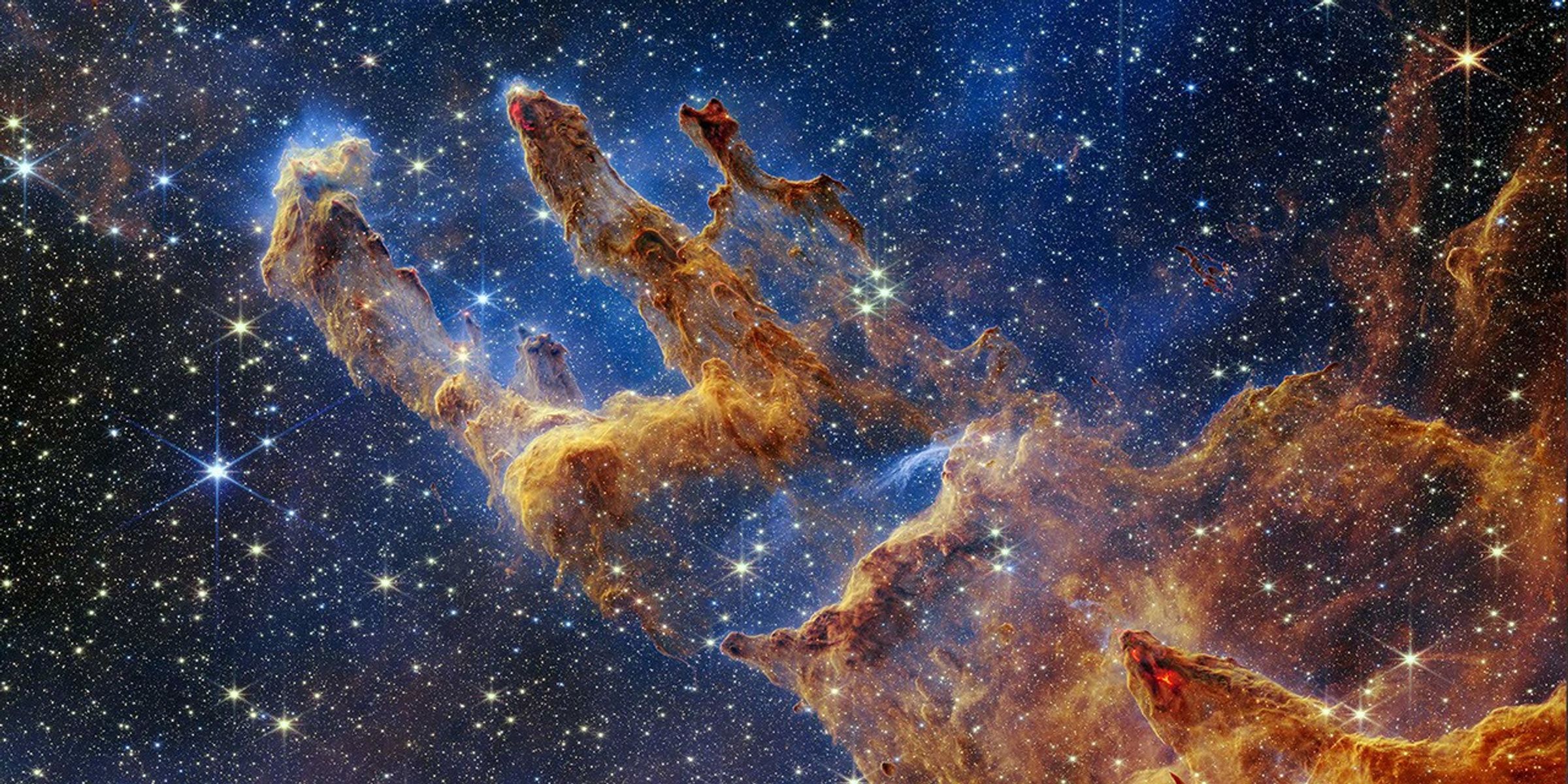
NASA's Great Observatories - A Triumph of the Human Spirit
Speaker
Michael Werner (Jet Propulsion Laboratories, former Project Scientist, Spitzer Space Telescope)
Abstract
In January of 1985, more than 40 years ago, a group of astronomers met with NASA officials to map out the future of NASA space astronomy. Their efforts led to the Great Observatories program, linking four powerful space telescopes to study the heavens in four regions of the spectrum. The successful launch and operation of the Spitzer Space Telescope in the Fall of 2003 completed the launch of the Great Observatories, almost 20 years after the program was formulated, and two of the Observatories, Hubble and Chandra, continue to operate very productively. The scientific and public education results of the Great Observatories are well-known. Here we emphasize that fulfilling the extraordinary vision of the Great Observatories was a triumph of human ingenuity, dedication, and determination.
SPHEREx Discovery of a Large Water Ice Grains + Giant Carbon Dioxide Coma Surrounding Interstellar Object 3I/ATLAS
Speaker
Casey Lisse (Johns Hopkins University)
Abstract
The SPHEREx spacecraft (Dore+2016, 2018; Bock+ 2025) observed interstellar object (ISO) 3I/ATLAS from 01- to 15-August-2025. Using 102 band, R = 40−130 spectrophotometry, imagery, spectroscopy, and light curves of the ISO were obtained. From these, robust detections of water gas emission at 2.7−2.8 μm and CO2 gas at 4.23−4.27 μm were found. More tentative detections of 13 CO2 and CO gas were seen. A slightly extended coma of H2O was detected, and a huge surrounding atmosphere extending out to 3′ was discovered. Registration and co-adding of dozens of scattered light continuum images around λ = 1.2 μm corrected for the solar spectral produced a high S/N ratio image consistent with a point source. The same images were used to create a light curve for which variability ≲ 10% was seen from beginning to end. The absolute brightness of 3I/ATLAS at 1.0−1.5 μm is consistent with a < 2.5 km radius nucleus (Jewitt+ 2025) surrounded by a 100 times brighter coma. The 1.5−4.0 μm continuum structure shows a strong feature commensurate with water ice absorption seen in KBOs. In this talk we will report on the latest updates to these findings and their implications for the nature of 3I/ATLAS and its expected evolution as it passes out of our solar system in the next few months.
Seminar Connection
Meeting ID: 255 095 682 130
Passcode: ho7To3cW
News Straight to Your Inbox
Subscribe to your community email news list
We will never share your email address.