

























IR STIG Webinar
Infrared Science and Technology Integration Group
DATE
Dec 05, 2022
TIME
3:00 pm EST
COMMUNITY
IR STIG
TYPE
Webinar
The Starburst-AGN-Shock Connection in Galaxy Mergers
Dr. Vivian U (UC Irvine)
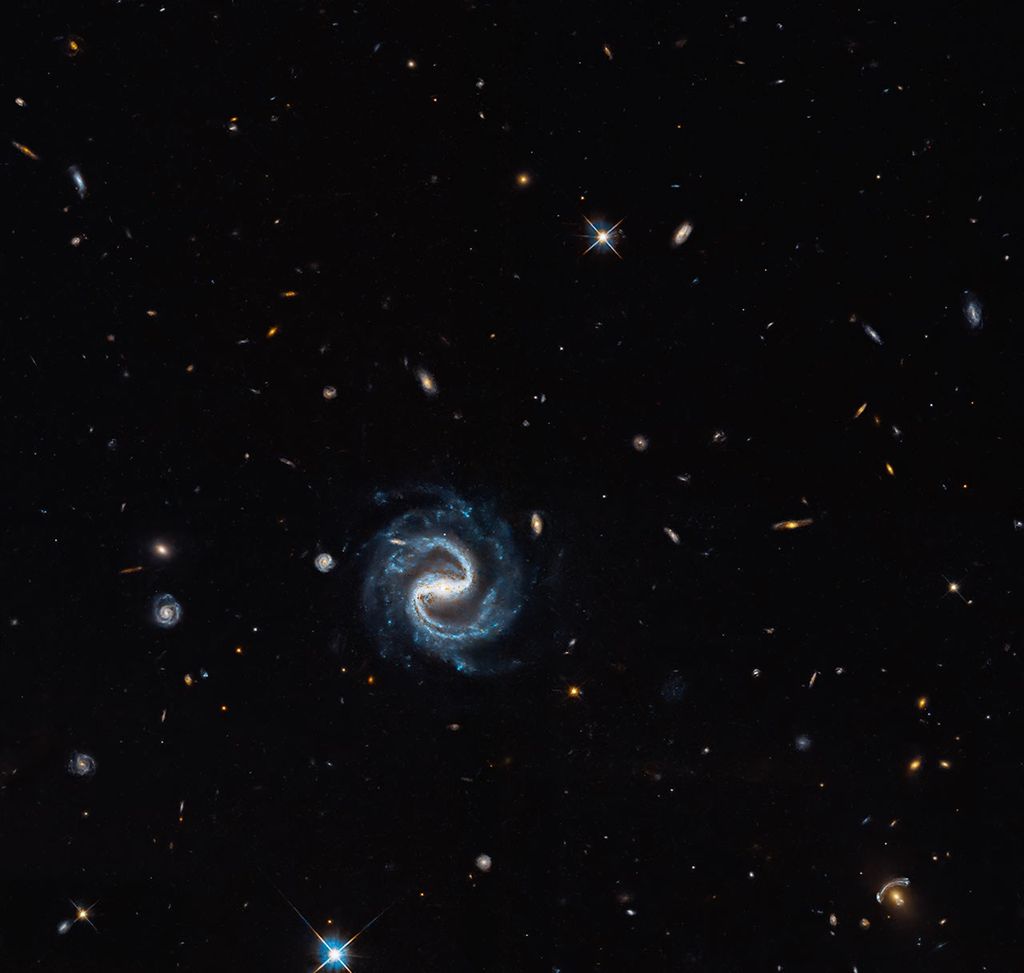
Feedback plays a pivotal role in regulating the galactic life cycle through its manifestation in shocks and turbulent gas within the galaxy and out into the circumgalactic medium. Yet, the complex interplay between outflowing winds and their host galaxy remains largely unconstrained at relevant physical scales in star-forming clouds and shocked gas clumps. The lack of direct observational measurements of small-scale properties of the multiphase interstellar medium is a big hurdle for constraining feedback prescriptions in cosmological models, prompting a systematic resolved study of extreme environments in galaxy mergers known to host these dynamic events. In this talk, I will highlight key results and ongoing work from our Great Observatories All-sky LIRG Survey and Keck OSIRIS AO LIRG Analysis survey that probe gas kinematics in nearby interacting infrared-luminous galaxies. With state-of-the-art ground- and space-based integral-field spectrographs on Keck and most recently JWST, we carry out a synergistic study of the multiphase gas to disentangle the starburst-AGN-shock connection in galaxies undergoing the most active phase of black hole growth and star formation activity. Our results on gas feedback from nuclear to galactic scale demonstrate the important role that mergers play in shaping galaxy evolution.
Re-defining G in ultra-low temperature bolometers with phonon engineering
Dr. Jake Connors (NIST-Boulder)
Future far-infrared astrophysics space missions will look to utilize high-resolution direct-detection spectrometers coupled with an actively cooled mirror to study the detailed astrochemistry of exoplanetary systems. These instruments, potentially operating from 30 – 300μm and with spectral resolutions of up to R ~ 105, require broadband, direct absorption detectors with noise equivalent powers (NEP) of < 10-19 W/Hz-1/2 to perform background limited observations. We choose to study the limits of transition edge sensor (TES) detectors due to their ability to be truly broadband, having a simple electrothermal response, and well understood fabrication. In addition to operating a TES at increasingly low bath temperatures, these NEP’s can be achieved through the reduction of the bolometers thermal link to the bath, G. However, the extreme dimensions required of the TES thermal links push the designer to consider quantized and coherent phonon transport effects. Instead of fabricating simply very narrow or long TES thermal links, which suffer from the effects of a quantized minimum conductance or a large distributed heat capacity respectively, we choose to utilize these coherent phonon transport effects to systematically reduce G. Presented herein is a study of various TES thermal link designs approaching these extreme dimensions, exploring fabrication feasibility, theoretical calculations of the detector performances, and discussions of upcoming measurements of fabricated TES detectors.
News Straight to Your Inbox
Subscribe to your community email news list
We will never share your email address.
