






![Request for Information – Potential [Placeholder for Prize]](https://assets.science.nasa.gov/dynamicimage/assets/science/psd/solar/2023/09/s/solarsystem_0.jpg?w=1024)



IR STIG Webinar
Infrared Science and Technology Integration Group
DATE
Jun 12, 2023
TIME
3:00 pm EST
COMMUNITY
IR STIG
TYPE
Webinar
Searching for life and habitability in our Solar System
Dr. Geronimo Villanueva (NASA / GSFC)
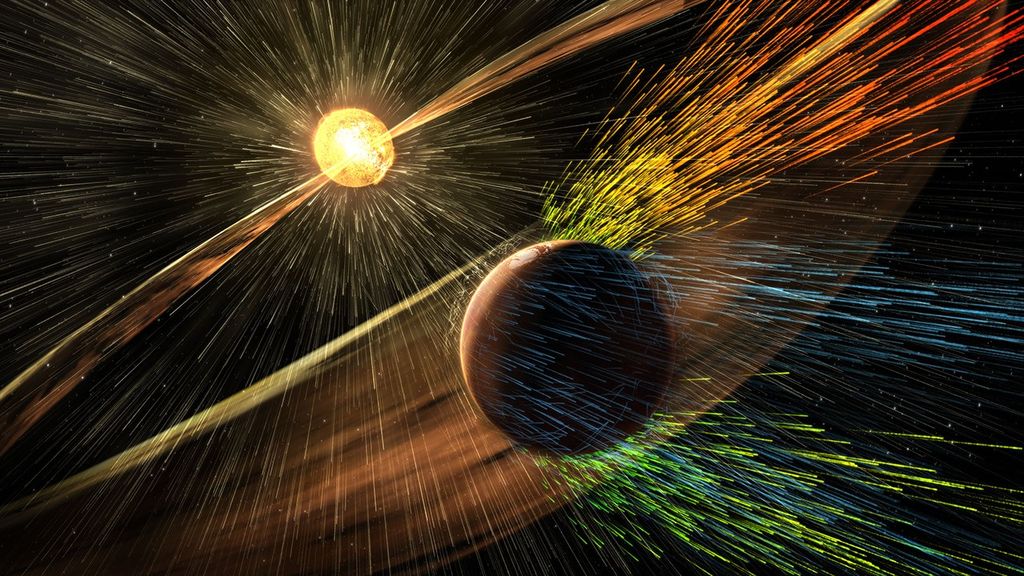
We recently established that Mars lost an ocean’s worth of water, while the Curiosity rover has recently detected organics on the Martian surface and in the atmosphere. Venus may have been once covered by water, while organic rich oceans have been suggested to exist under the surface of Europa, Enceladus and on Titan. If these planets/moons had a rich chemical and diverse past, how much of these biomarkers were lost to space, and how much are currently available for life? Are there sub-surface habitable niches connecting now with the atmosphere?
High-resolution spectroscopy is a powerful method to address fundamental questions of planetary evolution and habitability, by permitting to probe several key volatile and organic species, together with their isotopic abundance ratios. For example, in the last decade we obtained the most comprehensive search for organic material in the Martian atmosphere and we are now sending powerful probes to Venus, to the Jupiter-system, and beyond, permitting us to probe these planets/moons with unprecedented sensitivity. With the recent arrival of the James Webb Space Telescope (JWST) to the L2 point, a new window now opens for the exploration of the solar system and beyond. In particular when probing the rich molecular infrared wavelengths, which are notably noisy when employing ambient temperature observatories, yet provide sensitive access to many organics and volatiles.
In this talk, I will present our latest discoveries on Enceladus, Europa and Mars with JWST, ExoMars and ground-based observatories, and our latest findings with SOFIA, ALMA and other ground-based observatories on Venus, comets and other solar system bodies.
A Measurement of the Cosmic Optical Background from the Outer Solar System with New Horizons
Dr. Teresa Symons (UCI)
The extragalactic background light (EBL) is the sum of the light emitted by sources beyond the Milky Way throughout the history of the universe. While the EBL is present at all wavelengths, at optical wavelengths it is especially sensitive to the light from stars and galaxies and is referred to as the cosmic optical background (COB). Direct photometric measurements of the COB provide an important comparison to population models of galaxy formation and evolution. Such measurements therefore provide a cosmic consistency test with the potential to reveal additional diffuse sources of emission. However, the COB has been difficult to measure from Earth due to the difficulty of isolating it from the diffuse light scattered from interplanetary dust in our Solar System, Zodiacal Light. In this talk, I will discuss a new measurement of the COB derived from data taken by the Long-Range Reconnaissance Imager (LORRI) on NASA’s New Horizons mission, encompassing New Horizons’ journey from the inner Solar System to Pluto and beyond, and put this measurement in the context of other estimates of the COB and EBL.
News Straight to Your Inbox
Subscribe to your community email news list
We will never share your email address.
