












IR STIG Seminar
Infrared Science and Technology Integration Group
DATE
Jun 22, 2021
TIME
1:00 pm EST
COMMUNITY
IR STIG
TYPE
Seminar
Measurements of the Zodiacal Light Absolute Intensity through Fraunhofer Absorption Line Spectroscopy with CIBER
Phil Korngut (Caltech)
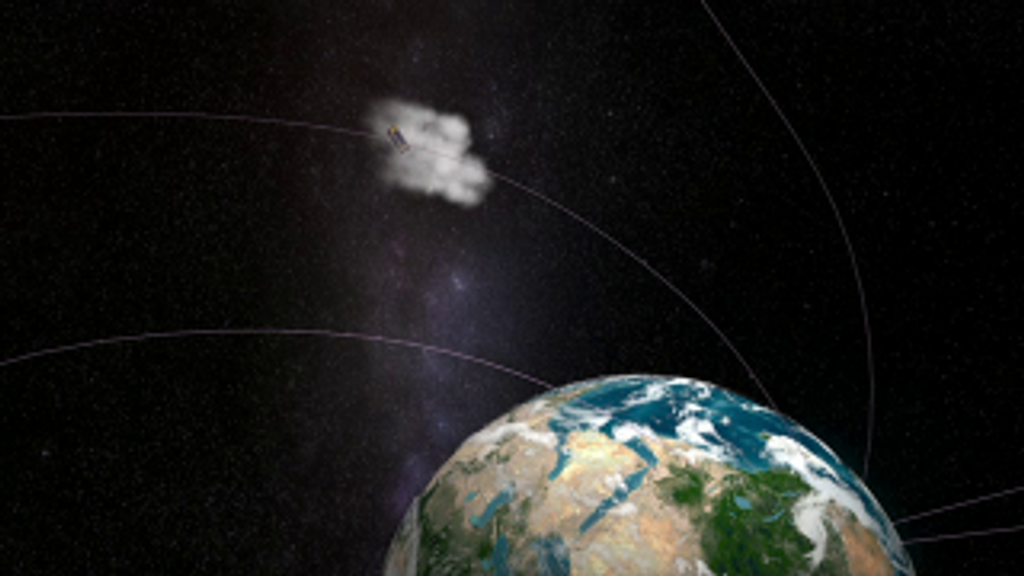
The Zodiacal Light, generated from scattered and re-radiated Sunlight and the Interplanetary dust cloud produces a bright foreground in the NIR, omnipresent in our 1AU neighborhood. This diffuse signal dwarfs the intensity of the Extragalactic Background Light, and historically, attempts to quantify the EBL through absolute spectro-photometry have relied on geometrical models for foreground removal. In this talk, I'll present recent results from the narrow band spectrometer aboard the CIBER sounding rocket which seek to independently quantify the intensity of the ZL foreground using Fraunhofer absorption lines. I'll show the accuracy with which the most widely cited foreground models describe the data and their implications for the Solar system and EBL.
Short Bio: Dr. Phil Korngut received his PhD in Physics from Upenn in 2005 where he developed a mm wave camera for the 100m Green Bank Telescope and used it to probe the Sunyav Zel'Dovich effect at high angular resolution in merging massive galaxy clusters. From there, he received a NASA Postdoctoral fellowship working on the CIBER and CIBER2 sounding rocket experiments to study the Extragalactic Background Light. Currently, Phil is a research scientist in Caltech's Observational Cosmology group. He serves as the Instrument Scientist on NASA's SPHEREx NIR all-sky survey mission, interfacing the demands of the astrophysical measurements to the design and capability of the infrared instrument.

News Straight to Your Inbox
Subscribe to your community email news list
We will never share your email address.
