




Next AI/ML Science and Technology Interest Group (AI/ML STIG) Lecture
2 February 2026
February 2nd, 2026 at 4:00 pm ET/1:00 pm PT
Graph Neural Networks
Neural Network Basics: Part 3 | Tri Nguyen, Northwestern University
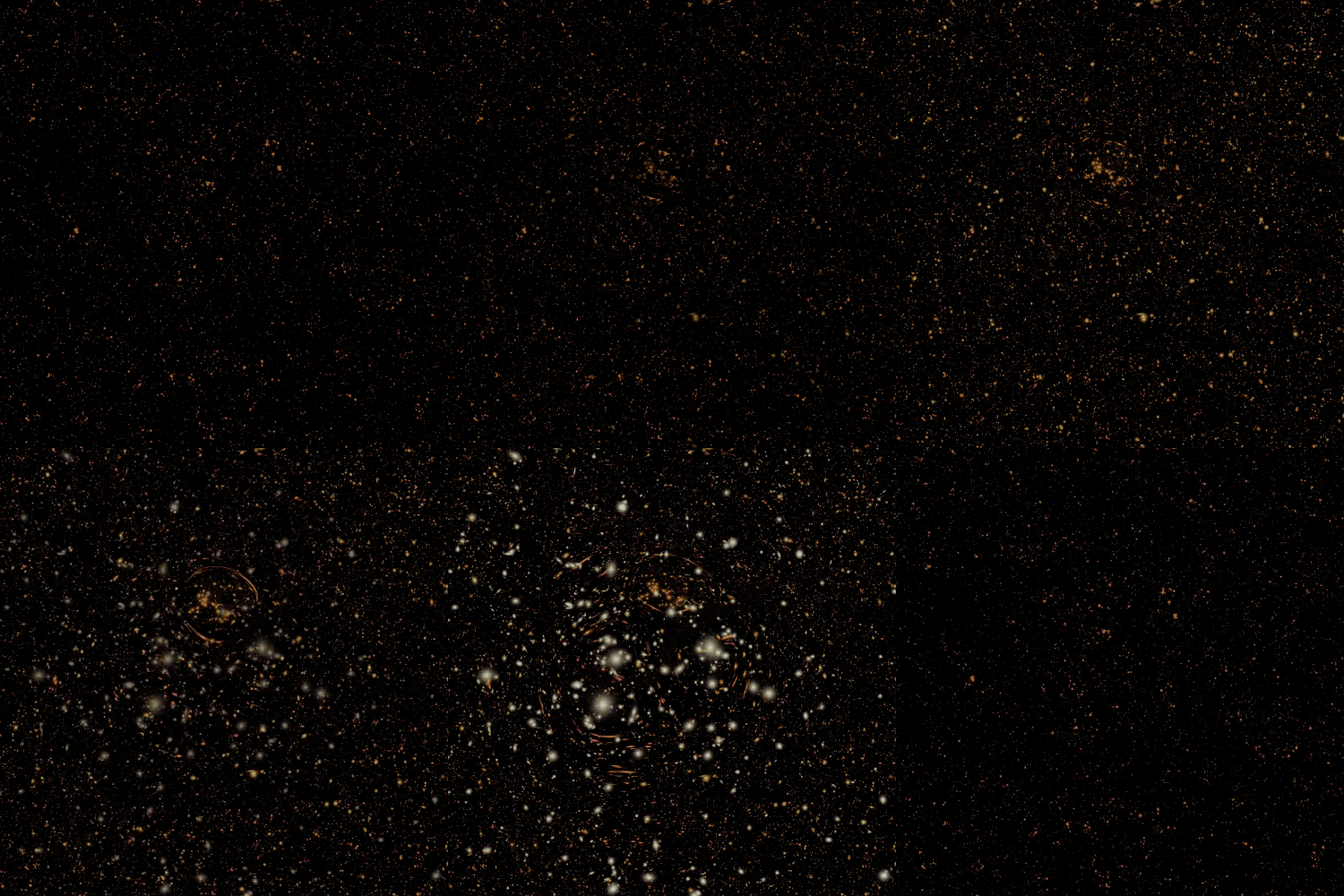
Learn how to build Graph Neural Networks (GNNs) to work with graph-structured data. Explore node classification on citation networks and apply GNNs to model dark matter subhalo interactions with stellar streams using real astrophysical simulations. Lecture tutorial materials and jupyter notebooks can be found here: https://tingyuansen.github.io/NASA_AI_ML_STIG/#schedule
Topics Covered:
- Introduction to graph-structured data and GNNs
- Node classification with the Cora citation network
- Building GNNs with PyTorch Geometric
- Graph attention mechanisms and message passing
- Application: inferring dark matter subhalo properties from stellar streams
- Working with point cloud data in astronomy
The link to join the meeting is here: Graph Neural Networks
Neural Network Basics: Part 3 | Tri Nguyen, Northwestern University
Learn how to build Graph Neural Networks (GNNs) to work with graph-structured data. Explore node classification on citation networks and apply GNNs to model dark matter subhalo interactions with stellar streams using real astrophysical simulations. Lecture tutorial materials and jupyter notebooks can be found here: https://tingyuansen.github.io/NASA_AI_ML_STIG/#schedule
Topics Covered:
- Introduction to graph-structured data and GNNs
- Node classification with the Cora citation network
- Building GNNs with PyTorch Geometric
- Graph attention mechanisms and message passing
- Application: inferring dark matter subhalo properties from stellar streams
- Working with point cloud data in astronomy
The link to join the meeting is here:
News Straight to Your Inbox
Subscribe to your community email news list
We will never share your email address.