

















UPDATED: Cosmic Origins Activities at AAS 245
10 January 2025
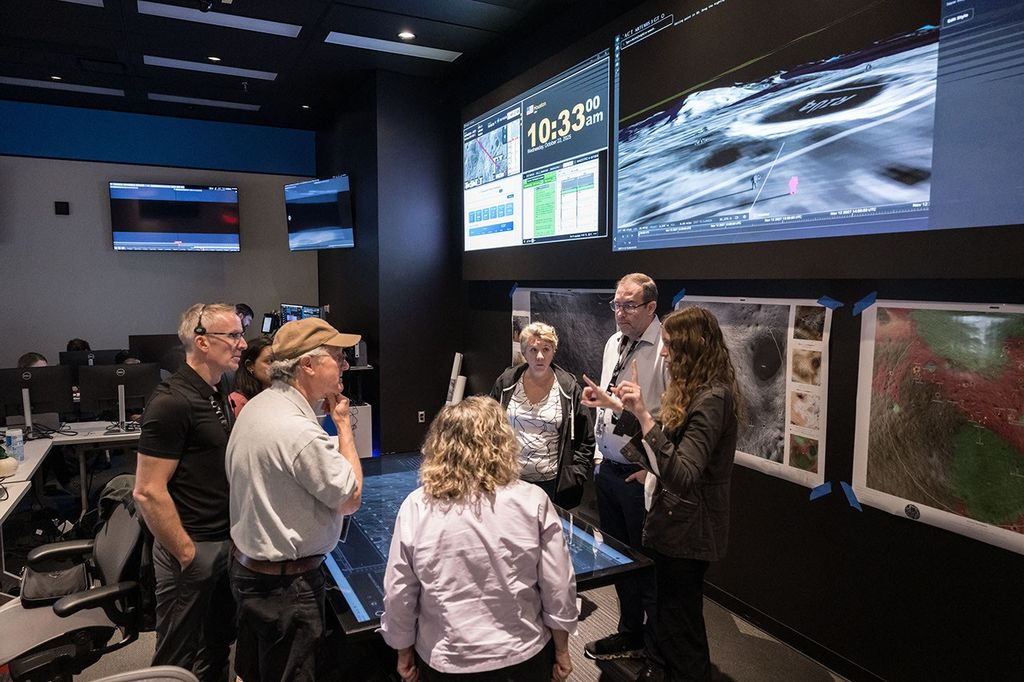
Join the Cosmic Origins team for the 245th Meeting of the American Astronomical Society at National Harbor, MD in the Washington DC area.
Cosmic Origins and Joint Program Analysis Group activities will be scheduled from 9a to 6p Eastern, Sunday, January 12th, before the main meeting opening reception on Sunday evening. The session will include science talks and programmatic presentations from members of the Cosmic Origins Science Interest Groups.
Immediately after the COPAG session is the Join PAG session that will provide program updates and various announcements pertaining to the broader NASA Astrophysics community. The agenda and connection information for those not attending in-person can be found here. To engage in meaningful discussions relevant to the community you can submit and upvote for the Joint PAG session here.
In addition to these sessions, members of the COR/COPAG community will be leading various sessions that range from state to the profession to infrared science to NASA trivia!
Highlighted talks for the COPAG session are listed below that include the morning and afternoon schedule blocks.
Morning Block
Room: Potomac 3 – 4
| Time | Topic | Speaker |
|---|---|---|
| 9:00am – 9:30am | COPAG Introduction and Updates | Shouleh Nikzad Peter Kurczynski |
| 9:30am – 10:55am | Galaxies / Stars / DGCE SIG | |
| The Need for Space-Based IFU Spectroscopy | Claudia Scarlata | |
| Deciphering the True Properties of Galaxies Across Cosmic Time with UV Spectroscopy | Bethan James | |
| A "Massive" Future for UV Spectroscopy | Christi Erba | |
| Growing in the Wind: O VI Imaging of a Galaxy’s Circumgalactic Medium | David Rupke | |
| Slitlet Stepping: Turning the NIRSpec Micro-Shutter Array into a Multi-headed IFU | Susan Kassin | |
| 11:10am ‑ 12:00 noon | Spatially Resolved UV Spectroscopy – Panel Discussion | Paul Scowen Erika Hamden Stephan McCandliss Emily Witt David Schminovich Susan Kassin Sanch Borthakur (Moderator) |
Afternoon Block
Room: Potomac 3 – 4
| Time | Topic | Speaker |
|---|---|---|
| 1:30pm | Science and upcoming data releases from Euclid, an ESA mission with NASA participation | Claudia Scarlata |
| 15 + Q&A | Deriving The Early-Career Algorithm: First Year Impacts of the Cosmic Pathfinders Program | Ron Gamble |
| 15 + Q&A | Cosmic Origins Technology Gaps and Portfolio Highlights | Rachel Rivera (NASA GSFC) |
| 15 + Q&A | Roman Space Telescope | Rachel Beaton |
| 3:00pm | Unpacking the Black Box: The Role of Artificial Intelligence and Machine Learning-Assisted Tools in Astronomy Research | Kartheik Iyer |
| Preparing for Astro 2030: The Astrophysics Decadal Survey Process | Rachel Osten, Kelsie Krafton |
News Straight to Your Inbox
Subscribe to your community email news list
We will never share your email address.
