




















Exoplanet Missions
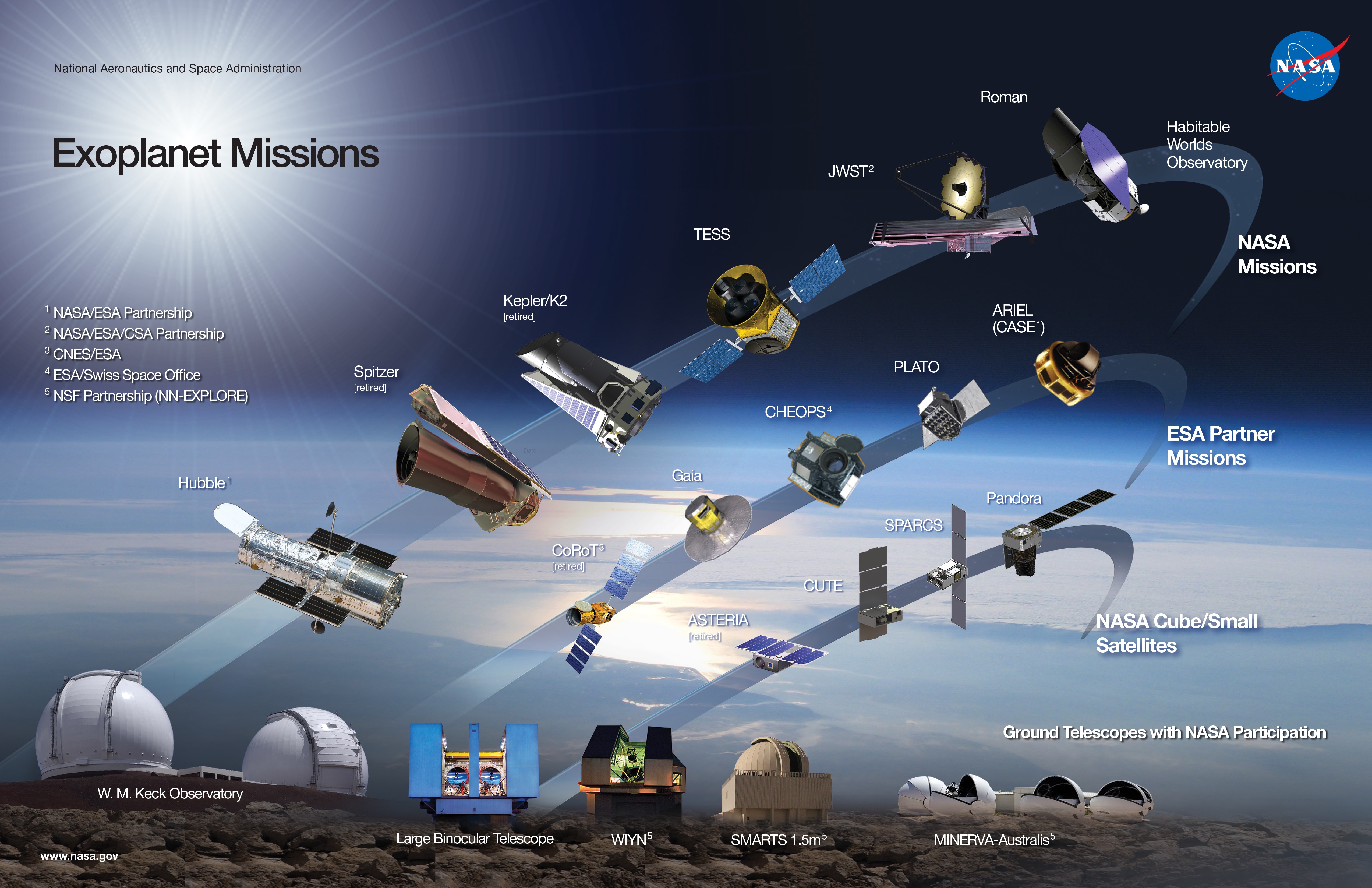
NASA explores exoplanets using a range of telescopes.

NASA supports a range of missions for exoplanet discovery and characterization. These missions include satellites designed specifically to study exoplanets and observatories built for general astrophysics, which have made valuable contributions to exoplanet science.
Exoplanet-Focused Missions
These NASA missions have been designed specifically for exoplanet exploration.
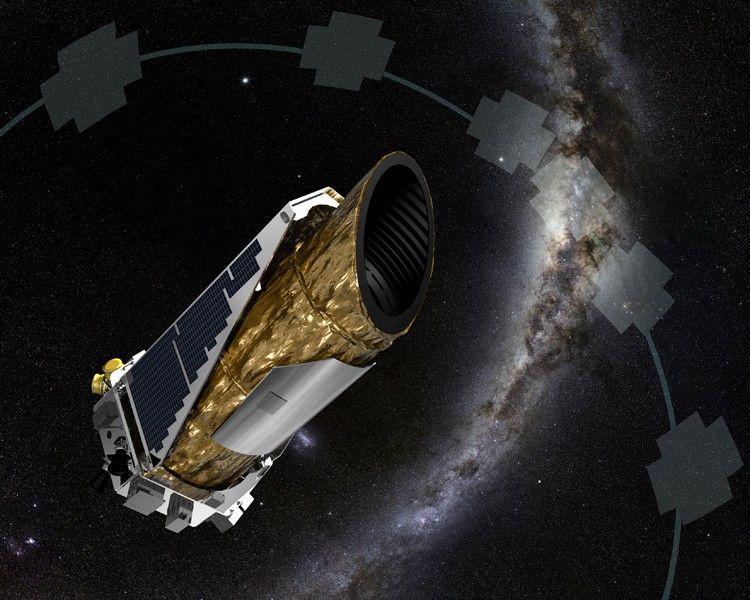
Kepler/K2
The Kepler space telescope was NASA’s first exoplanet-hunting mission. During nine years in deep space Kepler, and its second act, the extended mission dubbed K2, discovered thousands of transiting exoplanets and showed that there are more exoplanets than stars.
Launch: March 6, 2009
End of mission: Oct. 30, 2018 (Kepler transitioned to K2 on Nov. 4, 2012)
Type: Space Telescope (Discovery Mission)
Wavelengths: Visible/Near IR (420-900 nm)
Exoplanet Techniques: Transits

Arcsecond Space Telescope Enabling Research in Astrophysics (ASTERIA)
ASTERIA was a 6U CubeSat that demonstrated stable, arcsecond-level pointing and thermal control, important for precision photometry, which is used to measure stellar activity and planet transits. ASTERIA was the first CubeSat to detect an exoplanet transit.
Launch: Aug. 14, 2017
End of mission: Dec. 5, 2019
Type: CubeSat, Technology demonstration
Wavelengths: Visible/Near IR (500-900 nm)
Exoplanet Techniques: Transits

Transiting Exoplanet Survey Satellite (TESS)
TESS is an all-sky survey, composed of four wide-field cameras, designed to discover transiting exoplanets, particularly small planets around small, bright stars nearby. TESS has discovered thousands of planet candidates.
Launch: April 18, 2018
Type: Space Telescope (Explorer Mission)
Wavelengths: Visible/Near IR (600-1,000 nm)
Exoplanet Techniques: Transits

Colorado Ultraviolet Transit Experiment (CUTE)
CUTE is a 6U CubeSat that characterizes the composition and mass-loss rates of transiting exoplanet atmospheres, using near-UV transmission spectroscopy.
Launch: Sept. 27, 2021
Type: CubeSat
Wavelengths: Near-UV (255 - 330 nm)
Exoplanet Techniques: Transits, Spectroscopy
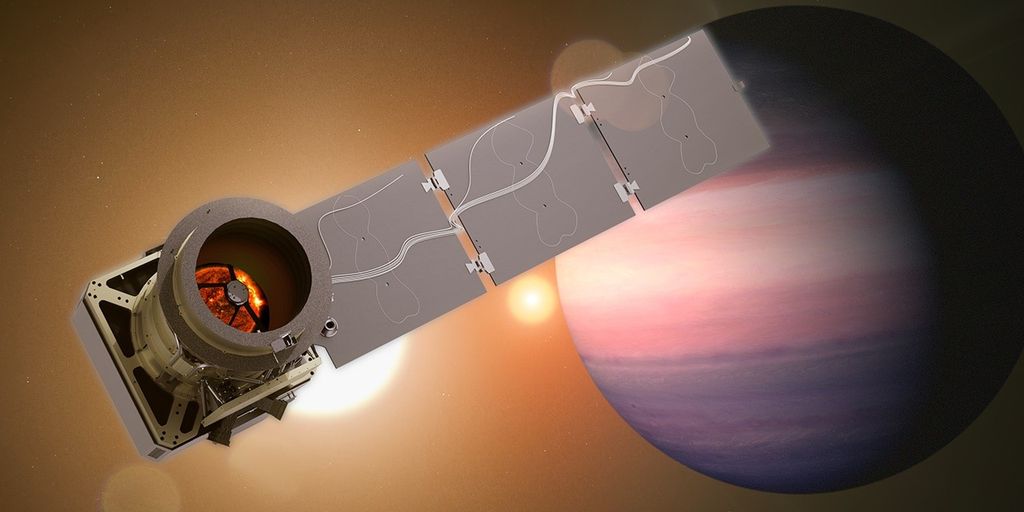
Pandora
Pandora is a small satellite designed to characterize the atmospheres of transiting exoplanets and the activity of their host stars with long-duration multiwavelength observations.
Launch: Jan. 11, 2026
Type: SmallSat (Pioneers Mission)
Wavelengths: Visible (380-750 nm) & Near-IR (860-1,630 nm)
Exoplanet Techniques: Spectroscopy

Star-Planet Activity Research CubeSat (SPARCS)
SPARCS is a 6U CubeSat devoted to monitoring 20 low-mass stars, to provide the time-dependent spectral slope, intensity, and evolution of their UV radiation.
Launch: Jan. 11, 2026
Type: CubeSat, Technology demonstration
Wavelengths: Far-UV (153 - 171 nm) & Near-UV (260 - 300 nm)
Exoplanet Techniques: Stellar environment
General Astrophysics Missions
These NASA missions have made valuable contributions across astrophysics, including exoplanet science.

Hubble Space Telescope (HST)
The first of NASA's Great Observatories, Hubble is a 2.4-meter space telescope that has made numerous firsts in exoplanet science, including the first detection of an exoplanet atmosphere, organic molecules on an exoplanet, water vapor on an exoplanet in the habitable zone, and atmospheric escape.
Launch: April 24, 1990
Wavelengths: UV, Visible, & Near-IR (115 -2,500 nm)
Exoplanet Techniques: Transits, Spectroscopy, Imaging
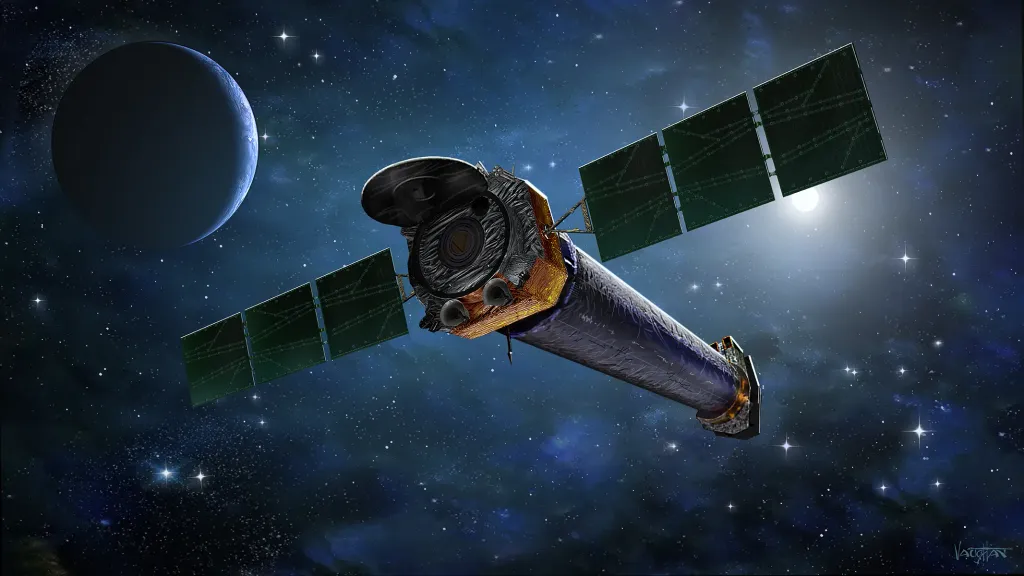
Chandra X-ray Observatory
Chandra is the X-ray component of NASA's Great Observatories. Chandra's measurements have provided information on interactions between exoplanets and their host stars, the environment around potential planet hosts, and detection of a possible exoplanet beyond the Milky Way galaxy.
Launch: July 23, 1999
Wavelengths: X-Ray (0.12 -12 nm)
Exoplanet Techniques: Stellar environment, Transits

Spitzer Space Telescope
Spitzer was the infrared component of NASA's Great Observatories. It was the first telescope to directly detect light from an exoplanet, and its measurements were used to make the first weather map of an exoplanet, showing temperature variations across the face of the planet.
Launch: Aug. 25, 2003
End of mission: Jan. 30, 2020
Wavelengths: IR (3,600-160,000 nm)
Exoplanet Techniques: Phase curves, Transits, Spectroscopy
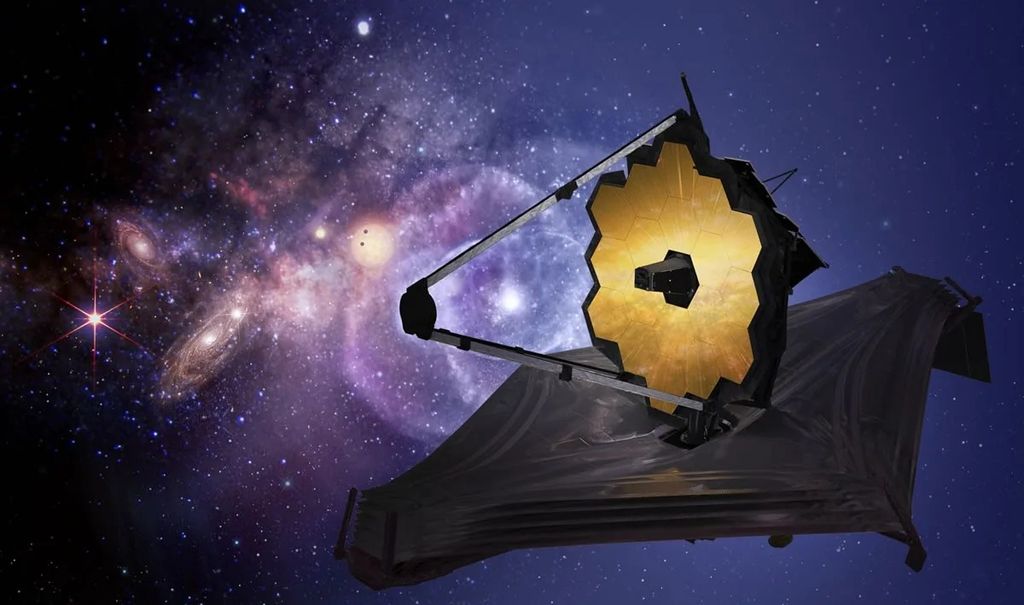
James Webb Space Telescope (JWST)
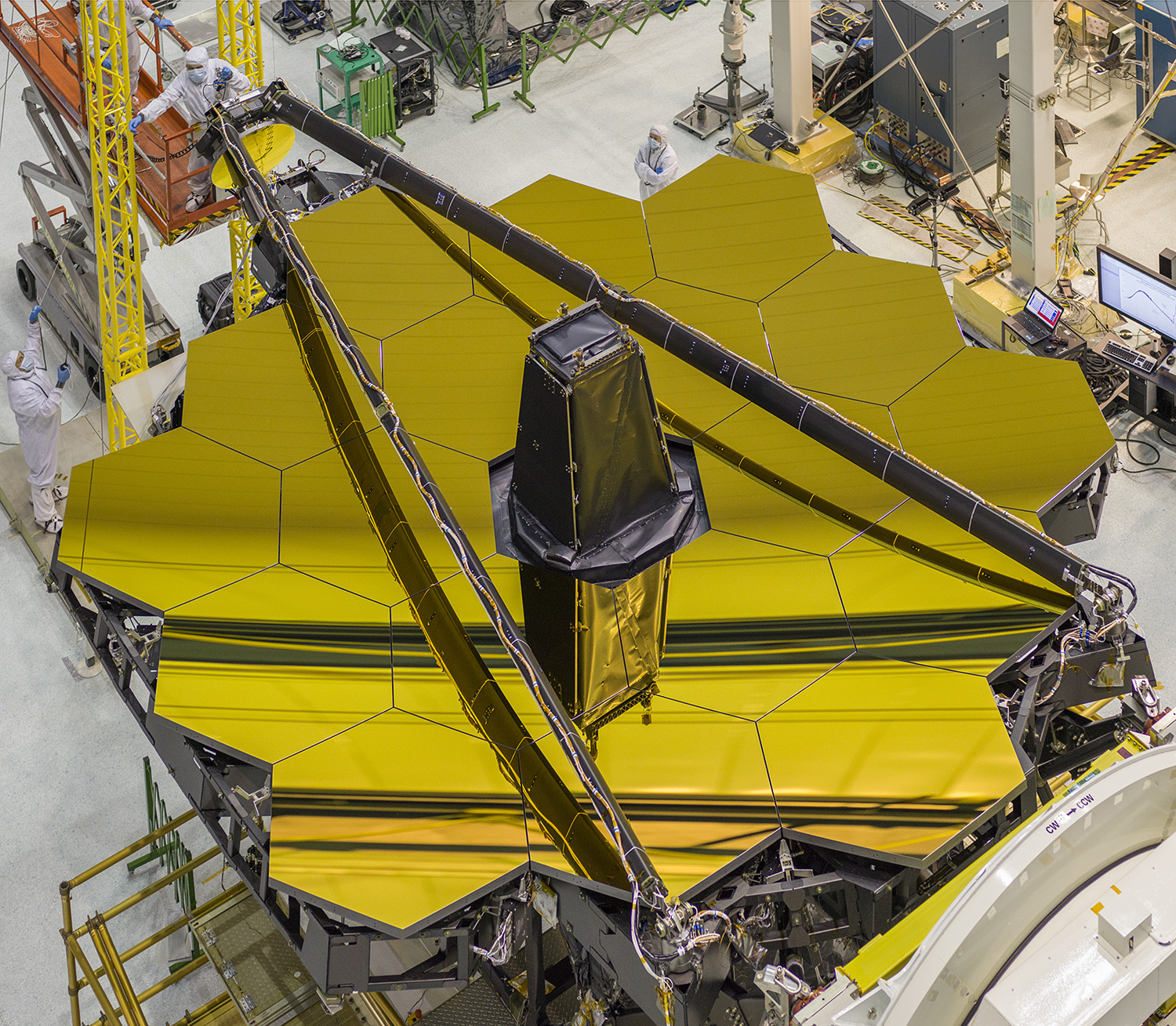
Webb is a 6.5-meter infrared observatory that is characterizing exoplanets in unprecedented detail. It has made the first detection of numerous molecules, including carbon dioxide and sulfur dioxide, in an exoplanet atmosphere, and discovered planets using coronagraphy.
Launch: Dec. 25, 2021
Wavelengths: Near-IR (600-5,000 nm) & Mid,Long-IR (5,000-27,000 nm)
Exoplanet Techniques: Spectroscopy, Imaging
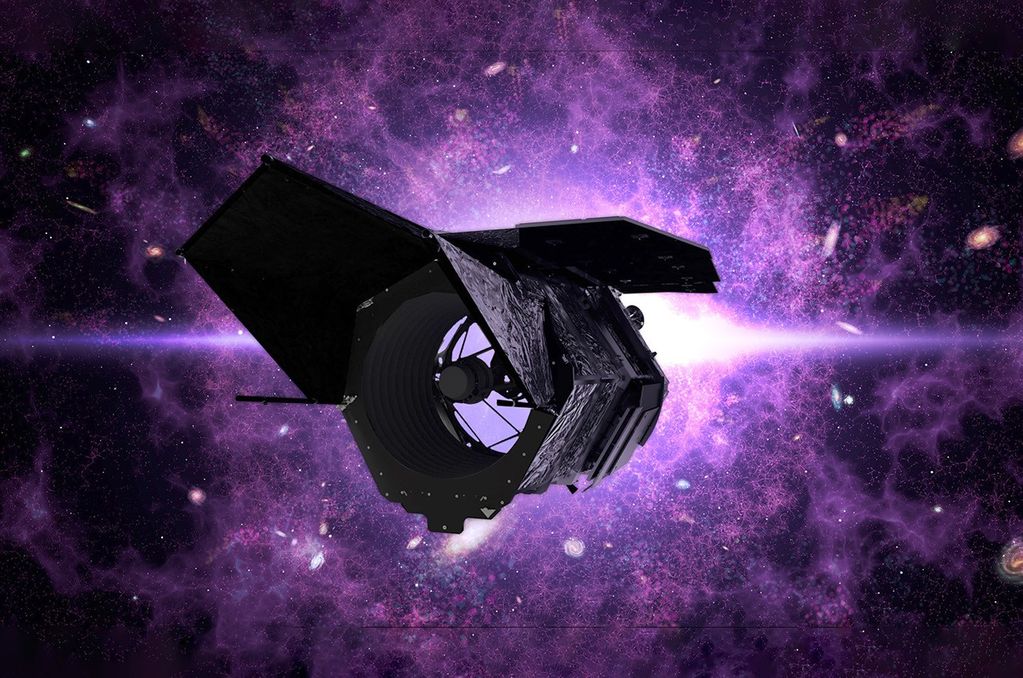
Nancy Grace Roman Space Telescope
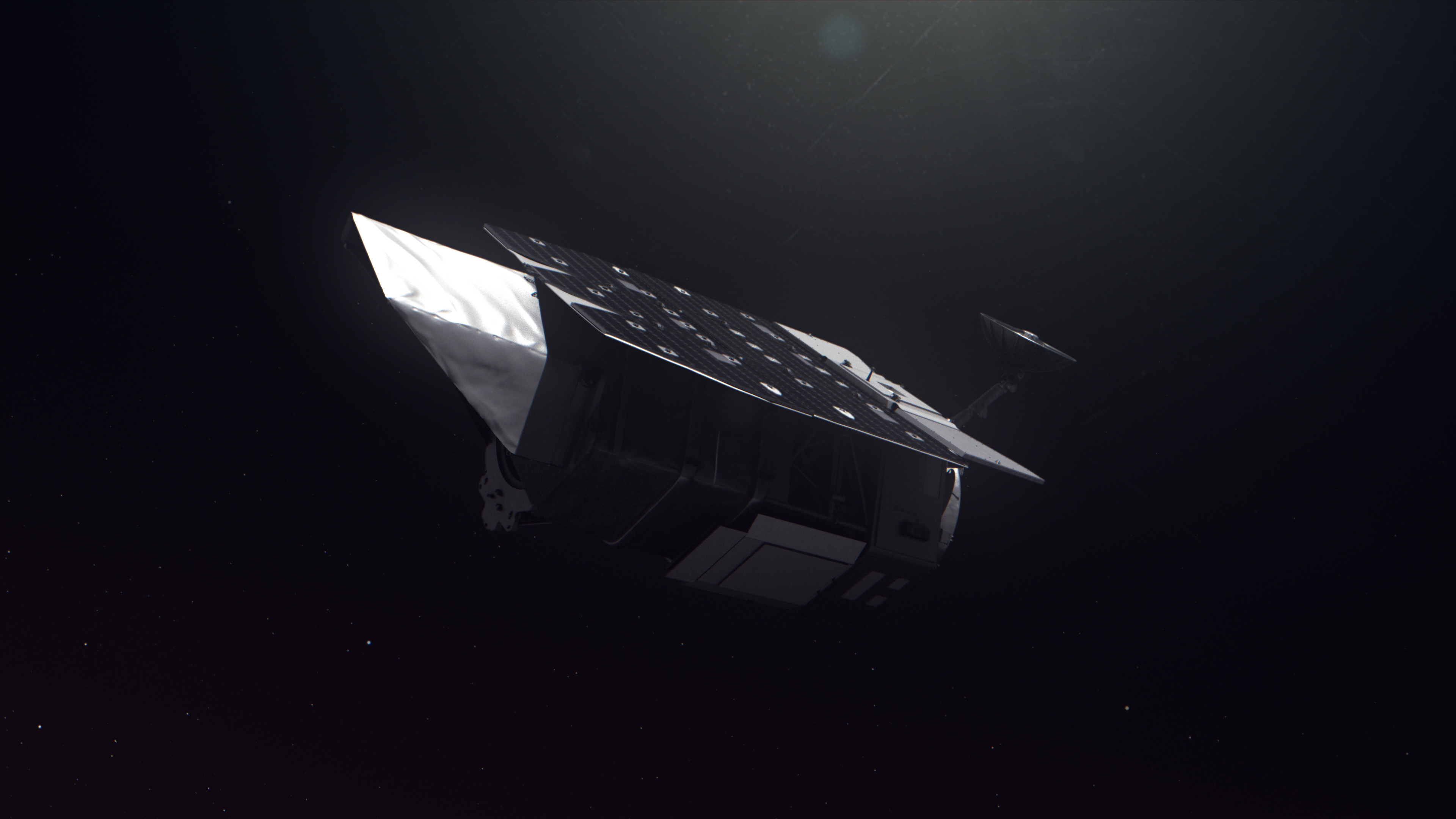
Roman is a 2.4-meter space telescope with a wide-field instrument that is expected to discover thousands of exoplanets through microlensing and transits, in its survey of the inner Milky Way. Roman will also demonstrate the coronagraphy technology needed to image exoplanets 10 million times dimmer than their host stars.
Launch: Aug. 30, 2026
Wavelengths: IR (500-2,000 nm)
Exoplanet Techniques: Microlensing, Transits, Imaging

Habitable Worlds Observatory (HWO)
HWO is a future large near-infrared/optical/ultraviolet space telescope currently in development. HWO will be the first telescope designed specifically to search for signs of life on Earth-sized planets orbiting other stars, through direct imaging and spectroscopy
Launch: TBD
Wavelengths: UV, Visible, IR
Exoplanet Techniques: Imaging, Spectroscopy


Learn More and Get Involved

Mission Resources





Managed by the Exoplanet Exploration Program and the Jet Propulsion Laboratory for NASA’s Astrophysics Division