
















The 248th Meeting of the American Astronomical Society
Location
Pasadena, California
Dates
14-18 June 2026
Community
Physics of the Cosmos
Type
Meeting
AAS Meeting 248
Joint AAS with HEAD and Laboratory Astrophysics Divisions Meeting
14-18 June 2026 at the Pasadena Convention Center
The meeting will be jam-packed with great scientific content and provide ample opportunity for networking with friends and colleagues.
Meeting Overview about Joint AAS with HEAD and Laboratory Astrophysics Divisions Meeting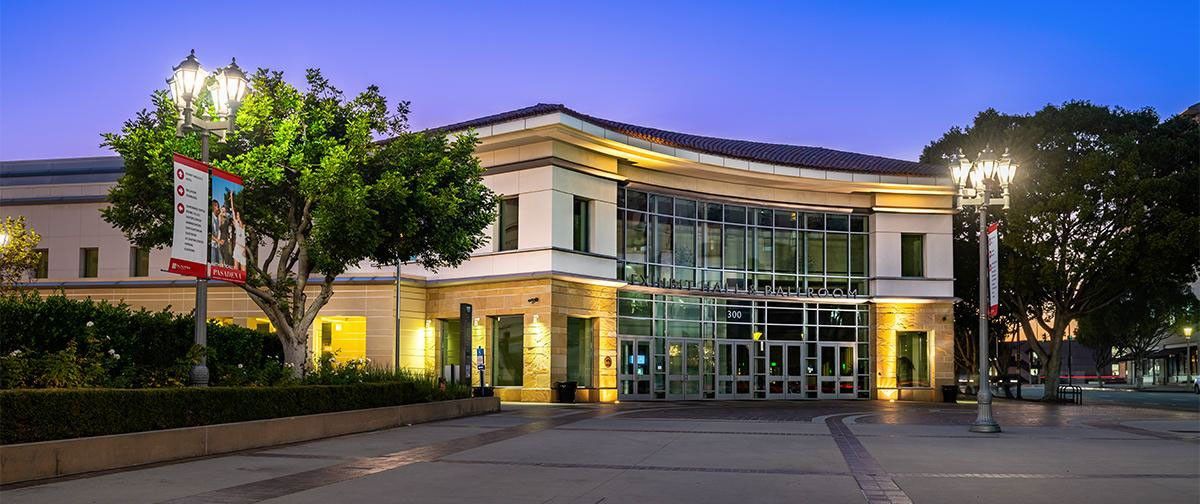
Pasadena Convention Center
The 248th AAS meeting (joint with HEAD and Laboratory Astrophysics Divisions) will be held 14-18 June in Pasadena, California.
- Sign up for our news email list
- Check out what opportunities are available with NASA
- Follow along for breaking news releases this week
Join us in the exhibit hall at the NASA booth and attend the NASA sessions.
Monday, 15 June 2026
| Time | Session | Location |
|---|---|---|
| 10:00am ‑ 11:30am PT | NASA’s Future Large Gamma Ray (FLAG) Mission Concepts Working Group | NOTE: ROOM CHANGE Pasadena Convention Center ‑ Conference Center, 104 |
| Summary | The Future Large Gamma-ray Mission Concepts working group will hold a hybrid work session to review progress and needed inputs for a technical report on gamma-ray instrumentation. Working group members will present updates and lead discussions to complete gathering of input on gamma-ray capabilities, mission concepts, and technologies. The group will work on identifying and filling gaps in the draft and refining the content of the report. |
| Topics | Working Group Documents |
|---|---|
| Cosmic Explosions | Target Observations Goals for Cosmic Explosions - Google Docs |
| Heavy Elements | Target Observations Goals for Heavy Elements in the Universe - Google Docs |
| Supermassive Black Holes | Target Observations Goals for Supermassive Black Holes - Google Docs |
| Fundamental Physics | Target Observations Goals for Fundamental Physics - Google Docs |
Session Recording
Tuesday, 16 June 2026
| Time | Topic | Location |
|---|---|---|
| 10:00am ‑ 11:30am | HEAD: Foundations for Discovery: A Coordinated Fleet Approach to NASA Astrophysics | Conference Center 212 |
| Summary | This session will discuss findings that demonstrate that most decadal science questions are optimally addressed through a coordinated fleet of∼ $1–2B missions (or flaglets) with a broad suite of capabilities, a significant guest investigator component, and operating concurrently with flagship missions to enable comprehensive, coordinated observations across the electromagnetic spectrum. |
Wednesday, 17 June 2026
| Time | Session | Location |
|---|---|---|
| 11:40am ‑ 1:10pm | (XR SIG Special Session) HEAD: Toward the 2030 Decadal: Science Cases for Potential Future X-ray Mission Concepts | Pasadena Convention Center ‑ Conference Center, 212 |
XR SIG Special Session Agenda
| Time | Topic | Speaker | Presentation |
|---|---|---|---|
| 11:40am ‑ 11:50am | Introduction | Dave Pooley, Trinity University Breanna Binder, Cal Poly Pomona | [PDF] |
| 11:50am ‑ 11:56am | High Angular Resolution X-ray Imager SAG: Updates & Results I | Kimberly Weaver, NASA/GSFC | |
| 11:56am ‑ 12:03pm | High Angular Resolution X-ray Imager SAG: Updates & Results II | Scott Randall, CfA | [PDF] |
| 12:03pm ‑ 12:10pm | High Angular Resolution X-ray Imager SAG: Updates & Results III | Herman Marshall, MIT | |
| 12:10pm ‑ 12:20pm | Lynx 2030 SAG: Updates & Results I | Steven Ehlert, NASA/MSFC | |
| 12:20pm ‑ 12:30pm | Lynx 2030 SAG: Updates & Results II | Fabio Pacucci, CfA | [PDF] |
| 12:30pm ‑ 12:36pm | Broad-Band X-ray Observatory SAG: Updates & Results I | Chien‑Ting Chen, USRA/NASA MSFC | |
| 12:36pm ‑ 12:43pm | Broad-Band X-ray Observatory SAG: Updates & Results II | Kristin Madsen, NASA/GSFC | |
| 12:43pm ‑ 12:50pm | Broad-Band X-ray Observatory SAG: Updates & Results II | Daniel Stern, JPL | |
| 12:50pm ‑ 1:10pm | X-ray Timing SAG: Updates & Results | Thomas Maccarone, Texas Tech |
Thursday, 18 June 2026
| Time | Session | Location |
|---|---|---|
| 10:00am ‑ 11:30am | (Special Session) Planning for the Future of Astrophysics and the ASTRA Initiative | Pasadena Convention Center ‑ Ballroom G |
ASTRA Initiative Special Session Agenda
| Time | Topic | Speaker | Presentation |
|---|---|---|---|
| 10:00am ‑ 10:10am | Introduction from the NASA Astrophysics Division Director | Shawn Domagal‑Goldman | |
| 10:10am ‑ 10:25am | The ASTRA Initiative: Overview & Path Forward | Jessica Gaskin, NASA HQ | |
| 10:25am ‑ 10:40am | Innovation for Astrophysics Workshop: Initial Findings | Kendra Short, JPL | |
| 10:40am ‑ 10:55am | Ad ASTRA Community Science Workshop | Peter Kurczynski, NASA/GSFC | |
| 10:55am ‑ 11:30am | Panel Discussion | Francesca Civano, NASA/GSFC |
| Day | Session Title | Time | Locations |
|---|---|---|---|
| Sunday, 14 June | High Energy Science Analysis with HEASARC Services | 10:00a ‑ 12:00n | Conference Center 102 |
| An Introduction to Fornax: Scalable Data and Compute for Scientific Analysis | 2:00p ‑ 4:00p | Conference Center 101 | |
| Monday, 15 June | NASA Update Town Hall | 12:45p ‑ 1:45p | Ballroom DE |
| 115 - HEAD: NuSTAR and the future of hard X-ray observations | 2:00p ‑ 3:30p | Conference Center 211 | |
| 118 - Gamma-ray Astrophysics from Fermi to the Future | 2:00p ‑ 3:30p | Ballroom F | |
| NSF NOIRLab Open House | 6:15p ‑ 8:15p | Conference Center 106 | |
| Tuesday, 16 June | 201 - Warner Plenary Lecture: Kyle Kremer, Globular Clusters: Astronomical factories of gravitational-wave and electromagnetic transients | 8:00a ‑ 9:00a | Ballroom DE |
| HEAD: Foundations for Discovery: A Coordinated Fleet Approach to NASA Astrophysics | 10:00a ‑ 11:30a | Conference Center 212 | |
| NASA's Big Science, Small Missions | 10:00a ‑ 11:30a | Conference Center 204 | |
| 212 - HEAD Early Career: Carolyn Kierans | 11:40a ‑ 12:30p | Ballroom DE | |
| National Science Foundation Update Town Hall | 12:45p ‑ 1:45p | Ballroom A | |
| 221 - HEAD: Exploring the MeV Gamma-ray Sky with COSI | 3:40p ‑ 5:10p | Conference Center 212 | |
| 222 - HEAD: NewAthena: The Next X-ray Flagship | 3:40p ‑ 5:10p | Conference Center 211 | |
| Wednesday, 17 June | 313 - Time Domain and Multi-messenger Astrophysics | 10:00a ‑ 11:30a | Conference Center 211 |
| The NASA Astrophysics ROSES Program | 11:00a ‑ 12:00n | Conference Center 204 | |
| 323 - Stellar/Compact Objects 2: HMXBs and Pulsar Phenomena | 2:00p ‑ 3:30p | Conference Center 211 | |
| 325 - HEAD: Chandra: Today and Tomorrow | 3:40p ‑ 5:10p | Conference Center 212 | |
| Thursday, 18 June | 402 - Gravitational-Wave Astronomy in the Next-Generation Era | 10:00a ‑ 11:30a | Ballroom F |
| 403 - High Energy Astrophysics | 10:00a ‑ 10:40a | Ballroom C | |
| 412 ‑ The Euclid Mission: Science Highlights and Preparation for Data Release 1 | 2:00pm ‑ 3:30pm | Ballroom G |
NASA Press Release
Featured Story
NASA’s Fermi Mission Uncovers Possible Sibling Supernova Remnants
A new study of two supernova remnants, the debris left behind after stars explode, suggests the explosions came from stellar…
Read the Story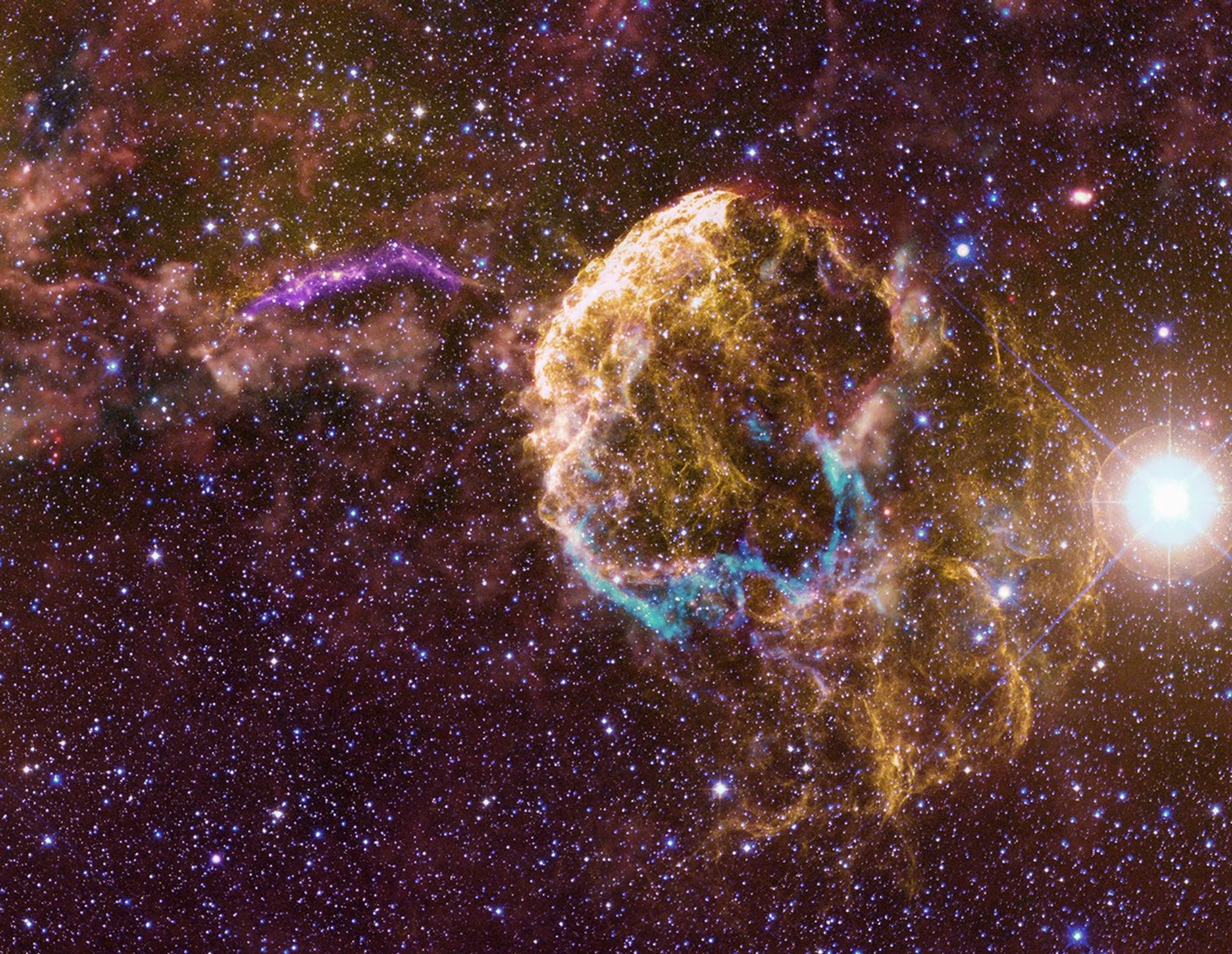
News Straight to Your Inbox
Subscribe to your community email news list
We will never share your email address.