





















Science Analysis Group
Future Large Gamma-Ray Mission Concepts
FLAG SAG is established to collect and synthesize community input on potential Probe-class and Flagship-class gamma-ray mission concepts that the community wishes to explore in the coming decade.
About FLAG SAG
Gamma-Ray Astrophysics Continues to Evolve Beyond Current Flagship Missions
Future concepts for large observatories focus on bridging the MeV gap, and improving sensitivity, angular resolution, and multi-messenger complementarities.
The Future LArge Gamma-ray mission concepts Science Analysis Group (FLAG SAG) is established to collect and synthesize community input on potential Probe-class and Flagship-class gamma-ray mission concepts that the community wishes to explore in the coming decade. The SAG will focus on concepts motivated by the compelling science questions identified in community reports and white papers including those identified in the FIG SAG Report. These should appeal not only to the gamma-ray community, but also to the broader astrophysics community, recognizing that broad scientific impact is essential for missions operating as community-serving observatories.
FIG SAG about Gamma-Ray Astrophysics Continues to Evolve Beyond Current Flagship Missions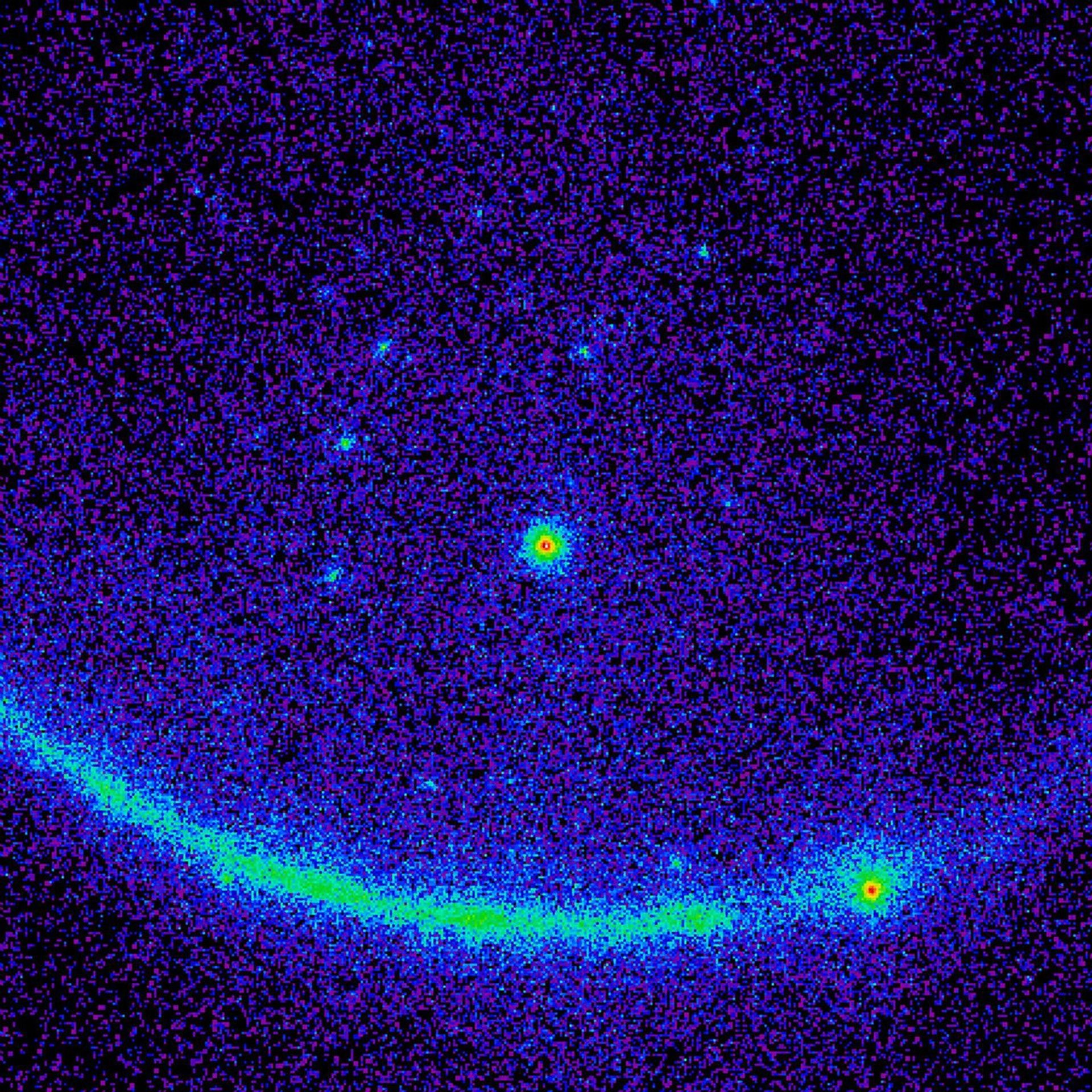
The primary goal of the FLAG SAG is to develop a coherent framework for comparing and assessing gamma-ray mission architectures. Within this framework, the SAG will:
- Solicit and collect technical capabilities and their development status from the community, welcoming concepts at any stage of development, from ideas based on technologies at high readiness levels to concepts requiring substantial technology maturation.
- Tabulate and harmonize technical capabilities descriptions, identifying for each:
- The primary science goals and key science questions addressed;
- Basic performance metrics (e.g., energy range, sensitivity, angular and energy resolution, field of view, timing capabilities, polarization sensitivity);
- The anticipated mission scale (Probe, Flagship or other);
- The current level of technology readiness, and the technology development efforts, including hardware and software, required to mature the concept into a viable mission proposal;
- Additional considerations relevant for Decadal-level discussion.
- Identify common themes, trends, complementarities, and overlaps among mission concepts, including similarities in science goals, measurement approaches, or enabling technologies, and suggest generalized concepts where appropriate in order to clearly define coherent, community-endorsed mission directions.
The scientific motivation for this effort is grounded in the community-defined priorities articulated by the Future Innovations in Gamma rays Science Analysis Group (FIG SAG), including but not limited to nuclear lines to study supernova explosions, pulsar timing arrays to study supermassive black hole mergers, blazar jets and gamma ray bursts to study particle acceleration, and place constraints on WIMP and ALP dark matter candidates. Other science drivers continue to emerge alongside observational and theoretical advances, including the capabilities of gamma-ray missions (such as polarization and high-resolution spectroscopy), to reveal the properties of relativistic plasma processes in extreme environments. Mission concepts considered by the FLAG SAG are expected to connect to these science drivers and to clearly articulate the scientific advances enabled by their proposed capabilities.
Stay Connected
To Stay informed about FLAG SAG activities, be sure to sign up for the GR SIG Email List
To join the list, send an email to GammaSAG-join@lists.nasa.gov with Subject="join"
To unsubscribe, Send an email to GammaSAG-leave@lists.nasa.gov with Subject="leave"
Your email address will be used only for the purpose of subscription to the selected email distribution list. For further information, read the NASA Web Privacy Policy.
SAG Chairs
| Name | Institution |
|---|---|
| Elizabeth Hays | NASA / GSFC |
| Henric Krawczynski | Wash U St. Louis |
News & Events
Meetings, conferences, seminars, workshops, and other news and events for FLAG SAG
FLAG SAG Meeting to Discuss the Draft FLAG SAG Report. 12:00pm - 1:00pm ET

Physics of the Cosmos at the 248th Meeting of the American Astronomical Society, 14-18 June 2026
News Straight to Your Inbox
Subscribe to your community email news list
We will never share your email address.