NASA’s Carruthers Geocorona Observatory Reaches Target Orbit
NASA’s Carruthers Geocorona Observatory has achieved its target orbit, positioning the spacecraft to capture the first repeated observations of the ultraviolet glow from Earth’s outer atmosphere, the geocorona.
The achievement was confirmed following its third and final orbital maneuver, a 2-minute thruster fire, on Jan. 8. The spacecraft has now entered its intended halo orbit around the Sun-Earth L1 Lagrange point, a position of gravitational balance approximately 1 million miles from Earth.
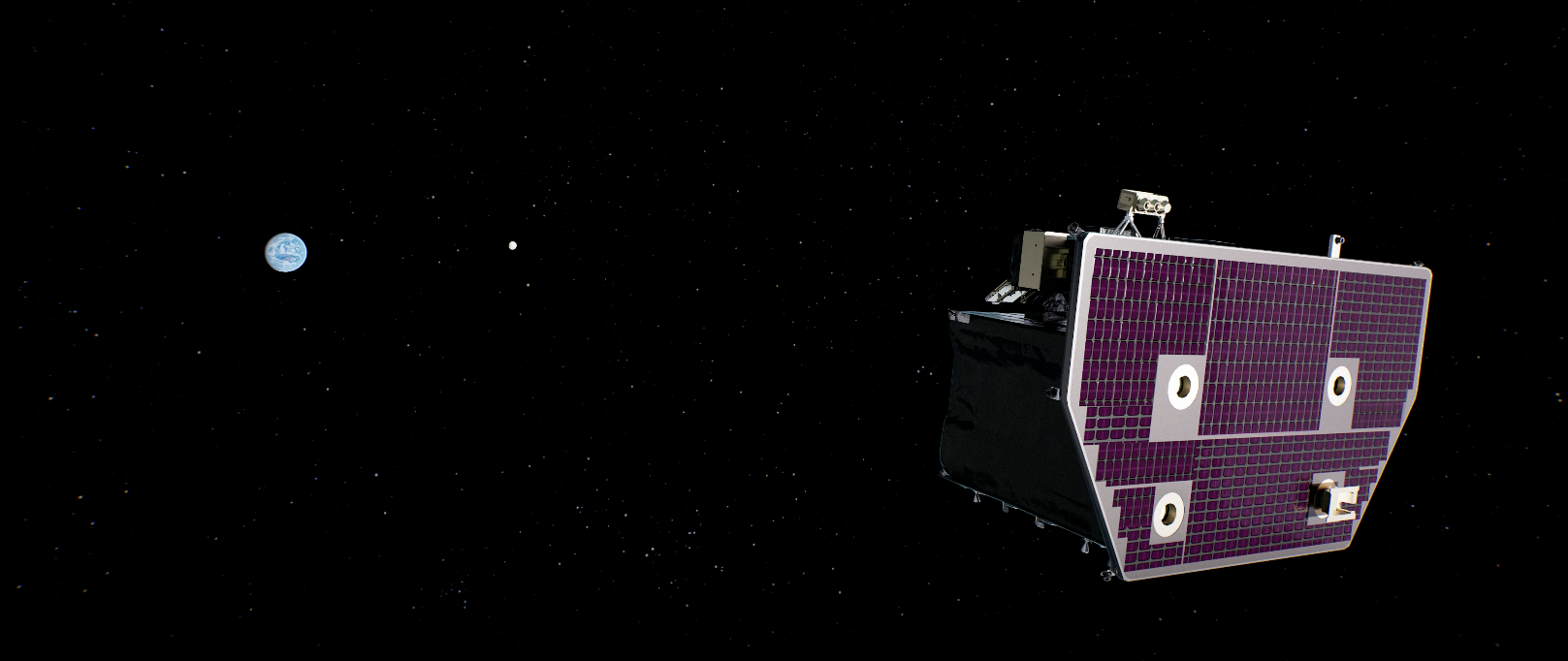
The loveseat-sized spacecraft launched from NASA’s Kennedy Space Center on Sept. 24, 2025. Since launch, the Carruthers team has been testing the spacecraft’s instruments, capturing its “first light” images, and adjusting its course as it approached L1. Carruthers now begins its final checkout procedures before beginning its two-year primary science mission in March.

Carruthers uses two cameras, a wide-field imager and a narrow-field imager, to capture the most detailed images ever taken of Earth’s geocorona, the glow of ultraviolet light emitted by Earth’s outermost atmospheric layer. The mission was named in honor of Dr. George R. Carruthers, inventor of the ultraviolet camera placed on the Moon by Apollo 16 astronauts that captured the first images of Earth’s geocorona in 1972.
The Carruthers Geocorona Observatory mission is led by Dr. Lara Waldrop from the University of Illinois Urbana-Champaign. The Space Sciences Laboratory at the University of California, Berkeley, leads mission implementation and operations, design, and development of the payload in collaboration with Utah State University’s Space Dynamics Laboratory. The Carruthers spacecraft was designed and built by BAE Systems. NASA’s Explorers and Heliophysics Projects Division at the agency’s Goddard Space Flight Center in Greenbelt, Maryland, manages the mission for the agency’s Heliophysics Division at NASA Headquarters in Washington.
By Miles Hatfield
NASA’s Goddard Space Flight Center, Greenbelt, Md.