













NASA Payload to Study Gamma Rays Arrives at Northrop Grumman
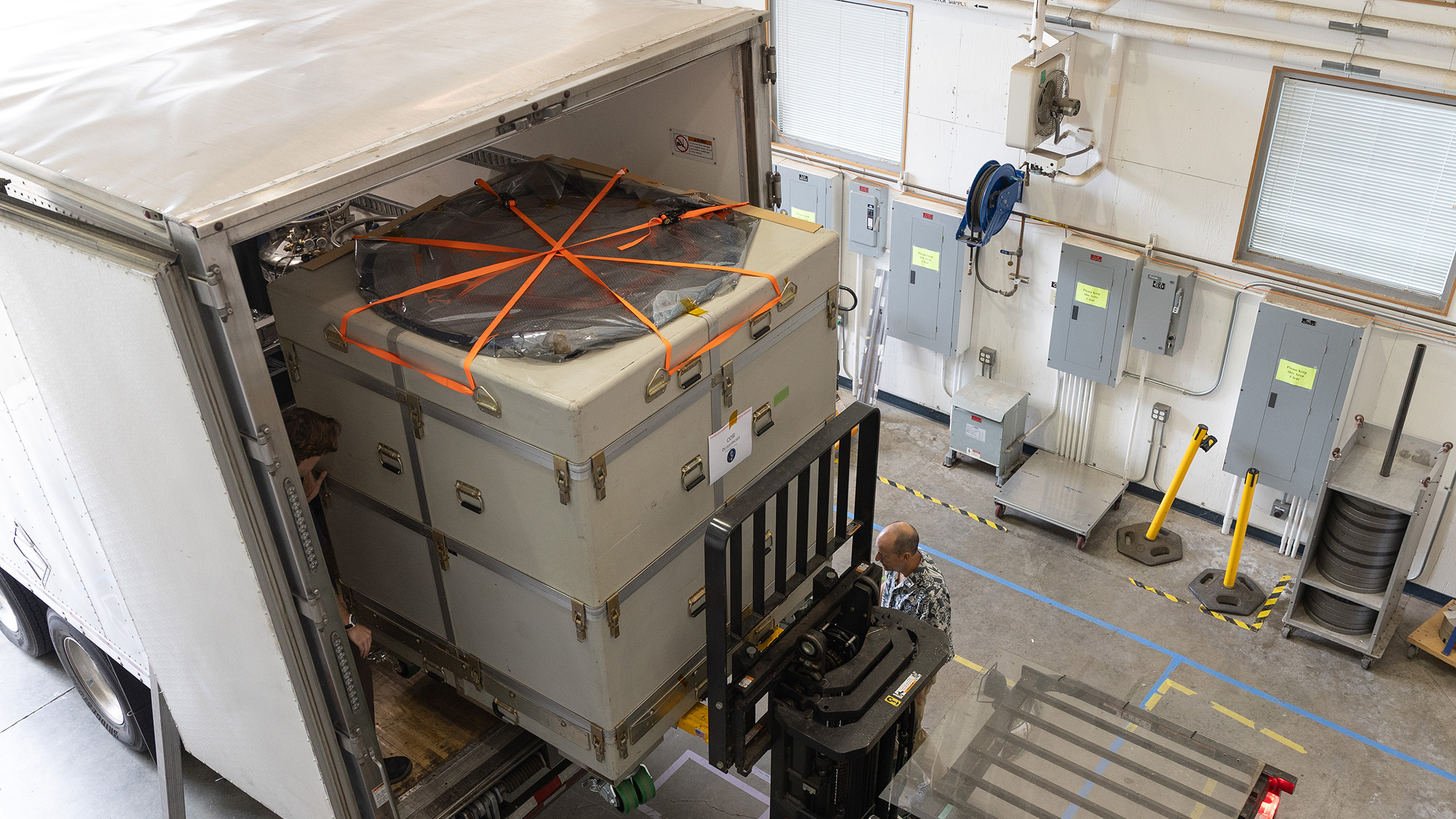
The scientific payload for NASA’s upcoming COSI (Compton Spectrometer and Imager) mission arrived at Northrop Grumman’s satellite manufacturing facility in Sterling, Virginia, earlier this month.
The COSI mission is designed to study the sky in gamma rays, the highest energy form of light, over a wide field of view. Its science goals include studying energetic phenomena in our Milky Way galaxy and beyond, including the creation and destruction of matter and antimatter and the final stages of the lives of stars.
Northrop Grumman engineers will install the payload onto a LEOStar-2 spacecraft and conduct vibration and thermal testing ahead of launch, which is slated for August 2027.
Team members assembled the science instrumentation at the University of California, Berkeley’s Space Sciences Laboratory over the summer.
The mission, part of NASA’s Astrophysics Explorers program, is a collaboration between UC Berkeley; the University of California, San Diego; the Naval Research Laboratory; NASA’s Goddard Space Flight Center in Greenbelt, Maryland; Northrop Grumman; Space Dynamics Laboratory; the Italian Space Agency; and other research institutions.
