




















Two NASA Scientists Receive USGS, NASA 2025 William T. Pecora Award
Award: The William T. Pecora Award recognizes outstanding scientific contributions toward a better understanding of Earth through satellite or aerial remote sensing.
The award is presented annually by the U.S. Geological Survey and NASA.
Awarded to: Eric Vermote, a research physical scientist with NASA’s Goddard Space Flight Center in Greenbelt, Maryland. Vermote is recognized for his outstanding contributions to improving the quality and reliability of global Earth observation data by working to account for the effect of the atmosphere on satellite measurements of the planet’s land surfaces.

The methods and algorithms he developed set global standards for atmospheric correction and data validation. They are used in operational data production and support a range of key science applications including agriculture and environment monitoring.
Vermote has been a member of the Landsat Data Continuity Mission Science Team, the Moderate Resolution Imaging Spectrometer Science Team with the Terra and Aqua missions, and NASA’s National Polar-orbiting Operational Environmental Satellite System Preparatory Project Science Team for the Visible Infrared Imaging Radiometer Suite instrument.
His work is foundational to consistent, long-term satellite data records from those instruments and others, allowing researchers to study change to the land surface over time.
Through international collaborations, Vermote has advanced standards for atmospheric correction and for validating satellite retrievals using ground-based measurements from the Aerosol Robotic Network’s monitoring program, essential to ensuring reliability and consistency across missions and over time. Alongside his research, he is a dedicated mentor to students, helping them develop the skills needed to succeed in Earth science.
Awarded to: James Irons, emeritus scientist and former director of the Earth Sciences Division of NASA’s Goddard Space Flight Center in Greenbelt, Maryland.
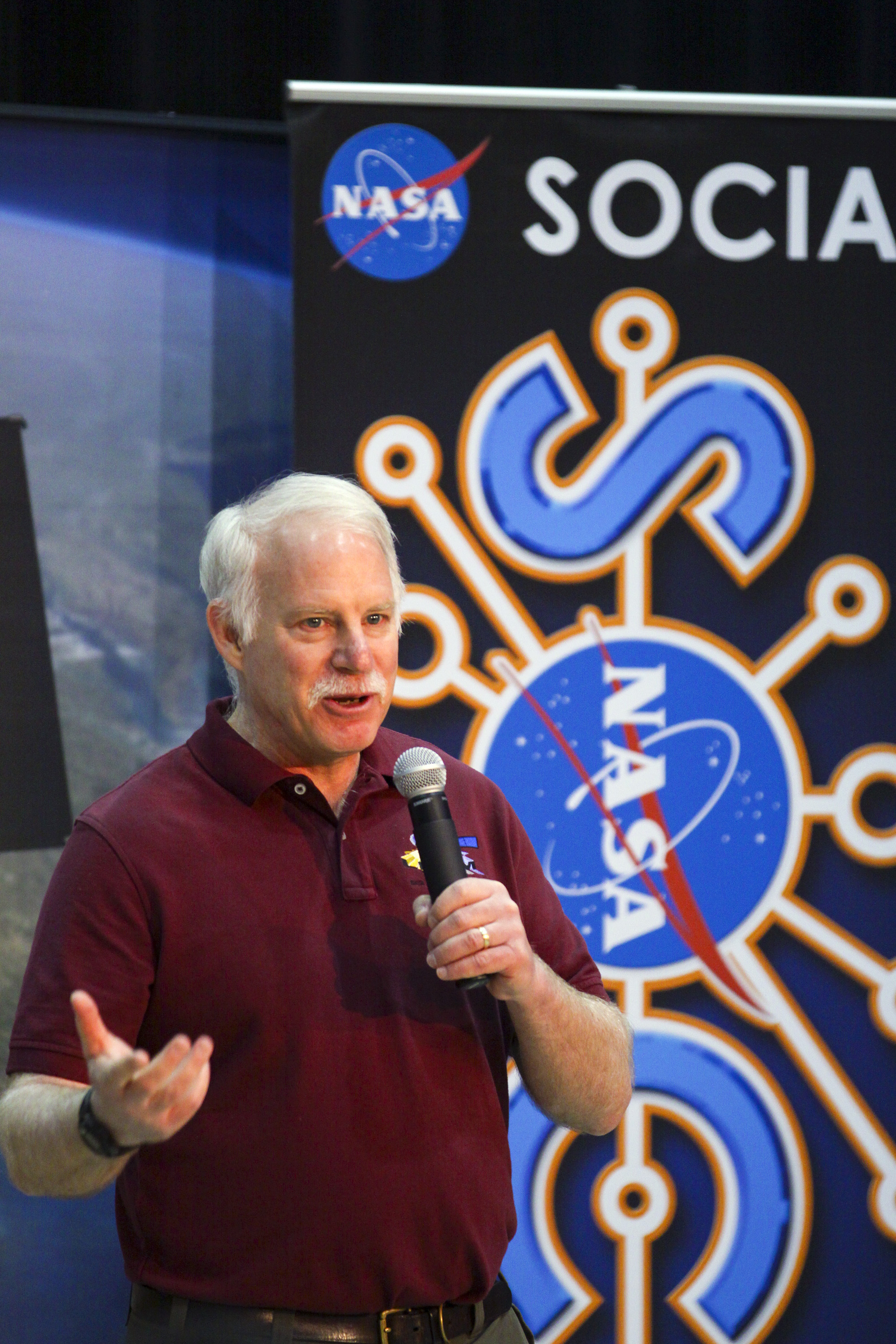
Irons has devoted his career to understanding how Earth’s systems work together and to advancing satellite missions that deliver broad societal benefits, especially through NASA and USGS’s Landsat program. He emphasized the importance of long-term, consistent records to study global changes. With insights into the needs of data users and the scientists studying the Earth system, Irons helped expand Landsat’s role in innovative applications used for water quality monitoring and agriculture.
Irons, also NASA’s Landsat 7 deputy project scientist and Landsat 8 project scientist, led the effort to continue thermal infrared measurements from earlier missions into the Landsat 8 era. He pushed for technical advances that helped establish the standards and processes for data calibration and quality assurance that remain in use today.
He established collaborations between NASA and USGS that continue to shape how Landsat operates. He brought stakeholders together and encouraged cross-mission collaborations, ensuring the continuity of the Landsat program and broadening the range of disciplines adding to understanding Earth’s systems. That collaborative spirit carried into his role as director of NASA Goddard’s Earth Science Division, where his leadership created an environment that gave teams the support needed for success.
Date: May 27, 2026
