



















Scientific American’s Inaugural ‘Young American Scientists’ Recognition
Award: Scientific American’s “Young American Scientists” is a new annual recognition program honoring early- and mid-career researchers whose work is advancing discovery, expanding knowledge, and helping shape the future of science. The inaugural class includes 28 scientists selected from across disciplines for their contributions to research and innovation.
Awarded to: Amber Young, program scientist at NASA Headquarters, Washington; and Erini Lambrides, research fellow at NASA’s Goddard Space Flight Center, Greenbelt, Maryland, and the University of Maryland, College Park
A program scientist at NASA Headquarters and astrobiologist from NASA Goddard, Amber Young studies the atmospheres of rocky planets and uses climate and photochemical models to identify potential biosignatures – chemical clues that could reveal the presence of life beyond Earth. Her research helps scientists better understand how to detect habitable worlds and interpret observations of planets both within and beyond our solar system. Through her scientific contributions and commitment to expanding opportunities in STEM, Young is helping advance one of humanity’s most fundamental questions: Are we alone in the universe?
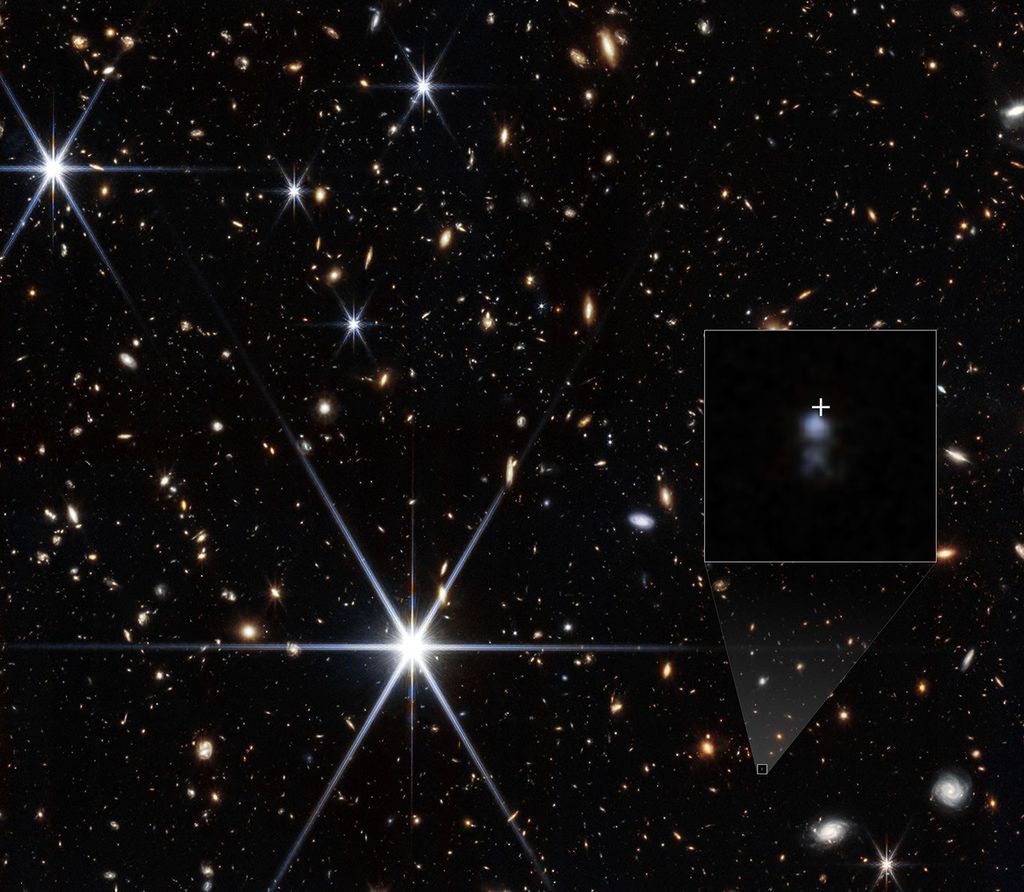
An astrophysicist and research fellow at NASA Goddard, Erini Lambrides specializes in the formation and evolution of massive black holes — from Little Red Dots to the most dust-shrouded quasars. She is an expert on investigating elusive growing massive black holes across all of cosmic time, and characterizes their relationship with their surrounding environments, from the first galaxies to present day, using telescopes from space like NASA’s Webb, Chandra, and Hubble, and big dishes from the ground like the Very Large Array and ALMA.
Scientific American featured Young, Lambrides, and the other honorees in its July/August 2026 issue and online, as part of a collection highlighting researchers whose work is driving scientific progress and inspiring the next generation of scientists.
Date: June 16, 2026
