












Suggested Searches

Blogs

    NASA Missions Help Identify What Powers Auroral ‘Space Battery’

    An arc of green aurora bends over the limb of Earth, which appears cloudy. A faint red haze appears above the green auroral arc against the black background of space.

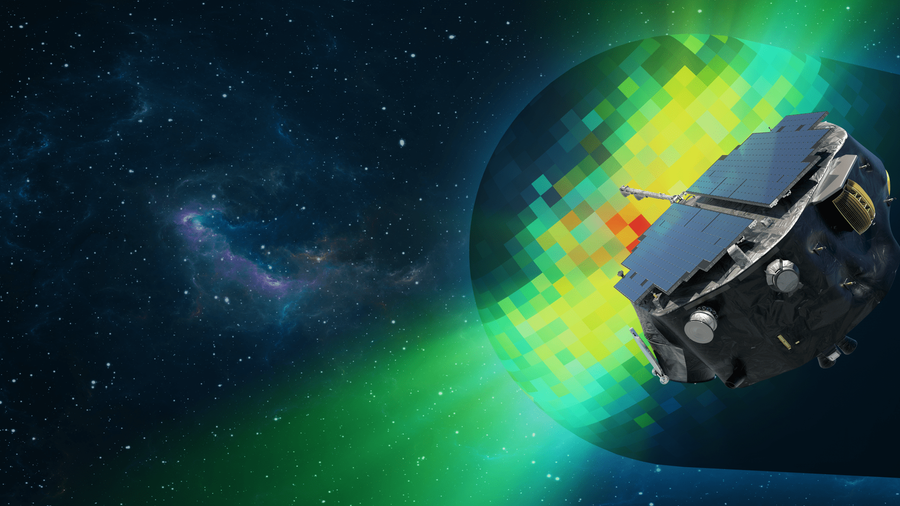
    Scouring archived observations from NASA missions, scientists may have solved a mystery about what powers a type of aurora called auroral arcs. The answer, they say, is space waves. From the ground, auroral arcs look like green, glowing curtains of light sweeping across the night sky. From space, they appear as thin, green lines — or arcs — slicing across the […]

    Read Full Post

    NASA’s Galileo Mission Points to Ammonia at Europa, Recent Study Shows

    A high-resolution scientific graphic from NASA illustrates the detection of ammonia on the surface of Jupiter’s moon, Europa. On the left, a full-disk view of the icy moon is shown against a black starfield, with a white rectangular box highlighting a specific region near the equator. This box zooms into a large, detailed grayscale map on the right, which reveals a complex landscape of crisscrossing linear ridges and fractured "chaos terrain." Overlaid on this topographical map are pixelated data clusters: purple areas indicate the presence of ammonia, while vibrant red pixels mark the highest concentrations. These detections are primarily concentrated along the geologically active ridges and disrupted ice, suggesting that the ammonia may be surfacing from the moon's subsurface liquid ocean.

    New analysis of decades-old data has turned up a significant result: the first discovery of ammonia-bearing compounds on the surface of Jupiter’s moon Europa. Ammonia is a nitrogen-bearing molecule, and nitrogen — like carbon, hydrogen, and oxygen — is key to life as we know it. As the first such detection at Europa, the finding […]

    Read Full Post

    NASA’s SpaceX Crew-12 Begins Quarantine for Space Station Mission

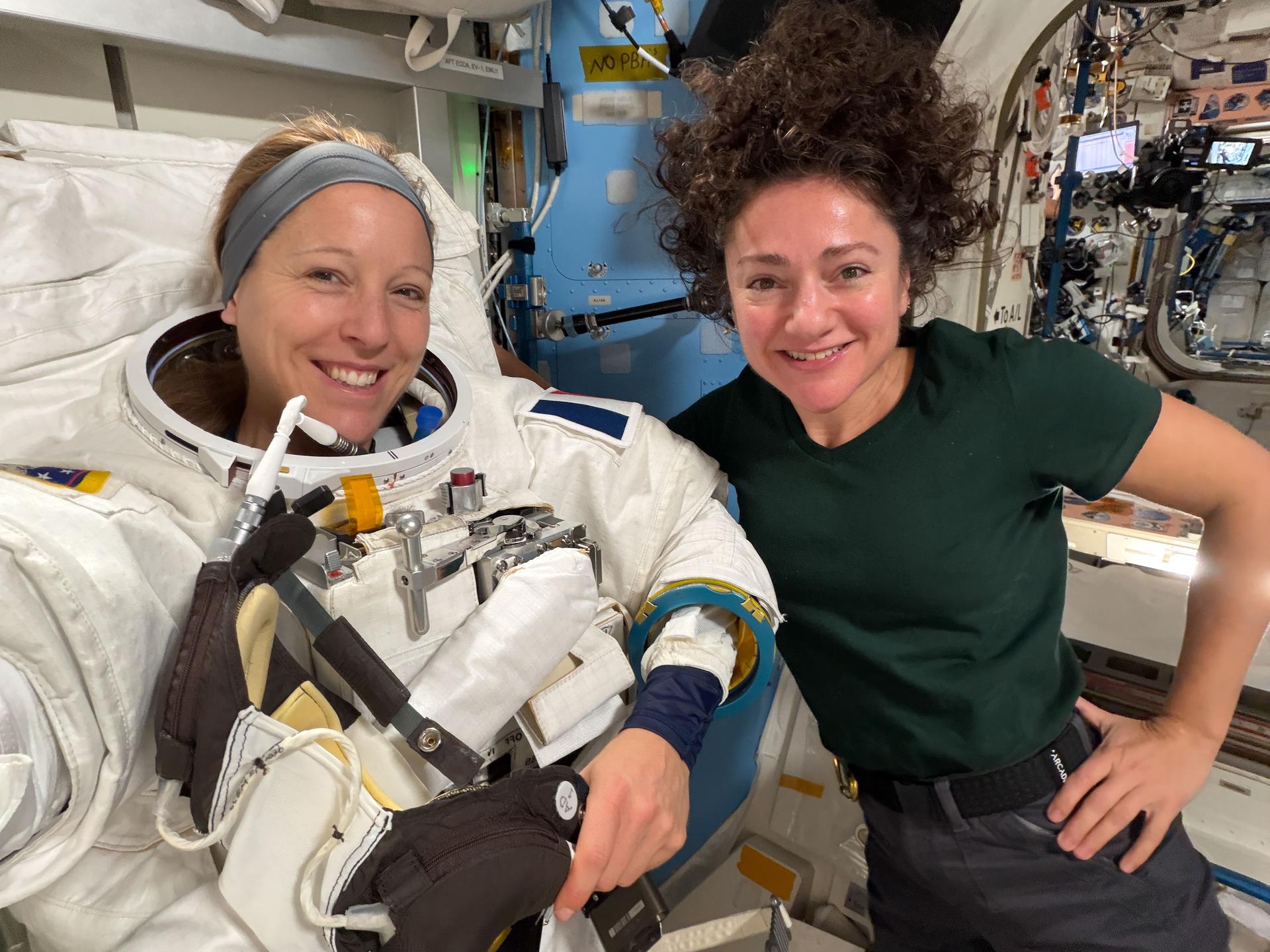
    The four crew members of NASA’s SpaceX Crew-12 mission began their routine two-week quarantine on Wednesday at NASA’s Johnson Space Center in Houston ahead of their upcoming launch to the International Space Station. The earliest opportunity for Crew-12 to launch to the orbital complex is 6 a.m. EST Wednesday, Feb. 11, from Space Launch Complex 40 at […]

    Read Full Post

    NASA’s Arcstone Instrument Successfully Completes Primary Mission 

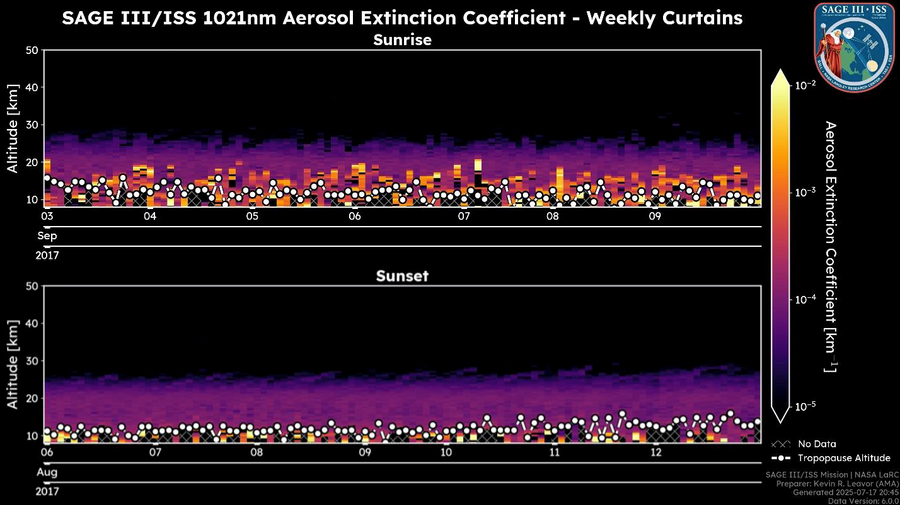
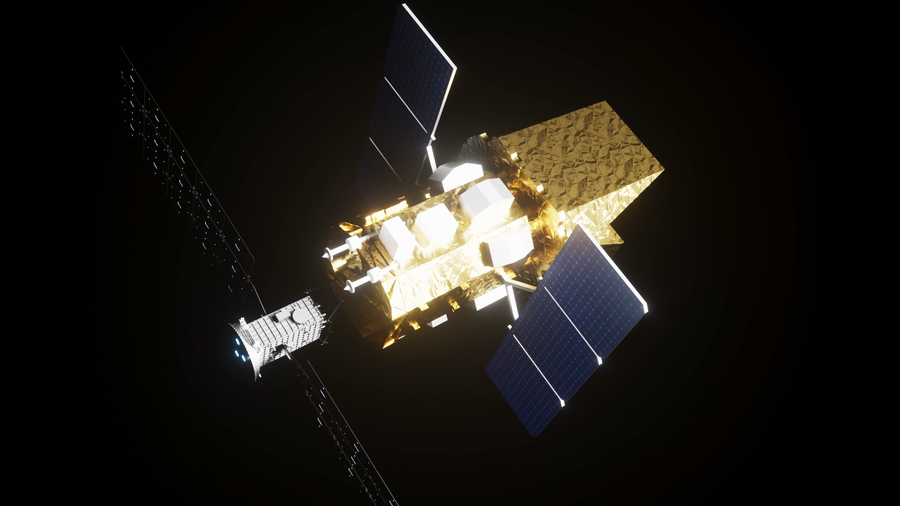
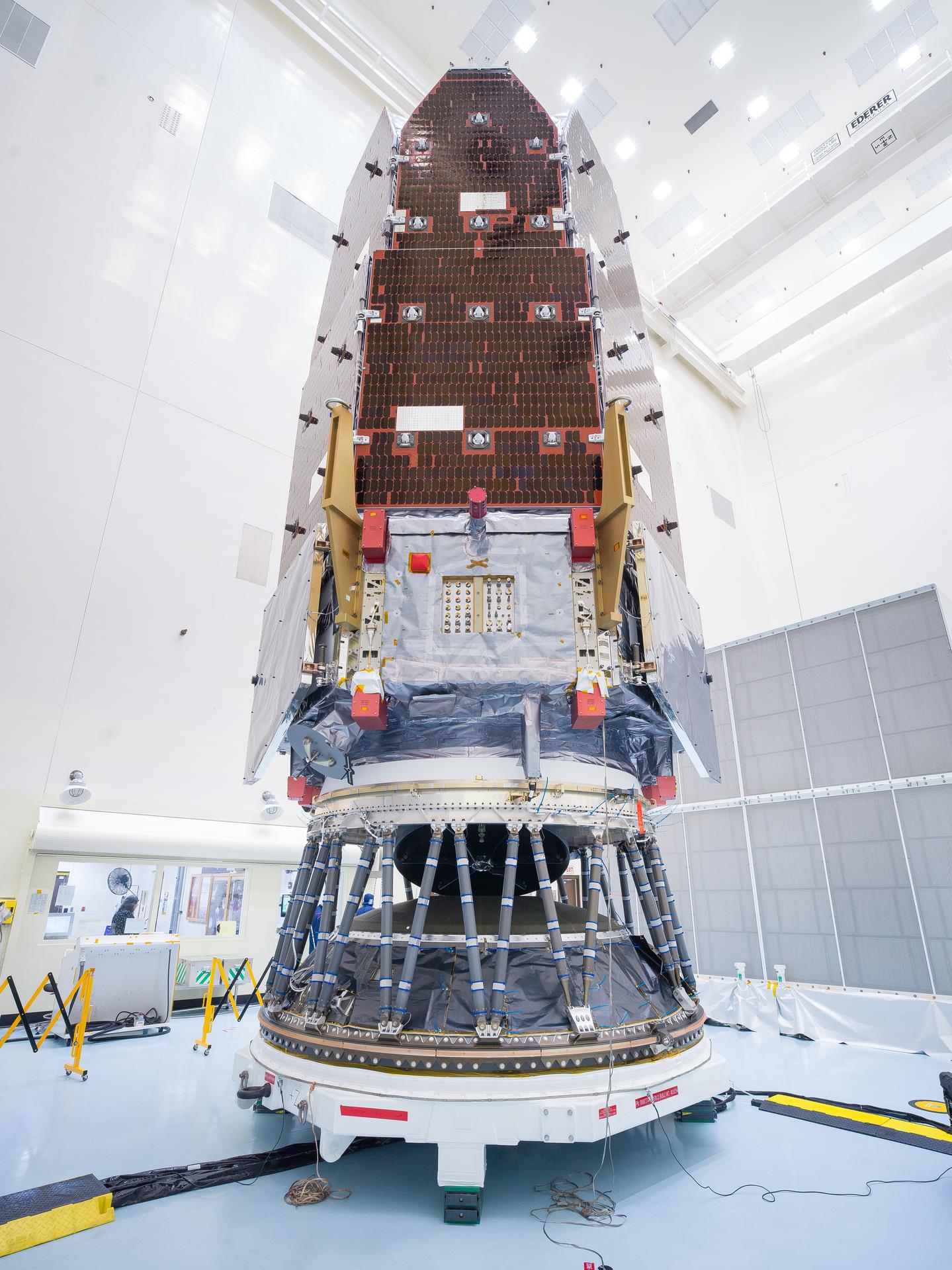
    NASA’s Arcstone instrument, designed to improve the accuracy of lunar calibration, successfully completed its technology demonstration, and now begins extended operations.   Arcstone launched on June 23 on a SpaceX Transporter-14 from Vandenberg Space Force Base in California, on a six-month mission to measure light reflected by the Moon, which is a stable and potentially highly-accurate calibration source, for satellite sensors.  The mission, led by NASA’s Langley Research Center in Hampton, Virginia, uses a specially designed spectrometer system and is the first on-orbit instrument solely dedicated […]

    Read Full Post

    Crew Studies Robotics and Virtual Reality Advancing Space Tech

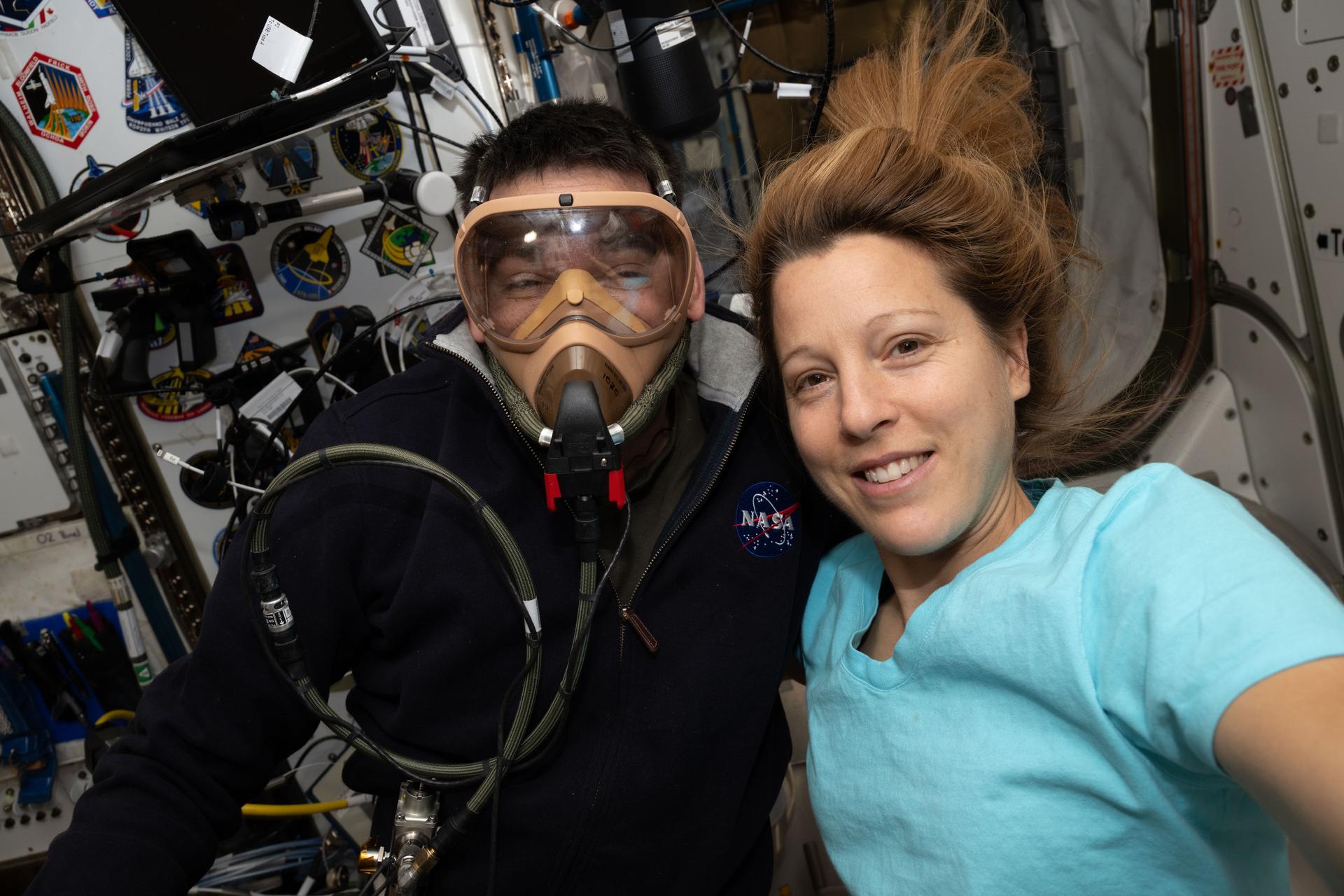
    Robotics and virtual reality filled the science schedule aboard the International Space Station on Tuesday as the Expedition 74 crew promoted education and explored human research. The orbital trio also inspected safety equipment, worked on cargo swaps, and conducted Earth observations.

    Read Full Post

    NASA’s TESS Reobserves Comet 3I/ATLAS

    TESS image of 3I/ATLAS

    NASA’s TESS (Transiting Exoplanet Survey Satellite) observed the interstellar comet 3I/ATLAS during a special observation run from Jan. 15 to 22. Scientists will use the data to study the comet’s activity and rotation.   Using TESS data from Jan. 15 and Jan. 18 to 19, Daniel Muthukrishna, a research scientist at the Massachusetts Institute of […]

    Read Full Post

    NASA Moves Steps Closer to Artemis II Fueling Test Ahead of Launch

    Teams at NASA’s Kennedy Space Center in Florida continue to prepare the SLS (Space Launch System) rocket, Orion spacecraft, and ground infrastructure in advance of the Artemis II test flight. Engineers have remained on track or ahead of schedule as they work through planned activities at the launch pad and are getting ready to conduct […]

    Read Full Post