
















Suggested Searches

Blogs

  • NASA’s New Horizons Finds Evidence of Recent Liquid on Pluto’s Surface
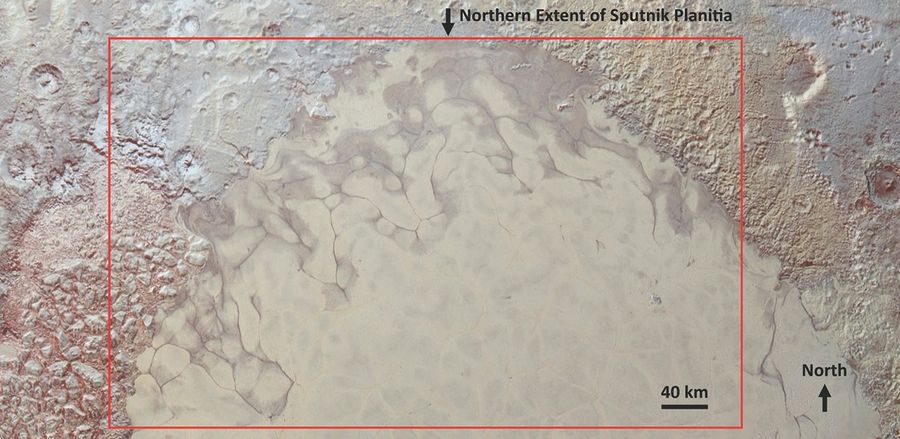
    A yellow and orange view of northern Pluto showing a plain turning into higher elevation features. A red box around dark wet spots indicates liquid nitrogen flows.

    A new analysis of imagery collected during NASA’s New Horizons spacecraft’s 2015 encounter with Pluto provides evidence that liquid nitrogen is rising to Pluto’s surface through cracks in the northern edge of the Sputnik Planitia, part of the massive heart-shaped glacier on the dwarf planet’s surface. This is the first evidence of recently flowing liquid […]

  • NASA Engineers Help Prolong Voyager 2’s Science Mission

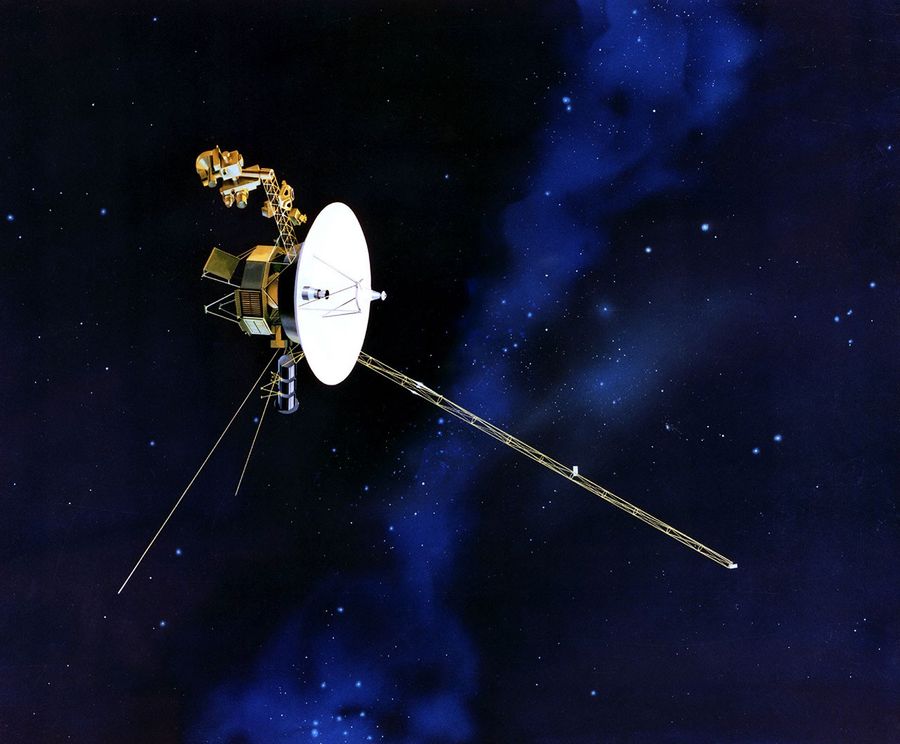
    This artist's concept of NASA's Voyager spacecraft with its antennapointing to Earth.

    Engineers at NASA’s Jet Propulsion Laboratory have successfully freed up power on Voyager 2, extending how long the spacecraft can continue to do science.   Nicknamed the “Big Bang,” the effort involved simultaneously turning off certain powered devices and substituting them with lower-power alternatives while ensuring the spacecraft remains warm enough to operate.   The Voyagers get their power from radioisotope thermoelectric generators, devices that convert […]

  • NASA’s Eyes software: July release notes

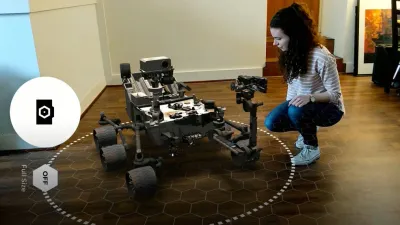
    An image of a person crouched next to an augmented reality Curiosity rover on a floor.

    The Eyes team has many significant upgrades underway, but in the month of July we only updated our augmented reality mobile app Spacecraft AR and released it to the Google Play and Apple App stores. This update included mostly internal bug fixes and upgrades. If you are unfamiliar with the app, you can download and […]

  • Webb Unravels Small Cosmic Details With Interferometry Observing Mode

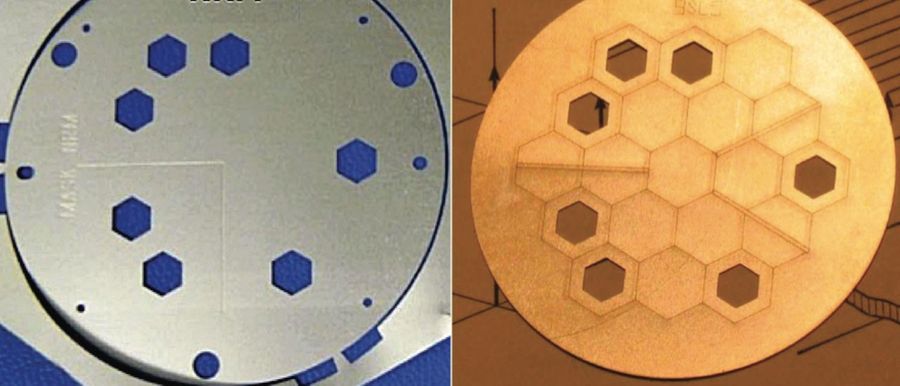
    A prototype of NASA’s James Webb Space Telescope’s NIRISS (Near Infrared Imager and Slitless Spectrograph) non-redundant mask with seven hexagonal pinholes with outlines of the telescope’s primary mirror segments and secondary mirror support struts. When light passes through these pinholes, it creates a pattern of overlapping light waves. Similar to overlapping waves in water, these light waves can interfere constructively (combine together) or destructively (cancel out) with each other, creating a complex pattern of light and dark spots known as fringes.

    One of the most recognizable features of NASA’s James Webb Space Telescope is its large, segmented, gold-coated mirror, which delivers images twice as sharp as pre-launch estimates. Aperture masking interferometry is an observational technique that allows for high-angular resolution imaging of celestial objects. The basic principle involves placing a specially designed mask with several small […]