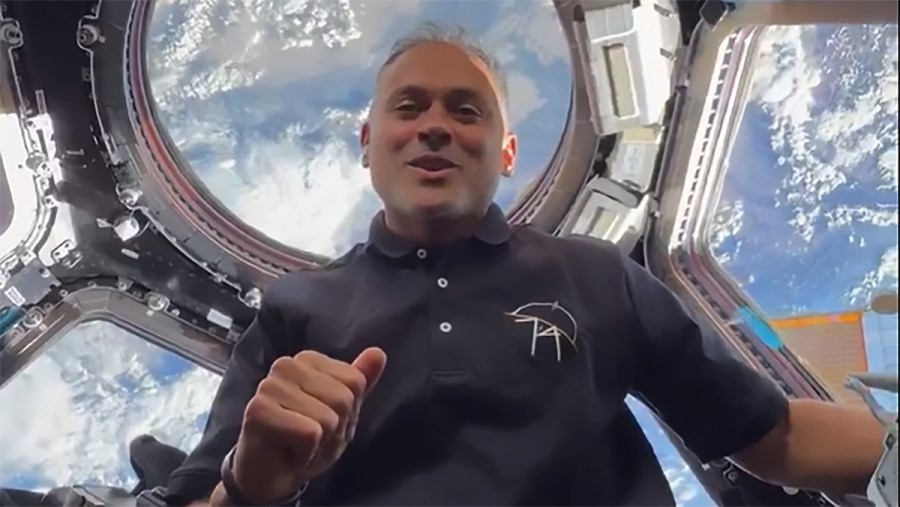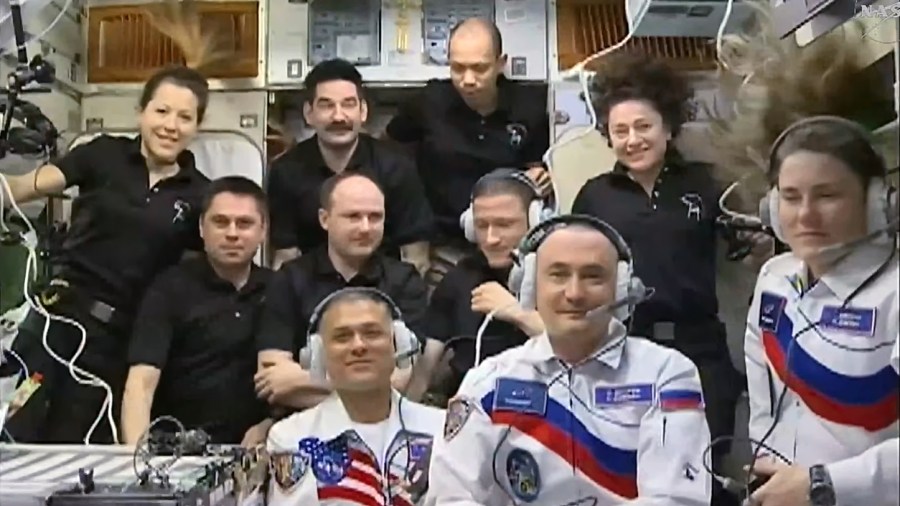






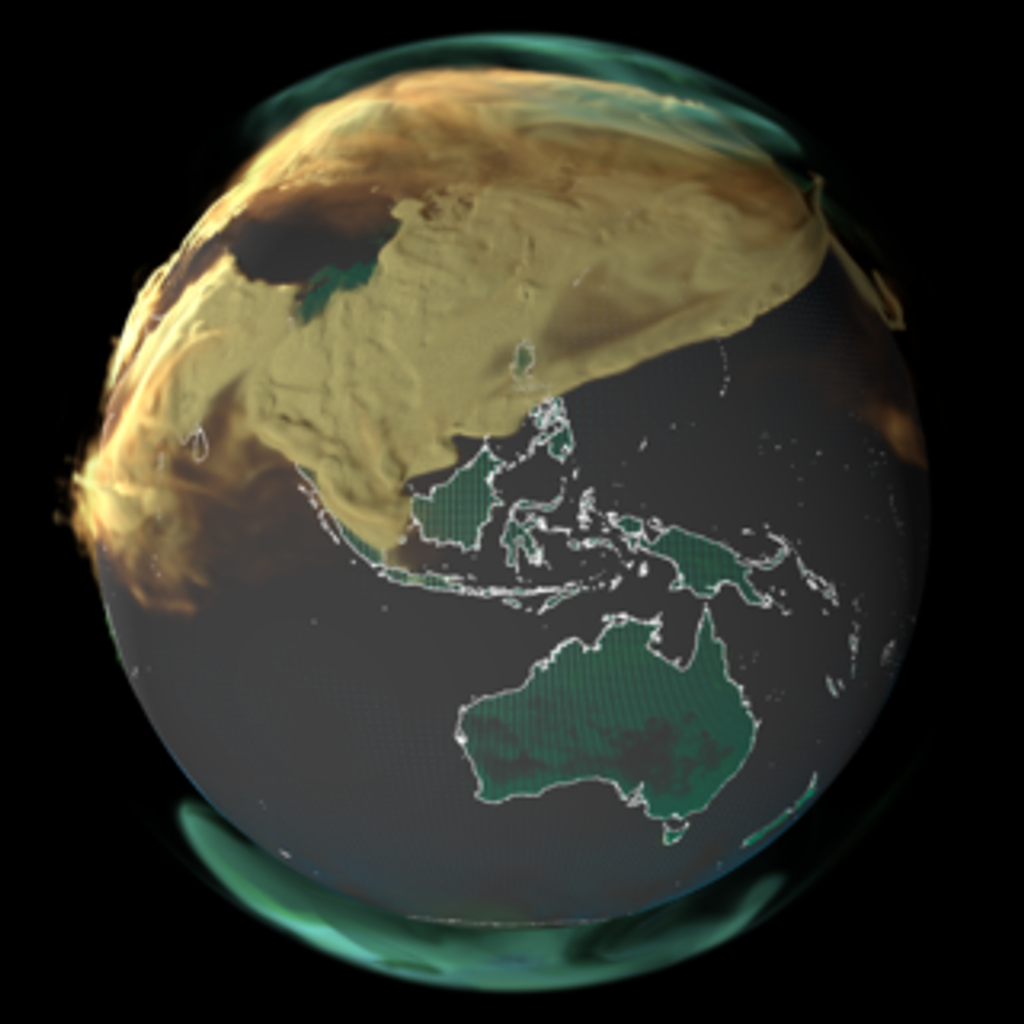




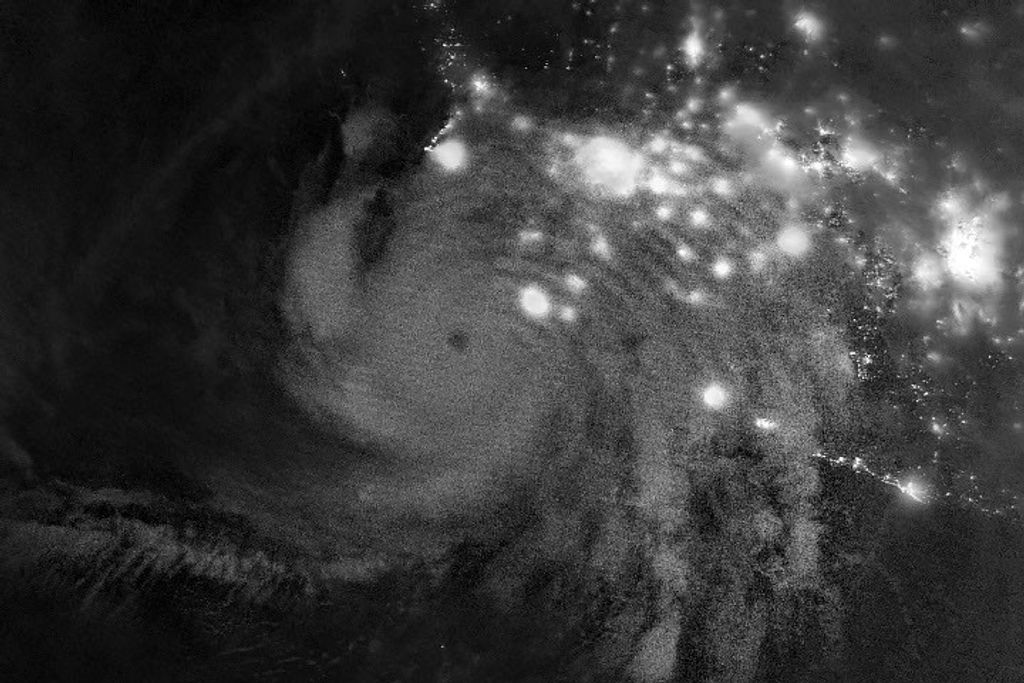






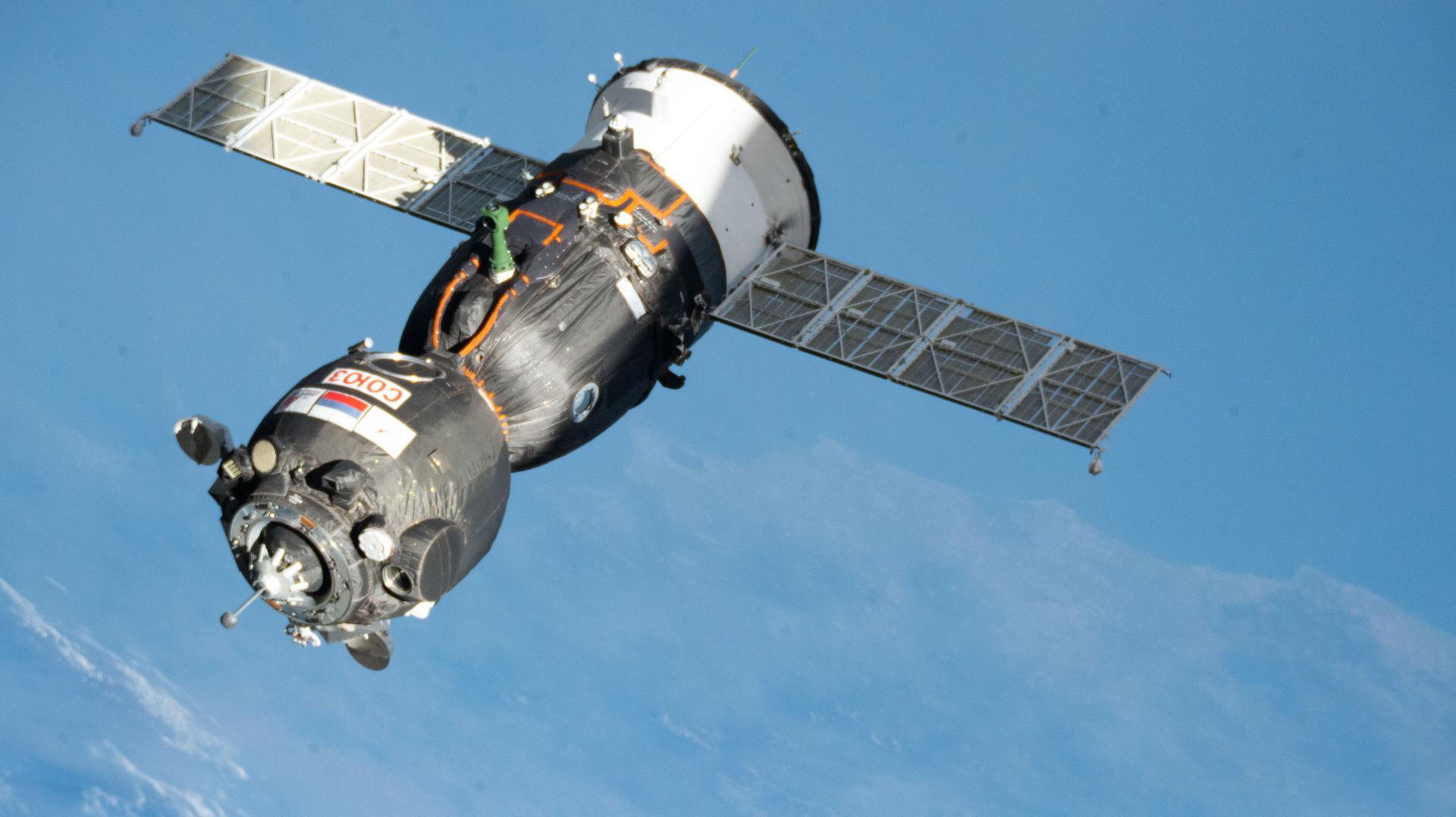
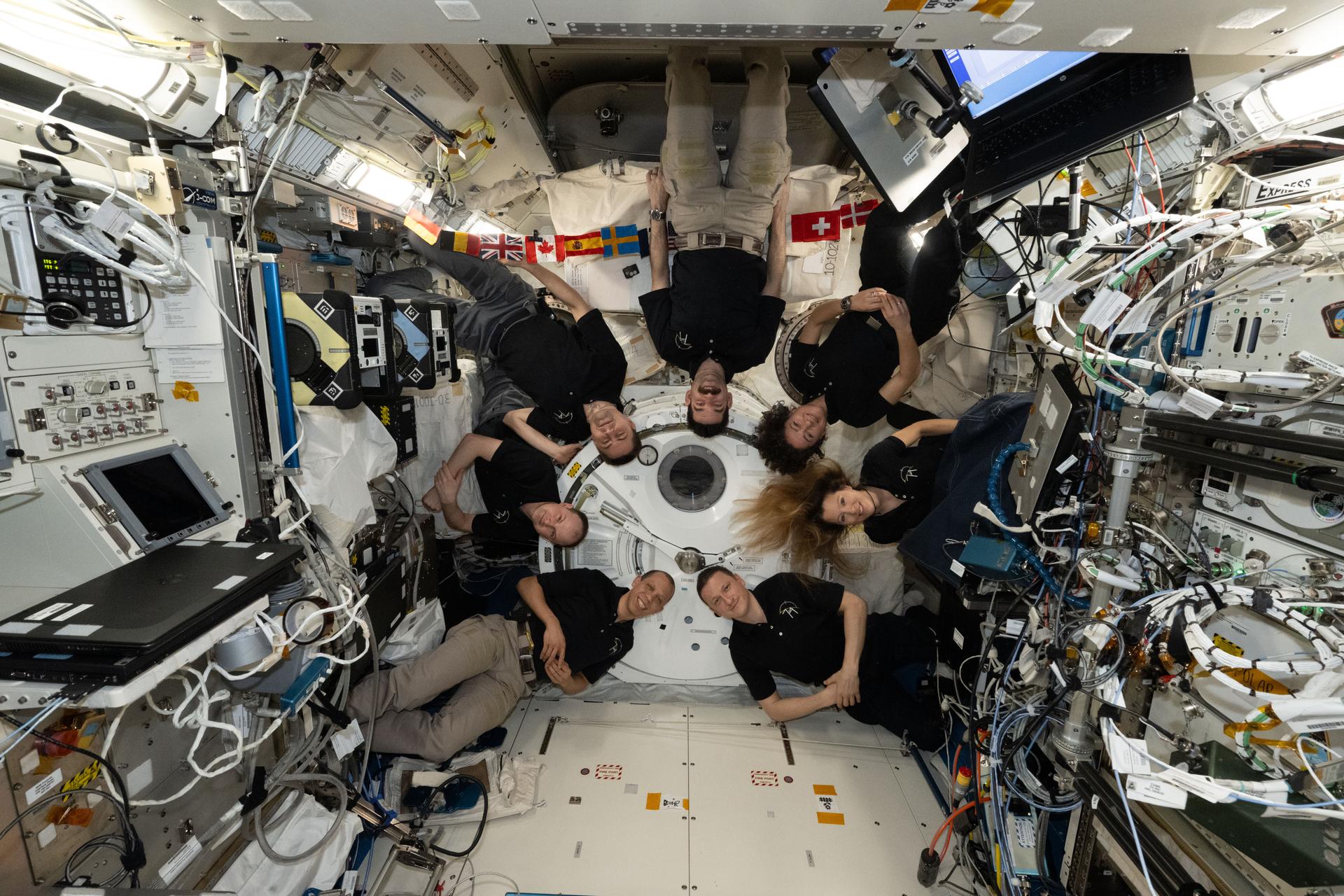
Crew swap activities are underway aboard the International Space Station as three new crewmates continue getting up to speed with living and working in microgravity and another Expedition 74 trio prepares to return to Earth. Meanwhile, scientific operations are back in full swing aboard the orbital outpost with lab residents studying how weightlessness affects the human body.
Week Wraps with New Crew Adjustments and Human Research Studies


![An educational diagram illustrating how measurement uncertainty can distort data regarding Earth's magnetosphere, featuring a detailed space visualization alongside two comparative line graphs. Top Right: Earth is shown surrounded by a complex network of blue magnetic field lines.Far Right: A bright blue, curved line denotes the "Bow shock," which transitions into an orange-red turbulent region labeled the "Magnetosheath." Spacecraft Locations: The "WIND" spacecraft is positioned far to the left in the "Solar wind" stream, connected to a label reading "Measured solar wind strength." The "THEMIS" spacecraft sits closer to Earth inside the magnetosheath, labeled "Corrected solar wind strength. Left Graph: Plots "Earth's response [mV/m]" against "Measured solar wind strength [mV/m]." A blue line initially follows a linear path but then flattens out, marked with the text "illusion of saturation due to measurement uncertainty."Right Graph: Plots "Earth's response [mV/m]" against "Corrected solar wind strength [mV/m]." A pink line continues steadily upward diagonally, labeled as the "True linear response."](https://science.nasa.gov/wp-content/uploads/2026/07/sivadas-2026-explanation-figure-v5-1.jpg?w=900)