








Suggested Searches

Blogs

  • Sun Releases 2 Strong Solar Flares

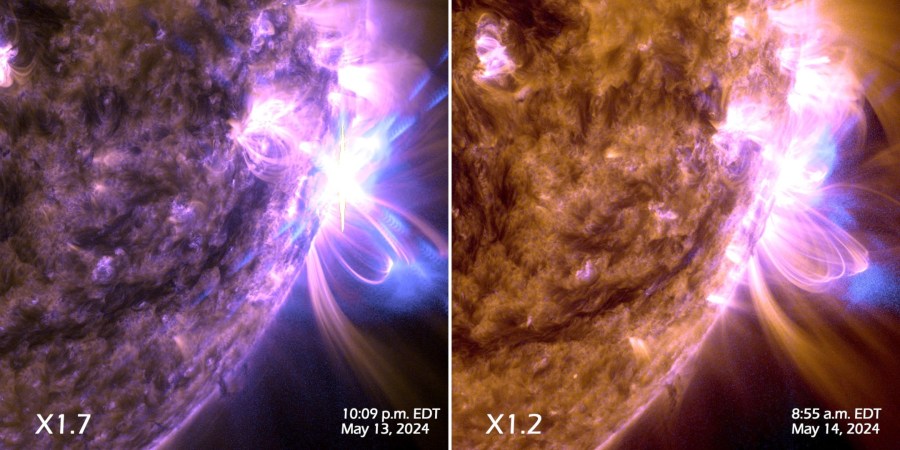
    NASA’s Solar Dynamics Observatory captured images of the two solar flares on May 13 and May 14, 2024. The flares are classified as X1.7 and X1.2-class flares, respectively. The image shows a subset of extreme ultraviolet light that highlights the extremely hot material in flares created from a mixture of SDO’s AIA171 and 131 channels. Available with EDT and UTC time labels as well as unlabeled.Credit: NASA/SDO

    The Sun emitted two strong solar flares, the first peaking at 10:09 p.m. ET on May 13, 2024, and the second peaking at 8:55 a.m. ET on May 14, 2024. NASA’s Solar Dynamics Observatory, which watches the Sun constantly, captured images of the event. Solar flares are powerful bursts of energy. Flares and solar eruptions …

  • ISS Daily Summary Report – 5/13/2024

    Payloads: Cold Atom Lab (CAL): The crew performed day two of the multi-day effort to replace the Cold Atom Lab science module. Today’s activities were primarily to inspect and clean the fiber tips on the 767 nm and 785 nm lasers. More information on the CAL facility can be found here.  Sleep in Orbit: The …

  • Station Maintenance and Upkeep Top Monday’s Schedule

    A full day of orbital upkeep and maintenance kept the Expedition 71 crew busy on Monday as the septet continues to prepare the International Space Station for the arrival of two astronauts. In the Tranquility module, NASA astronaut Matthew Dominick kicked off the morning by removing the top and bottom port stalls of the orbital …

  • Strong Flare Erupts from Sun

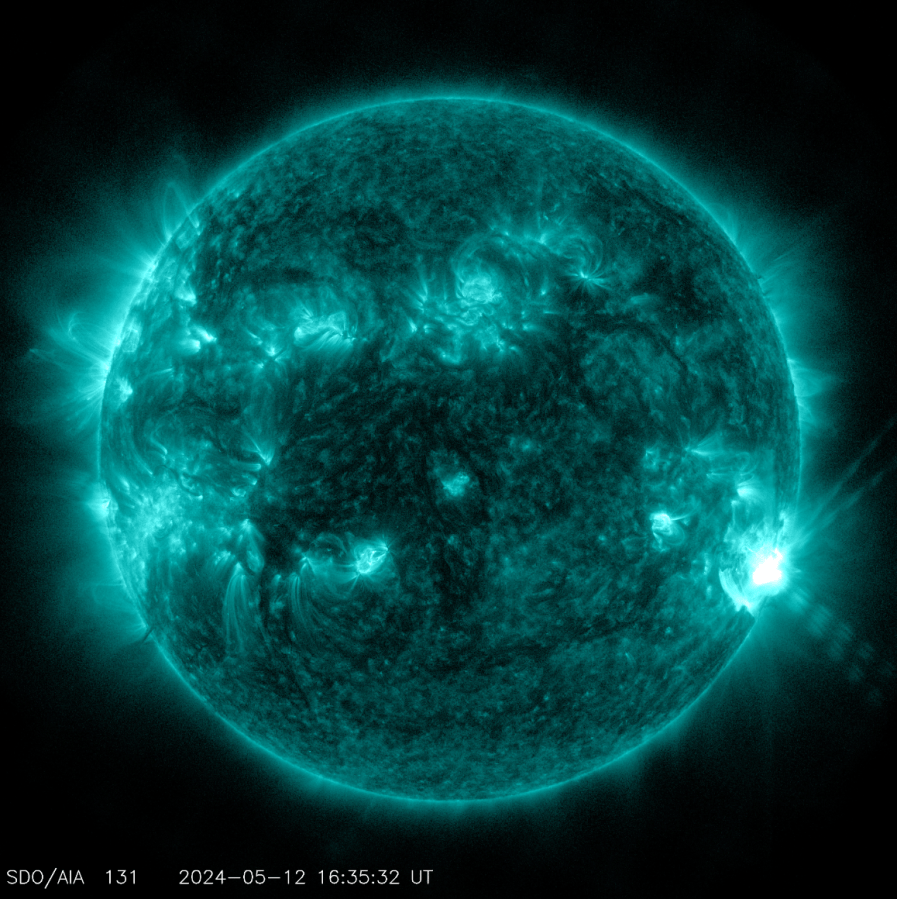
    The disk of the Sun, colorized in teal, features a bright flash on the lower right. Less intense bright spots and loops of material dot much of the Sun's surface.

    The Sun emitted a strong solar flare, peaking at 12:26 p.m. ET on Sunday, May 12. NASA’s Solar Dynamics Observatory, which watches the Sun constantly, captured an image of the event. Solar flares are powerful bursts of energy. Flares and solar eruptions can impact radio communications, electric power grids, navigation signals, and pose risks to …

  • Sun Releases 2 Strong Flares

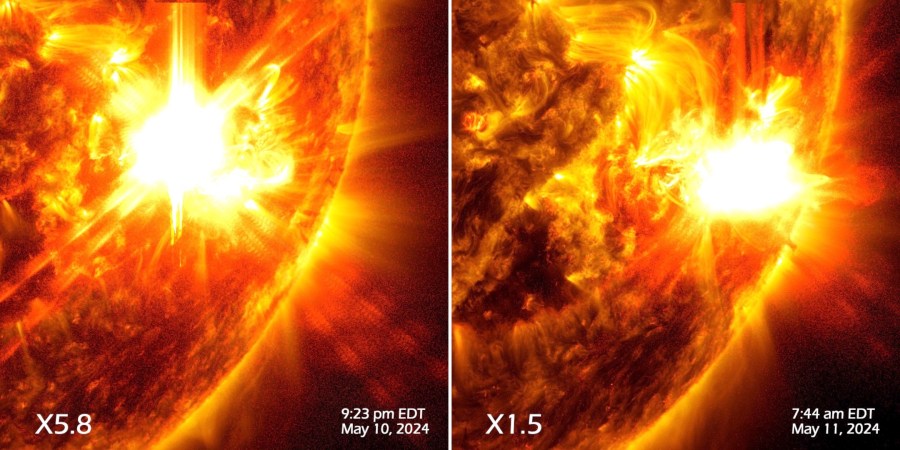
    NASA’s Solar Dynamics Observatory captured images of the two solar flares on May 10 and May 11, 2024. The flares are classified as X5.8 and X1.5-class flares, respectively. The image shows a subset of extreme ultraviolet light that highlights the extremely hot material in flares created from a mixture of SDO’s AIA 193, 171 and 131 channels. Available with EDT and UTC time labels as well as unlabeled.Credit: NASA/SDO

    The Sun emitted two strong solar flares, peaking at 9:23 p.m. ET on May 10, 2024, and 7:44 a.m. ET on May 11, 2024. NASA’s Solar Dynamics Observatory, which watches the Sun constantly, captured an image of the event. Solar flares are powerful bursts of energy. Flares and solar eruptions can impact radio communications, electric …

  • Space Physics Aboard Station as Starliner Crew Returns to Houston

    Space physics and life support maintenance topped the schedule at the end of the week for the Expedition 71 crew as the Starliner astronauts return to Houston. 3D printing and cargo operations also rounded out the operations aboard the International Space Station. The coldest place in the universe may be the Cold Atom Lab located …

  • ISS Daily Summary Report – 5/10/2024

    Payloads: Cold Atom Lab (CAL): The crew performed day one of the multi-day effort to replace the Cold Atom Lab science module. Today’s activities were primarily to inspect the fiber optic cables and ports. More information on the CAL facility can be found here. Exploration Potable Water Dispenser (xPWD): The crew replaced a suspect ADLink …

  • Space Physics Aboard Station as Starliner Crew Returns to Houston

    Space physics and life support maintenance topped the schedule at the end of the week for the Expedition 71 crew as the Starliner astronauts return to Houston. 3D printing and cargo operations also rounded out the operations aboard the International Space Station. The coldest place in the universe may be the Cold Atom Lab located …

  • Strong Solar Flare Erupts from Sun

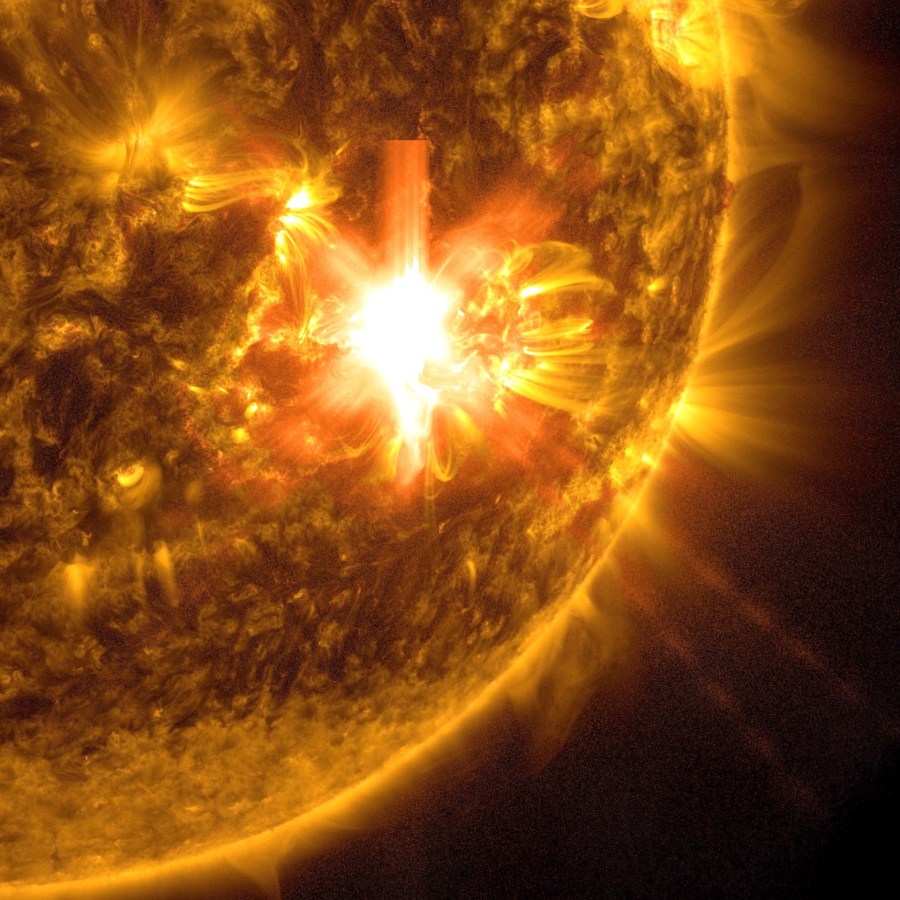
    NASA’s Solar Dynamics Observatory captured this image of an X3.9 flare on May 10, 2024. The image shows a blend of 171 and 131 Angstrom light, subsets of extreme ultraviolet light. Credit: NASA/SDO

    The Sun emitted a strong solar flare, peaking at 2:54 a.m. ET on May 10, 2024. NASA’s Solar Dynamics Observatory, which watches the Sun constantly, captured an image of the event. Solar flares are powerful bursts of energy. Flares and solar eruptions can impact radio communications, electric power grids, navigation signals, and pose risks to …